
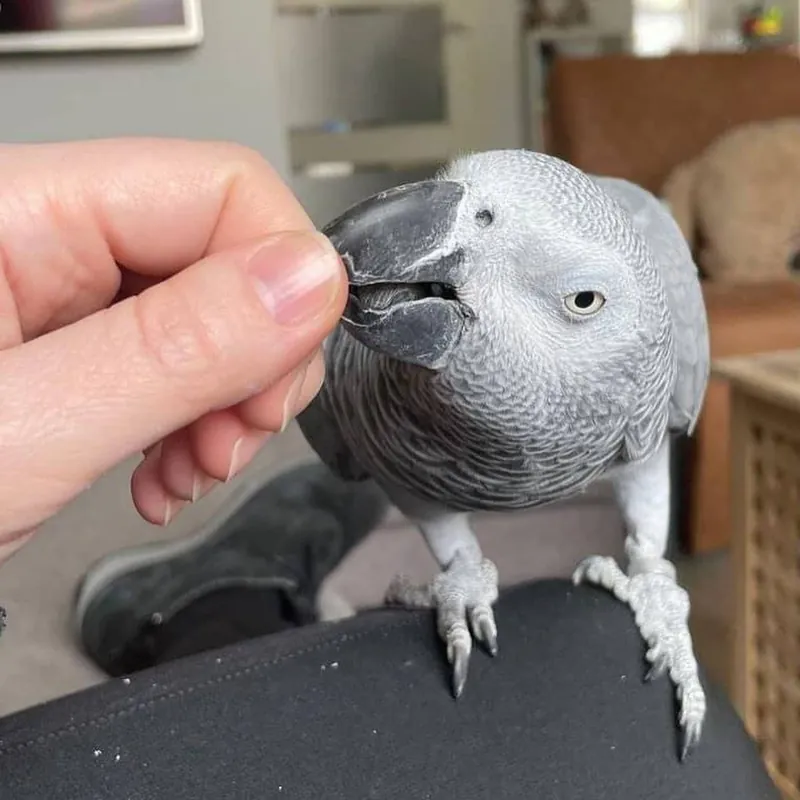
 Congo
Congo Bery
$1,700Past the baby stage and already steady in a household. The one to choose if you want a grown hen who has done her settling here.
CongoHen1 year
Collect in person, or $185 airport · $350 home
C.A.Gs · Midland, Texas · hatched here since 2014
Every grey on this page hatched in our house, was hand-fed at our table and has a laboratory file with its name on it. Pick the bird, read the price beside it, then decide between collecting it here and having it flown to you.
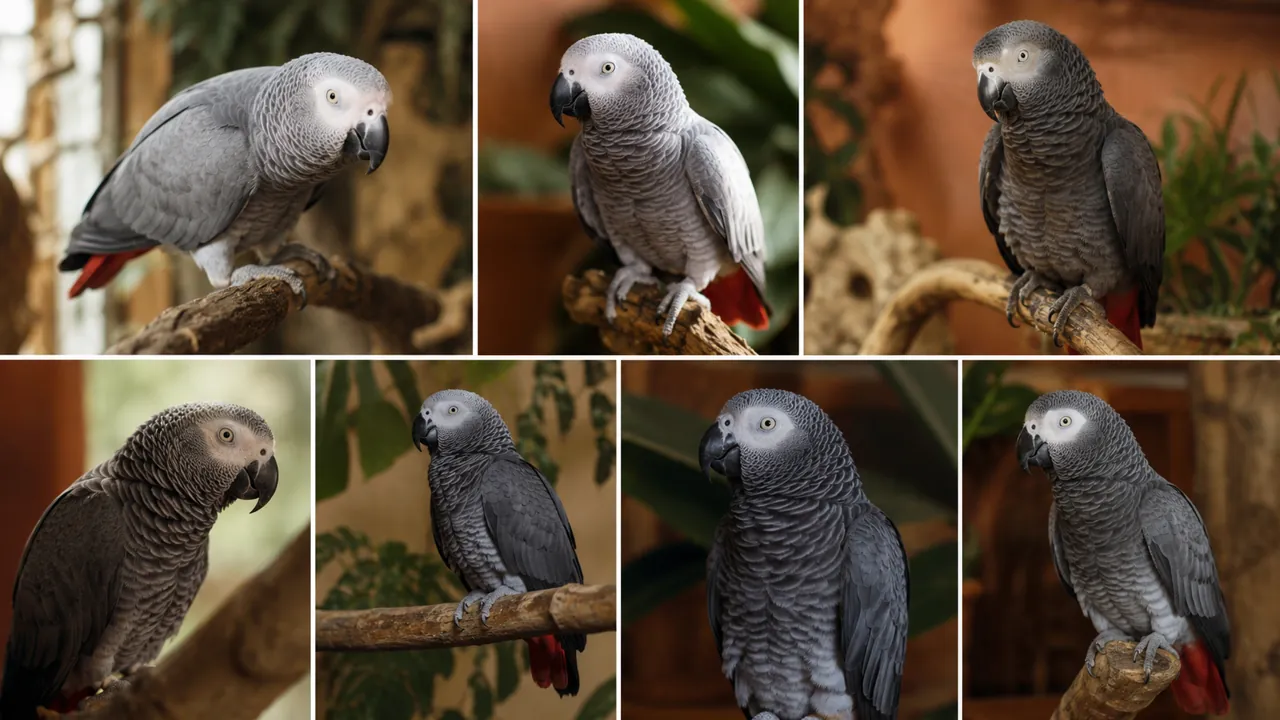

These are the six greys we can put a name and a price to today. Nothing here is a stock photograph and nothing is a bird we bought in to resell. Each one hatched in our nursery, and each card links to the bird's own page, where the same price appears again.
Congo Past the baby stage and already steady in a household. The one to choose if you want a grown hen who has done her settling here.
Collect in person, or $185 airport · $350 home
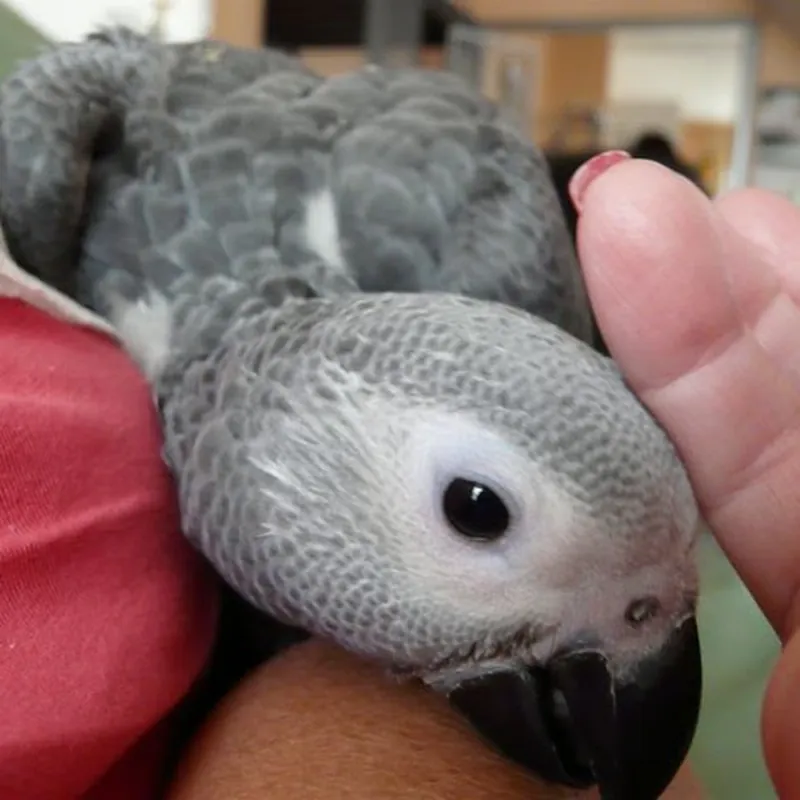 Congo
Congo Still on the last of her hand-feedings and eating on her own more each week. Ready when weaned, not before.
Collect in person, or $185 airport · $350 home
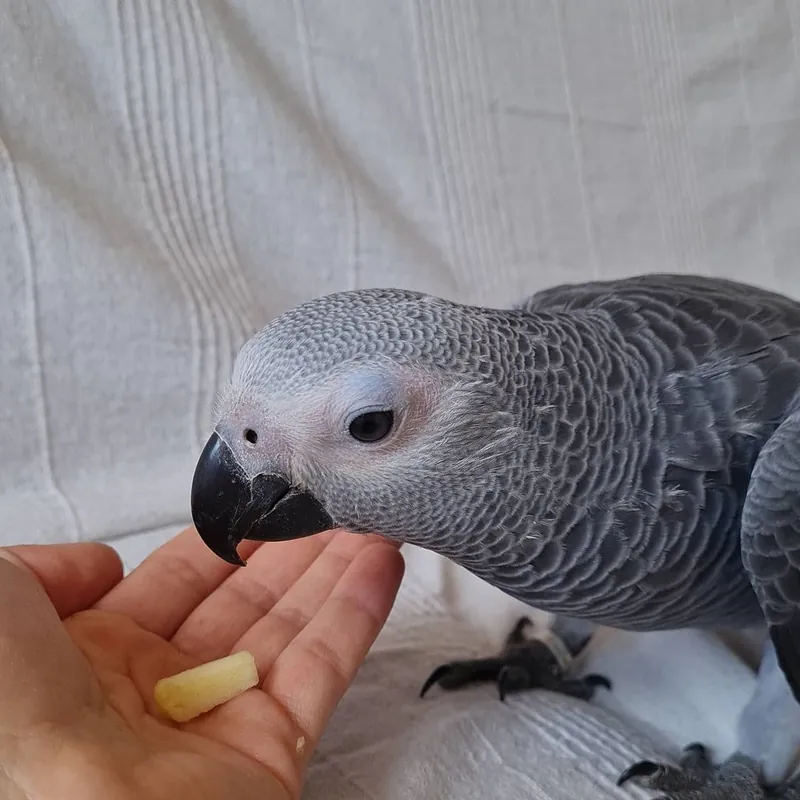 Congo
Congo The bold one of the clutch. Investigates first, retreats never. Best matched to a house with a routine he can join.
Collect in person, or $185 airport · $350 home
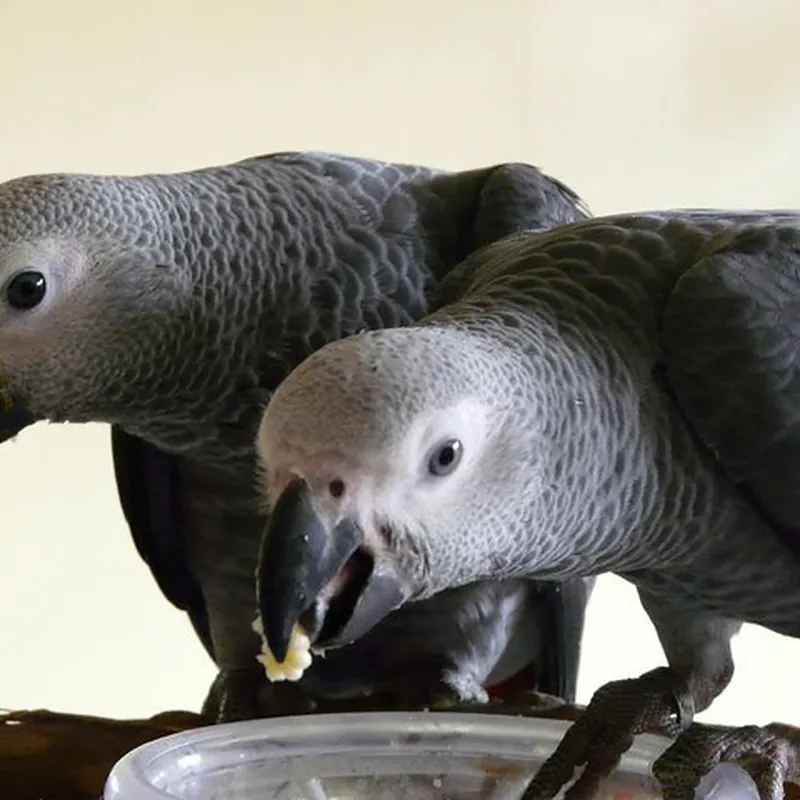 Companion pair
 Two unrelated Congos who keep each other company. Sold together so neither goes alone.
Collect in person, or $185 airport · $350 home
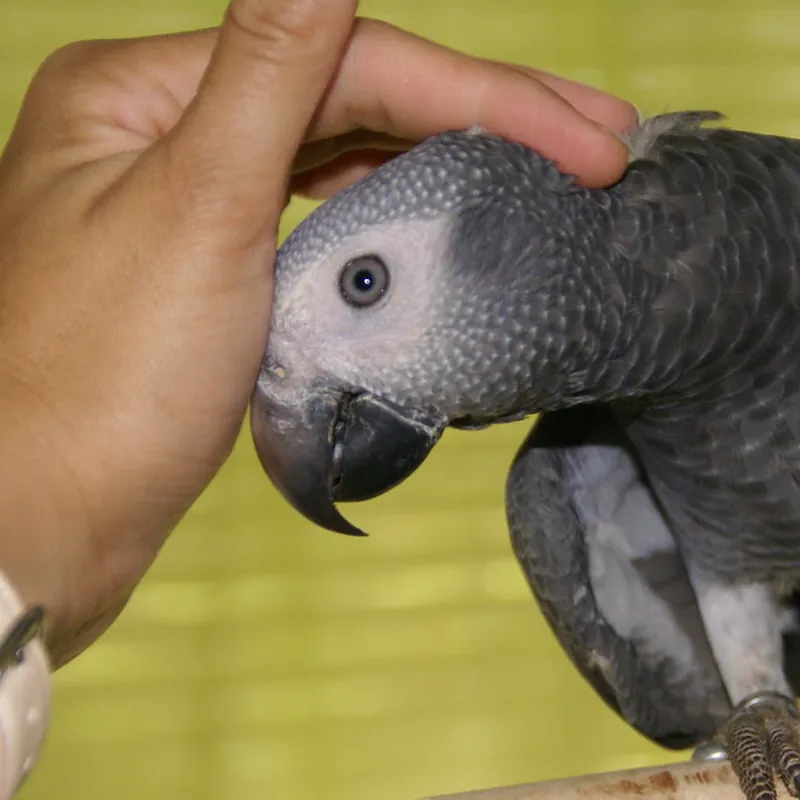 Timneh
 A weaned Timneh cock, smaller and quicker to trust than his Congo cousins.
Collect in person, or $185 airport · $350 home
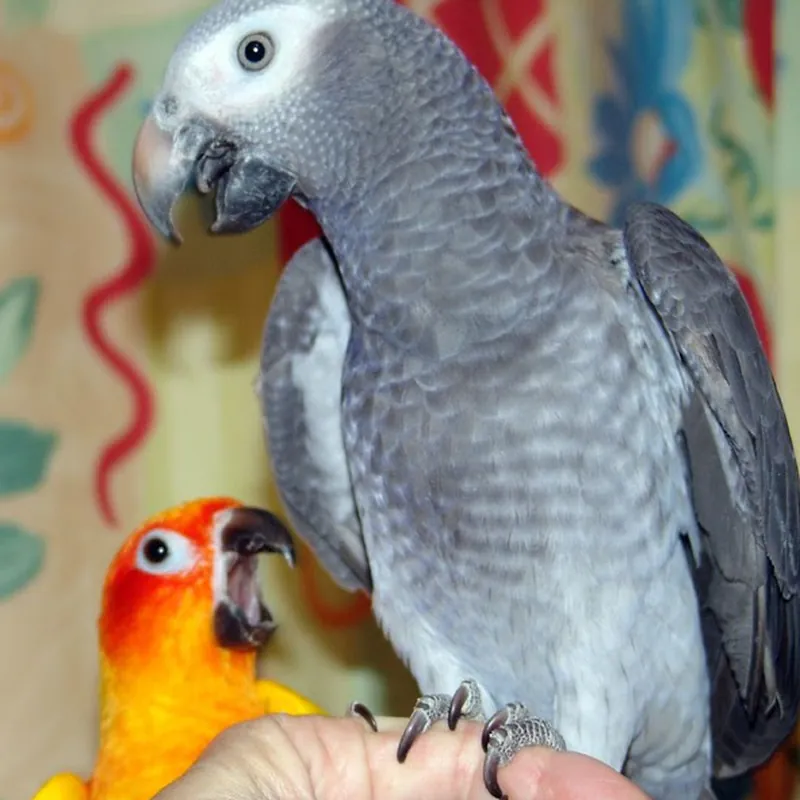 Timneh
 A watchful Timneh hen. She learns a household by observing it first, then joins in.
Collect in person, or $185 airport · $350 home
3 single Congos and one companion pair carry a Congo badge above. Fact A Congo is the larger of the two greys we breed, 400–600 grams as an adult, with the bright red tail most people picture when they hear the species name. Bery is the grown hen, Amie the youngest, Roys the one who will meet your visitors at the door of his cage.
The card price is the whole price of the bird. It is not a starting figure, it is not before paperwork, and it does not change once you have paid a deposit. What moves it between one Congo and another is what the next heading says.
A weaned chick from this season sits higher than a grown hen who has been with us a year, because the chick carries the months of hand-feeding that a buyer pays for once and keeps for the life of the bird. Sex is on the laboratory certificate rather than in our judgement, and the price does not favour one over the other. The documentation is the same folder for every bird, so it never explains a difference between two cards.
Every weaned bird on this page can fly. A bird still finishing its hand-feedings, which today means Amie, stays with us until it eats on its own, whichever state it is going to. The companion pair travels best to the door rather than through a cargo desk, and we say so on the pair's card.
Elad and Evie are the two Timnehs, a cock and a hen from different clutches. A Timneh is the smaller grey, 275–375 grams, with a maroon tail rather than a red one and a horn-coloured patch on the upper beak. In our nursery the Timnehs are the ones that step onto a stranger's hand first.
Demand, not quality. More buyers arrive asking for the red tail, so the Congo band runs higher. The Timneh band, $1,500–$1,600, is where our floor sits, and a buyer who wants a calmer, quicker-to-settle grey is usually better served by it than by paying more for the name.
The laboratory panel, the sex certificate and the treaty file do not know the difference between the two subspecies. A Timneh leaves with the same six documents a Congo does, in the same folder, with the same written guarantee.
When a deposit lands on a bird, its card comes off this page rather than gaining a badge, because a bird that is spoken for is not for sale. If the grey you wanted is gone by the time you read this, the form at the bottom takes your name for the next clutch, and we write to that list before anything is listed here.
The first fork in buying a grey is not which bird, it is which kind. Most buyers arrive having only heard of the Congo. Half of them leave with a Timneh once they have held both, and the table below is the reason why.
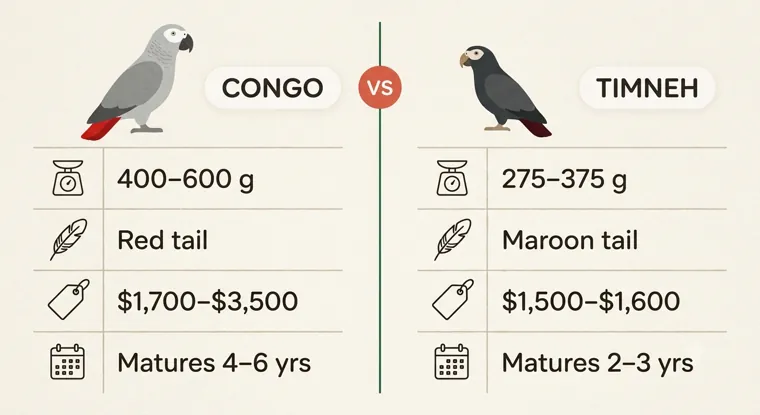
| What differs | Congo | Timneh | How to read it |
|---|---|---|---|
| Adult weight | 400–600 g | 275–375 g | Timneh is about a third smaller |
| Tail | Bright red | Dark maroon | The quickest visual tell |
| Beak | All black | Horn-coloured upper mandible | Visible from across a room |
| Our price band | $1,700–$3,500 | $1,500–$1,600 | Timneh sets the floor, the pair sets the ceiling |
| Available now | 5 birds | 2 birds | Counted from the cards above |
The World Parrot Trust's grey parrot profile ↗ covers the wild range and the two forms in more depth than a sales page should. Put a Timneh next to a Congo and it reads as roughly a third smaller: darker over the back, maroon in the tail, pale on the upper beak. The Congo is paler, heavier, and carries the red tail. Both are Psittacus erithacus, one species with two recognised forms, and both talk; the size difference is the one that changes a cage, a perch and a travel crate.
We hand-feed both in the same kitchen, on the same schedule, and the difference shows up before either is weaned. Timneh chicks accept a new hand sooner. Congo chicks pick their person and take longer to admit a second one. Neither is a rule, but across the clutches we have raised it has held often enough to say out loud.
The Timneh, in our experience, because a child's movements are quick and a Timneh forgives quick. A Congo in a house with young children does well when one adult is clearly the bird's person and the children are taught to let the bird come to them.
Our recommendation The Midland Socialization Method is our name for how a chick is handled between weaning and leaving: family handling by more than one person, an out-of-cage routine every day, and exposure to the ordinary noise of a household. Both subspecies go through it, and it is why a bird from us steps onto a hand rather than backing away from one.
The full Congo versus Timneh comparison covers voice, lifespan, the cost of a cage for each, and the mistakes buyers make when they choose by colour alone. This page gives you enough to choose a card; that one gives you enough to defend the choice.
Fact ↗ Both forms live 40 to 60 years in a home, so the gap is paid once and the bird is kept for decades. Today the gap is the distance between $1,500–$1,600 and $1,700–$3,500. It reflects demand for the red tail, not a difference in what leaves with the bird. A Timneh at $1,500 arrives with the same laboratory results and the same paperwork as a Congo at $3,500 does.
Search this species and one screen will show you a grey for $500, one for $1,500 and one for $7,500. Ours run $1,500 to $3,500, and this section exists so you can see what each dollar of that is doing rather than take our word that it is fair.
Because $1,500 is the least a screened, documented Timneh costs us to raise and still leave with its file complete. Behind the number sit three to four months of hand-feeding, a laboratory panel, a sex test, a veterinary visit and the treaty paperwork, none of which gets cheaper because a listing wants a lower figure. Below that, one of them has been skipped, and it is never the one the seller tells you about.
Usually the bird. The pattern we hear about from buyers who call us afterwards is a deposit paid to a listing with no address, then a shipping fee, then an insurance fee, then silence. When a real bird does exist at that price it is an unweaned chick sold early, or a grey with no screening and no paperwork, which means no way to know what it is carrying and no lawful way to move it across a border.
Fact The laboratory panel runs before a bird is listed, and the sex certificate comes from the same laboratory. Neither is an add-on. A buyer who asks a $500 seller for either usually finds that the conversation ends.
$200 takes one bird off this page for the time you need to book a flight or a drive, and we deduct it from the balance when you collect. It is not open-ended; if plans change, tell us and we will talk about it rather than quietly relisting the bird.
It moves a bird from this page to your name. What it does not do is buy a photograph or a promise: before any deposit we set up a video call so you have watched the bird move, in our house, on the day you pay.
None of the prices above include travel, because travel depends on where you are and a buyer within driving distance should not pay for a flight. The two flat figures below are the whole of it for a single bird anywhere in the country.
$185 puts the bird on a live-animal cargo flight to your nearest major airport, where you collect it at the cargo counter the same day. $350 adds the last leg to your door. A nanny's cabin seat, from $750, is priced route by route because a person flies both ways with the bird.
Work it out
What You Pay, and When
The deposit comes off the balance, so the last two lines are the whole cost. A cabin seat is quoted route by route, so for that option the figures are where the quote starts.
A grey leaves us one of three ways, and all three start the same: a health certificate, a booked date, and a bird that is fully weaned. The strip below is the whole journey in three steps; the headings after it are the detail.
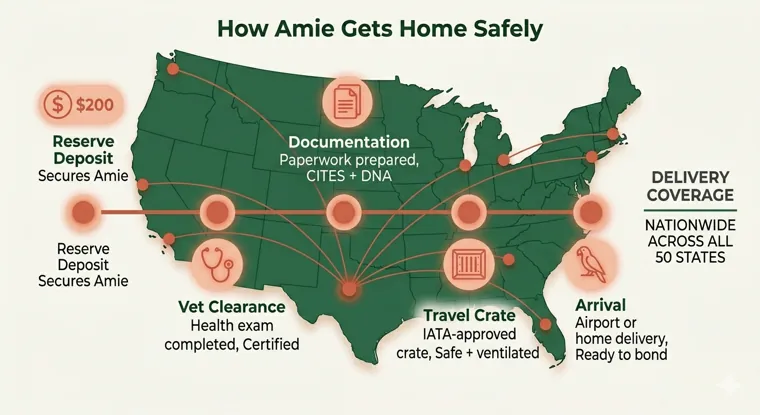
Before any bird flies, an avian veterinarian examines it and issues the certificate the airline requires. It travels fastened to the crate, not in an envelope, because the cargo counter at each end checks it. A bird that is not weaned does not get one from us, whatever the buyer's schedule.
We book, we crate, we drive the bird to the airport. You choose the destination: the cargo counter at your nearest major airport, your front door, or a seat in the cabin with a flight nanny who hands the bird to you at arrivals.
Delta Cargo, United Cargo and American Airlines Cargo all move live animals under the same set of rules, and we pick by the shortest day for the bird rather than by the cheapest fare. A direct flight beats a connection every time, even when the connection lands closer to you.
The IATA rules for live-animal air cargo ↗ set the crate size, the ventilation, the water cup and the temperature window a bird may fly in, and every carrier we use follows them. In the hottest weeks of a west Texas summer that can mean an early departure or a delayed one; we tell you which before you plan a day around it.
A buyer within a two to three hour drive of us collects in person, meets the bird before it is boxed, and pays nothing for the journey. That radius is not a service area we advertise; it is how far a weaned grey rides comfortably on a lap.
The journey ends when the bird is in your hands, at a counter or a doorstep or our kitchen. That moment matters for more than the photograph, because it is when the guarantee begins.
The avian vet locator from the Association of Avian Veterinarians ↗ is what we use to find a clinic near you inside that window. Our written health guarantee runs 72 hours from possession, and anything transit-related is covered for the first 24. A same-day call is what makes either usable, because it lets us arrange an avian vet near you while the window is open. The guarantee page has the term word for word.
Six documents, the same six for every bird on this page. The register below says what each one holds and why it exists, because a buyer who knows what to ask for is a buyer no listing can fool.
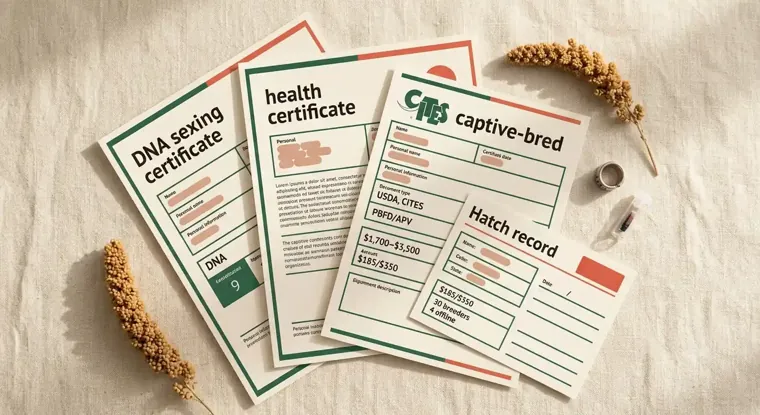
These are sample documents; the personal fields are redacted. A bird's own paperwork travels with the bird and is shown to its buyer on request.
| Document | What it holds | Why the document exists |
|---|---|---|
| 01CITES paperwork | Confirms the bird was hatched in captivity in the United States, with our aviary named | The species is listed on the strictest treaty appendix; a bird hatched here needs this on file to be traded lawfully |
| 02Hatch certificate and closed band | Hatch date, parentage, and the number on the ring fitted as a chick | Ties this bird to this aviary for life; the ring cannot be fitted to an adult |
| 03PCR disease screening | PBFD, Avian Polyomavirus and psittacosis results from a laboratory | Screening before sale, with results in writing, not a verbal assurance |
| 04DNA sex certificate | Male or female, from a feather or blood sample, for every single bird | Greys cannot be sexed by eye; the certificate is the only proof |
| 05Avian veterinary certificate | A health certificate issued before travel | The one document the airline asks to see on the crate |
| 06Written 72-hour guarantee | The term, in writing, that starts when you take possession | So the promise outlives the phone call |
Fact ↗ The African Grey sits on the strictest listing of the international treaty on trade in endangered species. What that governs is commercial trade in wild-caught birds. A grey hatched in our aviary is captive-bred, and the paperwork that says so is the document that lets it be sold, moved and owned lawfully.
The US Fish and Wildlife Service's page on the treaty ↗ is the office that enforces the listing at the border, and its own guidance says the same thing: the listing is about where a bird came from, not who may keep it. A grey hatched here with its file in order is as lawful to own as a budgie. What the listing does stop is the trade in birds trapped in the wild, which is the trade every cheap classified without paperwork is, knowingly or not, a part of.
The ring goes onto a chick's leg in its first days, when the foot is small enough for it to pass; it cannot be fitted to a grown bird. Its number is on the certificate with the date and the parents, so the bird in your hand and the paper in your folder can be matched by anyone, for the rest of its life.
The documentation page gives every document in the register above a longer entry, with what a real one looks like and the questions to ask a seller who cannot produce it.
"Vet checked" is a phrase; a laboratory result is a document. Every bird here has the second, and we hand it over rather than describe it.
Those are the three diseases a buyer of a young grey should fear most, and all three are screened by a method that looks for the organism itself rather than for symptoms that may not have appeared yet. The results are in the folder with the bird's name on them.
Cock and hen greys look alike, so the sex on the card is the sex on the certificate, from a feather sample run by the same laboratory. We sex every single bird before it is listed; the companion pair is offered on the strength of how the two birds get along, which no certificate measures.
We hold a licence under the Animal Welfare Act, and it is the one credential a buyer can check without trusting us at all.
The USDA licence search ↗ lists every Animal Welfare Act licence holder by name. Search it for us before you send a deposit to anyone, including us. A seller who is not in it has no licence to lose.
Two people, one house in west Texas, and a nursery that has been running since 2014. There is no shop front and no staff; if you call, one of us answers.
We are Mark and Teri Benjamin. We keep a small number of breeding pairs, hand-feed every chick they produce in our kitchen, and place each one with a household we have spoken to. That is the whole business.
Our recommendation The Benjamin Home-Raising Protocol is our name for how a chick gets from the nest box to a buyer: pulled for hand-feeding at the age we have found works, fed on a schedule in the house rather than a shed, weaned onto pellets and fresh food, and not listed until it eats on its own.
Weaning finishes somewhere between twelve and sixteen weeks, and the gate is the day the chick eats enough on its own that a missed hand-feeding does not matter. No grey leaves before it, whatever a buyer's calendar says.
Which parents, which clutch, what the bird eats today, what it weighed this morning, and which of the two of us it prefers. Ask; we would rather answer than have you guess.
Defined once above, and worth its own heading here because it is the part of raising a grey that a laboratory cannot certify. A chick that has only ever been fed and left alone grows into a bird that bites. A chick handled by several people, carried from room to room and let out every day grows into the bird on the cards above.
From weaning until the day it leaves, every bird here is handled by both of us and by whoever is in the house, and has time out of the cage every day. It is a habit, not a program, and it is why our birds arrive already expecting to be part of a family rather than kept apart from one.
This page is the hub. Every other for-sale page on the site is a spoke that answers one question in depth, and the boarding pass below lists all of them.
The Congo page is where to start if the fork above sent you to the red tail. The Timneh page does the same for the smaller grey. The baby page is for buyers who want a chick still finishing weaning. The companion pair page is for a household that wants two birds. Breeding pairs have a page of their own for aviculturists.
The health guarantee page carries the written term in full. DNA-tested greys explains the sex certificate and the laboratory behind it. What hand-raised means here covers the protocol week by week. The paperwork page shows a sample of every document.
Geography has one page, and this is not it.
The near-you page lists every state and metro we have written a page for and routes you to yours. We ship to all fifty states whether or not yours has a page.
Because two pages listing the same forty destinations would compete with each other in search and confuse a buyer about which one to trust. The router owns the list; the hub owns the birds.
Fertile eggs have a page of their own for incubator keepers. Adoption and first-year cost sets the two routes side by side with the numbers. Buying with shipping is the page for a buyer who has already decided and wants the price proved.
Twelve questions, taken from what people type into a search box before they find this page and from what they ask us on the first call.
Between $1,500 and $3,500. The low end is a Timneh hen, the top is the two-bird companion pair, and every price is printed on the bird's card on this page rather than quoted after you enquire. A single Congo runs $1,700–$3,500 depending on age and sex. Shipping is a separate line: $185 to your nearest cargo airport or $350 to your door.
Our companion pair, Jins and Jeni, is $3,500 for both birds. They are unrelated Congos who keep each other company, which is why we sell them together rather than as two singles. A breeding pair is a different purchase with its own page, and the price there depends on proven history rather than age.
Because the listing is not selling a bird. A captive-bred grey costs a breeder months of hand-feeding, laboratory screening and paperwork before it can leave, and none of that fits inside a few hundred dollars. The listings at that price ask for a deposit first and then find a reason the bird cannot ship. Our page on fake listings walks through the pattern; the short version is that a real seller has an address, a searchable licence and a bird you can watch on a video call today.
Yes. One is the American spelling, the other the British, and there is only one bird behind both. The two that actually differ are Congo and Timneh, and the comparison table on this page shows how to tell them apart at a glance.
Yes, as a pet owner buying a captive-bred bird with its paperwork. The international treaty listing restricts commercial trade in wild-caught greys; it does not stop you owning a bird hatched here. Every bird on this page comes with the captive-bred documentation that shows exactly that.
Six: the treaty paperwork, the hatch certificate with the band number, the laboratory results, the sex certificate, the veterinary certificate that travels on the crate, and the written 72-hour guarantee. The papers section above lists what each one holds and why it exists.
Three ways. Inside a two to three hour drive of us you collect the bird here for nothing. Everywhere else it flies as live-animal cargo to your nearest major airport for $185, or to your door for $350. A nanny's cabin seat costs from $750 and is priced route by route. We book the flight, and the bird travels with its health certificate.
It removes one named bird from this page for as long as you need to book travel, and we subtract it from what you pay at collection. It never buys a photograph: we set up a video call first so you are reserving a bird you have watched move, not a listing image.
If a rescue near you has a grey whose history suits your household, that is a good home for that bird and we will say so. What a rescue cannot usually give you is a known parentage and a bird that has only ever lived in one house. Our adoption page sets the two routes side by side with the costs.
Timnehs are smaller and, in our nursery, quicker to trust a new person. Congos are larger, louder and more particular about who they bond with. Neither is wrong for a first home; the honest advice is to pick by the household you have, not the bird you imagined. The fork section on this page is written for exactly that decision.
Phone us that day, before anything else. The written 72-hour term runs from possession, and hearing from you inside it is what lets us book an avian vet in your area before it closes. Transit-related problems are covered separately for the first 24 hours.
40 to 60 years with proper care, which is the reason we screen buyers as carefully as buyers screen us. A grey bought this year is a companion for a working life. The form at the bottom asks about your experience and your plans because the bird is going to outlast most of them.
Questions one, two, three and eight above. The short version: the card price is the price, the deposit is $200, and a grey under $1,000 is a listing to walk away from.
Questions five and six. Owning a grey hatched in captivity is lawful; the six documents are what make it provable.
Questions two, nine and ten. A companion pair is two unrelated birds sold together, a baby is a chick that leaves once weaned, and adoption is a good route when a rescue near you has the right bird.
Name the bird, or tell us the kind. We reply personally within a day, set up a video call, and only then talk about a deposit.
The six greys on this page, with the price each card shows:
Collect in person, or $185 airport cargo · $350 home delivery · cabin with a nanny from $750