
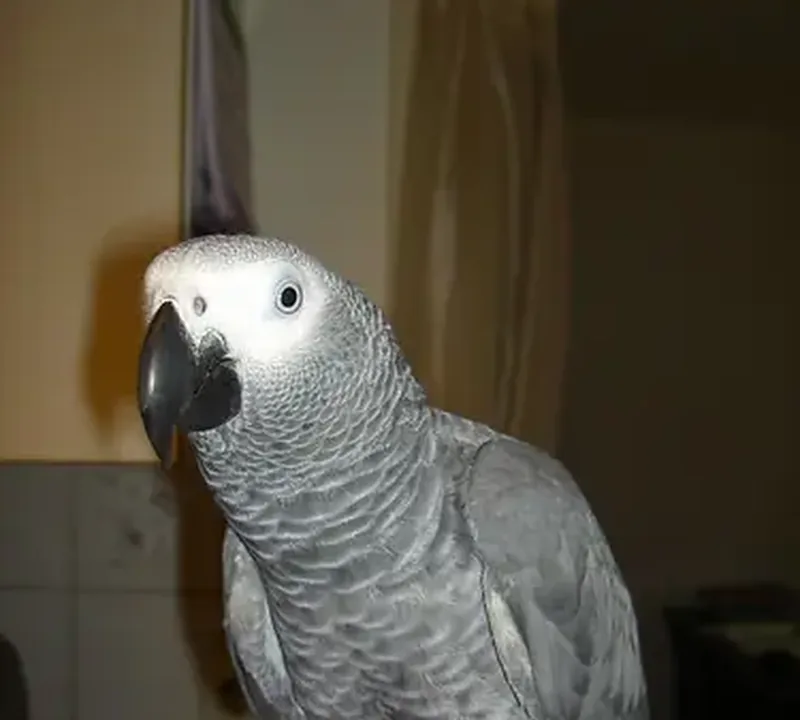
 Hen · confirmed
 Bery
$1,700Congo hen, result on file since her first moult — steady, unhurried, easy to read.
CongoResult on fileBanded
Meet Bery → Psittacus erithacus · Midland, TX · USDA-licensed family aviary since 2014
Here at C.A.Gs we do not guess at a grey's sex, and we do not ask you to. Every captive-bred African Grey on this page had a feather or blood sample run by an avian genetics laboratory, and the result was back in our hands before the bird was ever photographed for sale.
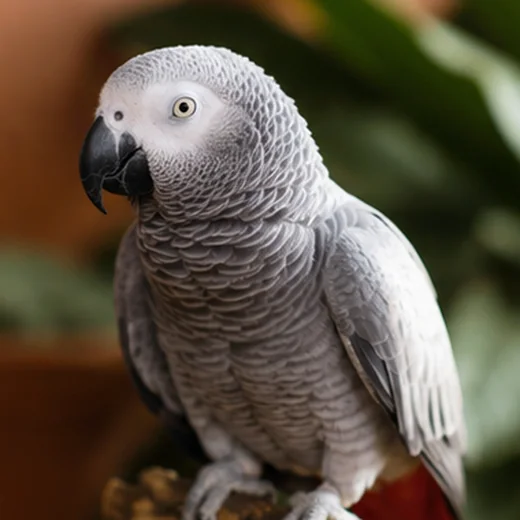
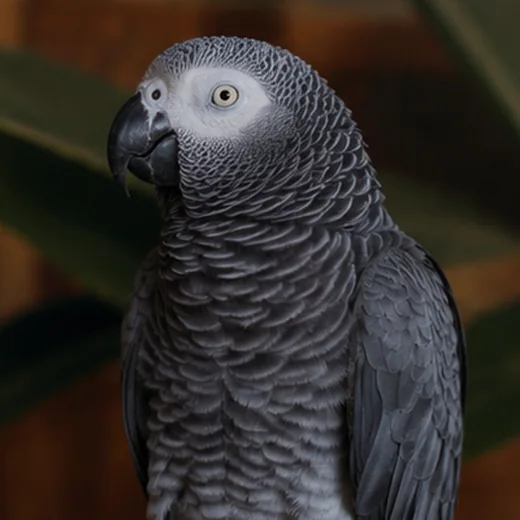
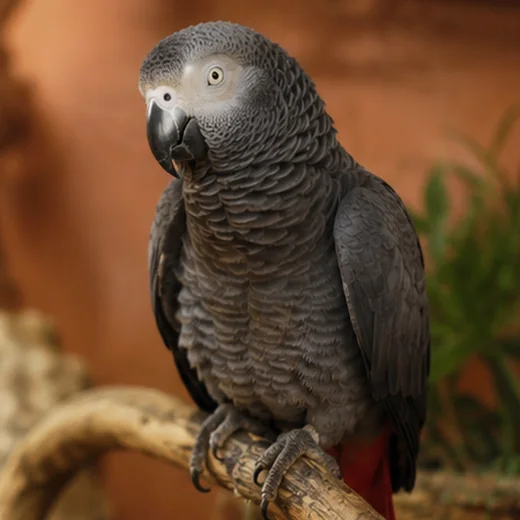

You cannot, and almost everything you will read today says otherwise. Search how to sex an African Grey parrot and the fourth result will tell you to lift the tail and read the feather colour — a method that has never worked on this species and has sent thousands of owners home with the wrong pronoun. We would rather spend the top of a sales page dismantling that than selling you anything.
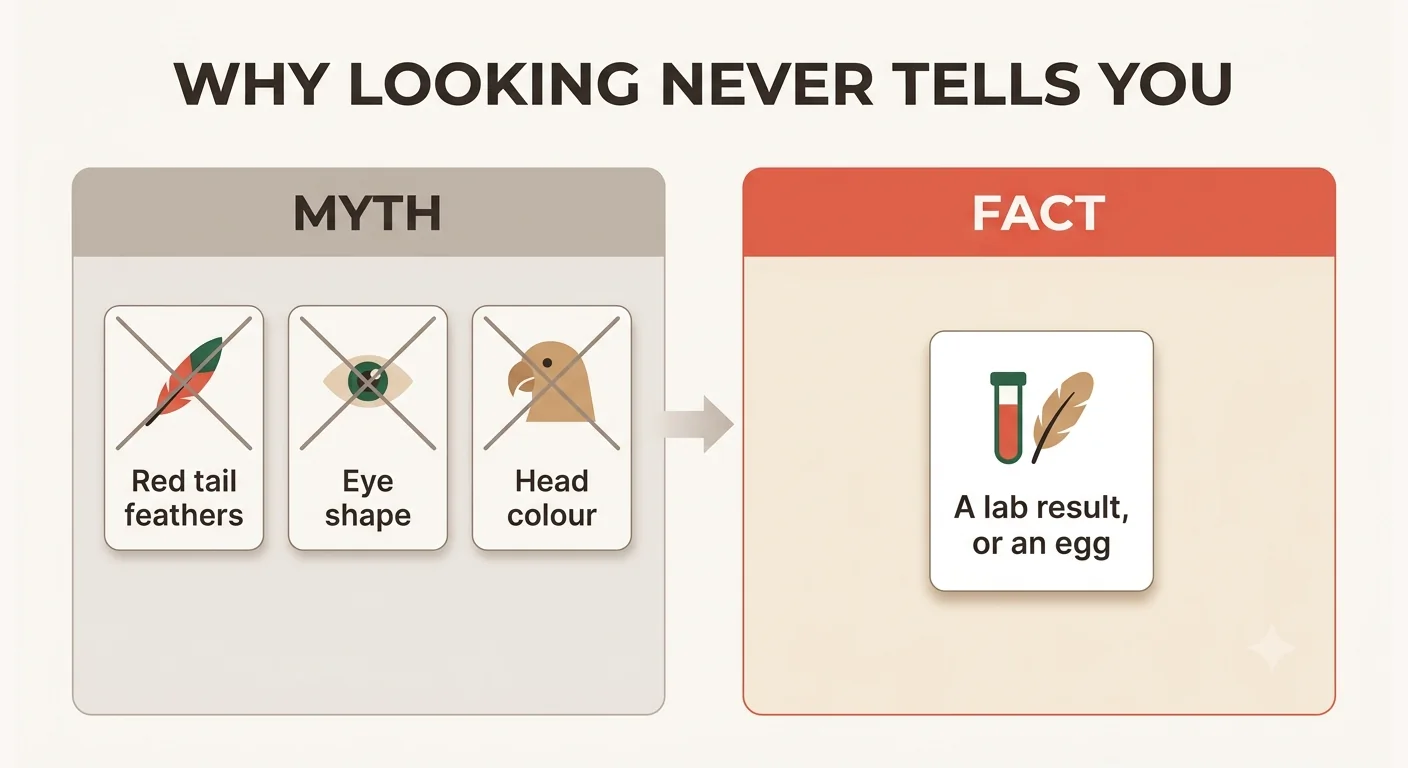
The rule sounds testable, which is exactly why it spreads: red tail equals cock, grey or silvered tail equals hen. It survives because it is easy to remember and because nobody who repeats it ever gets contradicted — the bird cannot object, and most owners never run an assay to find out.
No. A red tail means you have a Congo African Grey. Every healthy Congo carries one, hen and cock alike, and every Timneh carries a maroon one instead. The colour is a subspecies marker, not a sex marker, which is why the rule falls apart the moment somebody applies it to a room with more than one bird in it.
The variants of the myth are more stubborn than the original. Silvered tips on the tail, almond eyes against round ones, a paler crown, a heavier beak — each of these is a real thing you can observe on a real grey, and none of them sorts hens from cocks. They vary with the individual, the moult and the light in the room.
What those cues actually track is time. Tail tips silver as feathers wear and bleach before a moult replaces them; head shade lightens as a juvenile finishes maturing; eye rings change with age from grey through pale yellow. Read a bird's feathers and you are reading its calendar, not its chromosomes.
The correction usually arrives from another owner. Ask a parrot forum whether the bird in the photograph is a hen and the answers arrive fast, unanimous and blunt: greys look identical, no physical feature determines sex, get a test or wait for an egg. It is good advice, freely given by people with nothing to sell.
Because nothing in the buying process ever settled it. Someone buys a grey from a seller who never tested it, guesses at the sex from an article, names the bird accordingly, and then spends years quietly unsure. Our whole argument on this page is that the question should have been closed before money changed hands — by the breeder, at their expense, with the paper to show for it.
Monomorphic is the technical word for the problem, and knowing it changes how you shop. It means the two sexes of a species grow into the same body — same size range, same colouring, same everything a photograph can capture. For Psittacus erithacus that is not a subtlety to squint past; it is the settled description of the bird, which is why a laboratory result is the only honest thing a seller can offer you.
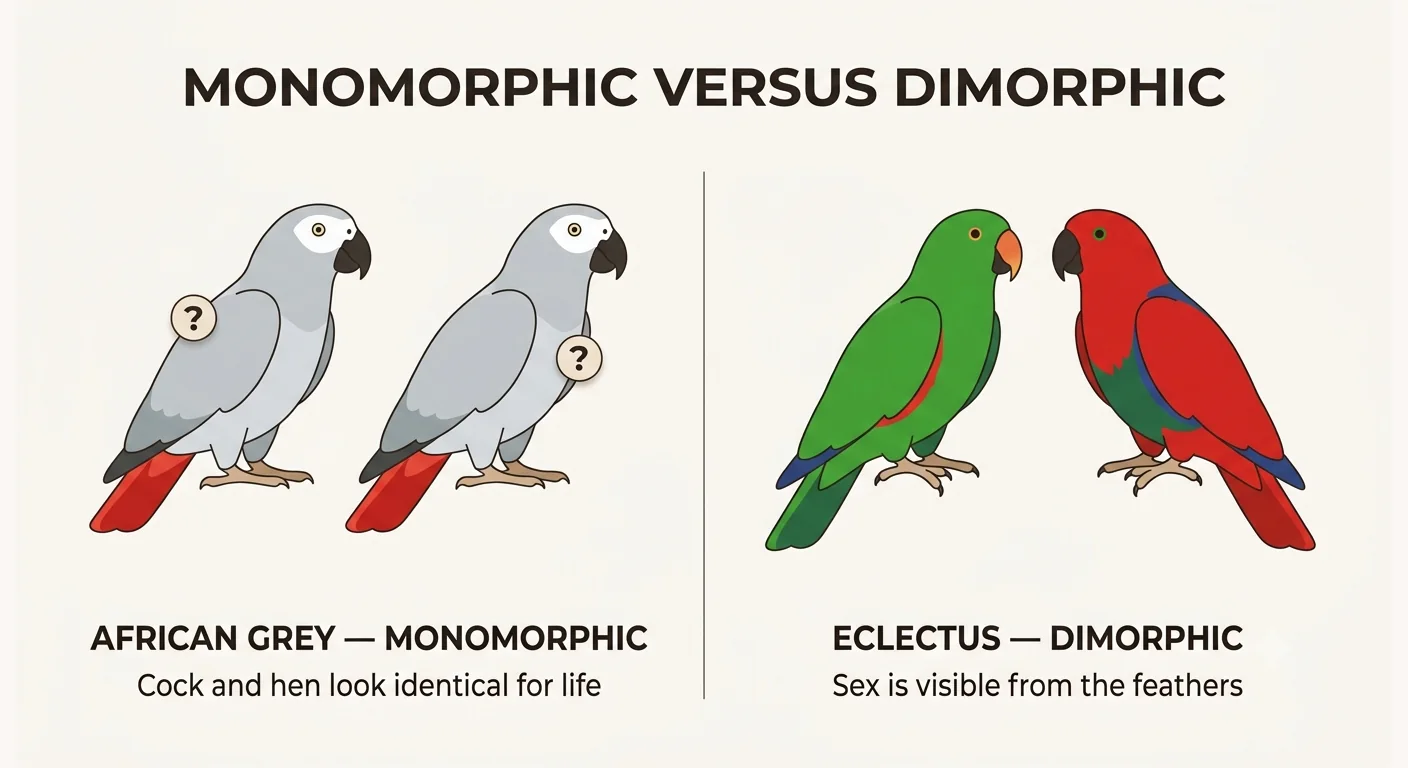
Split the parrot family by this one question and it falls neatly in two. Some species advertise sex in their feathers; the rest keep it to themselves. Greys are firmly in the second group, and no amount of familiarity with your own bird moves them into the first.
An experienced keeper can sex an Eclectus across a room, and will never manage it with a grey. That difference is not about skill — it is about whether the species evolved to signal sex visually at all. The World Parrot Trust's encyclopedia entry for the grey parrot ↗ is a useful outside reference here, because it describes the species without a bird to sell you.
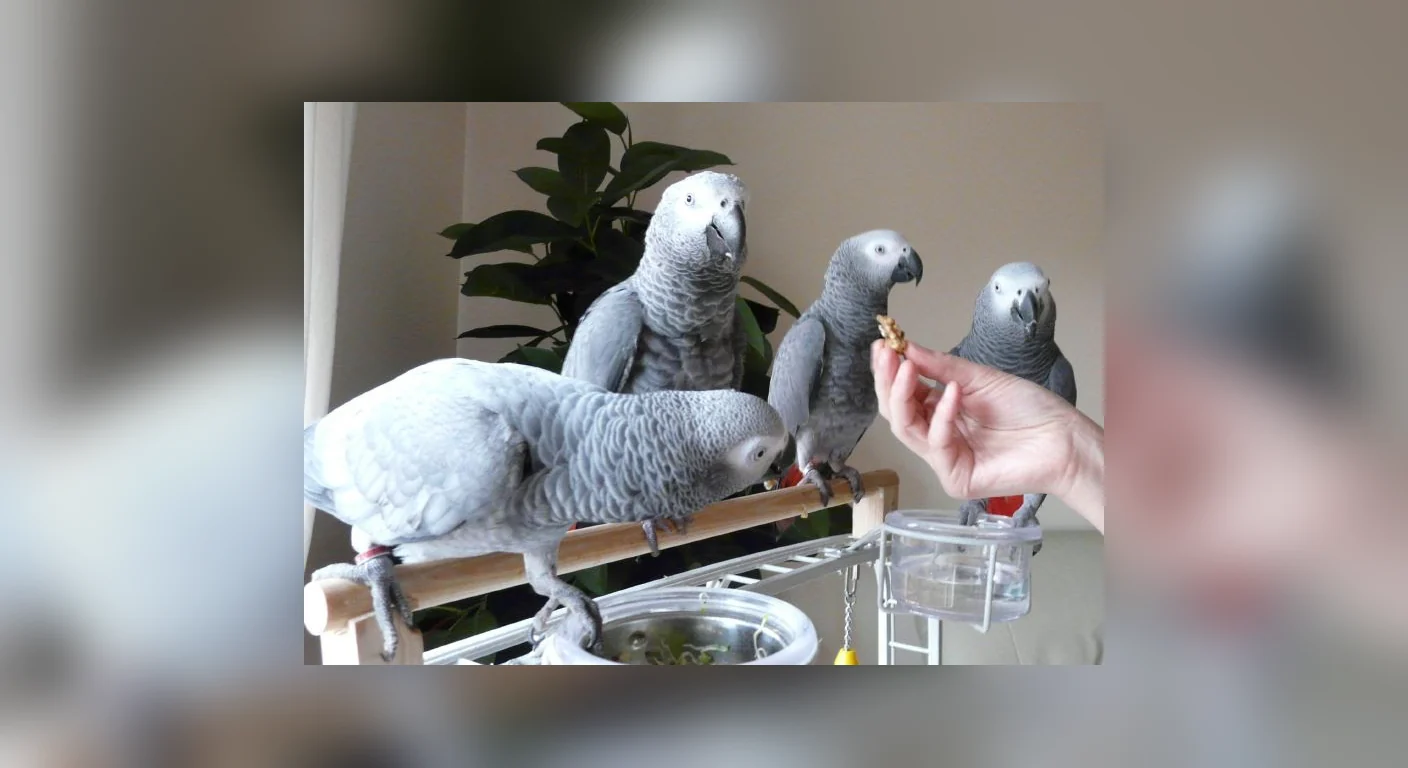
Eclectus cocks are emerald green and hens are scarlet and blue, so plainly different that early naturalists catalogued them as two species. Set that beside two greys on a perch and the contrast makes the point better than any argument: one species answers the question for free, the other only answers it in a laboratory.
Genetics laboratories will happily run a sample from any bird, but nobody sends Eclectus feathers, because the plumage already carries the result. The demand for avian sexing assays comes almost entirely from the monomorphic species — greys, cockatoos, amazons, macaws — where feathers say nothing at all.
Birds do not use the X and Y system people are taught at school. They run on Z and W, and the arrangement is inverted: a cock carries two Z chromosomes and a hen carries one Z and one W. A sexing assay is simply a test for the presence of that W.
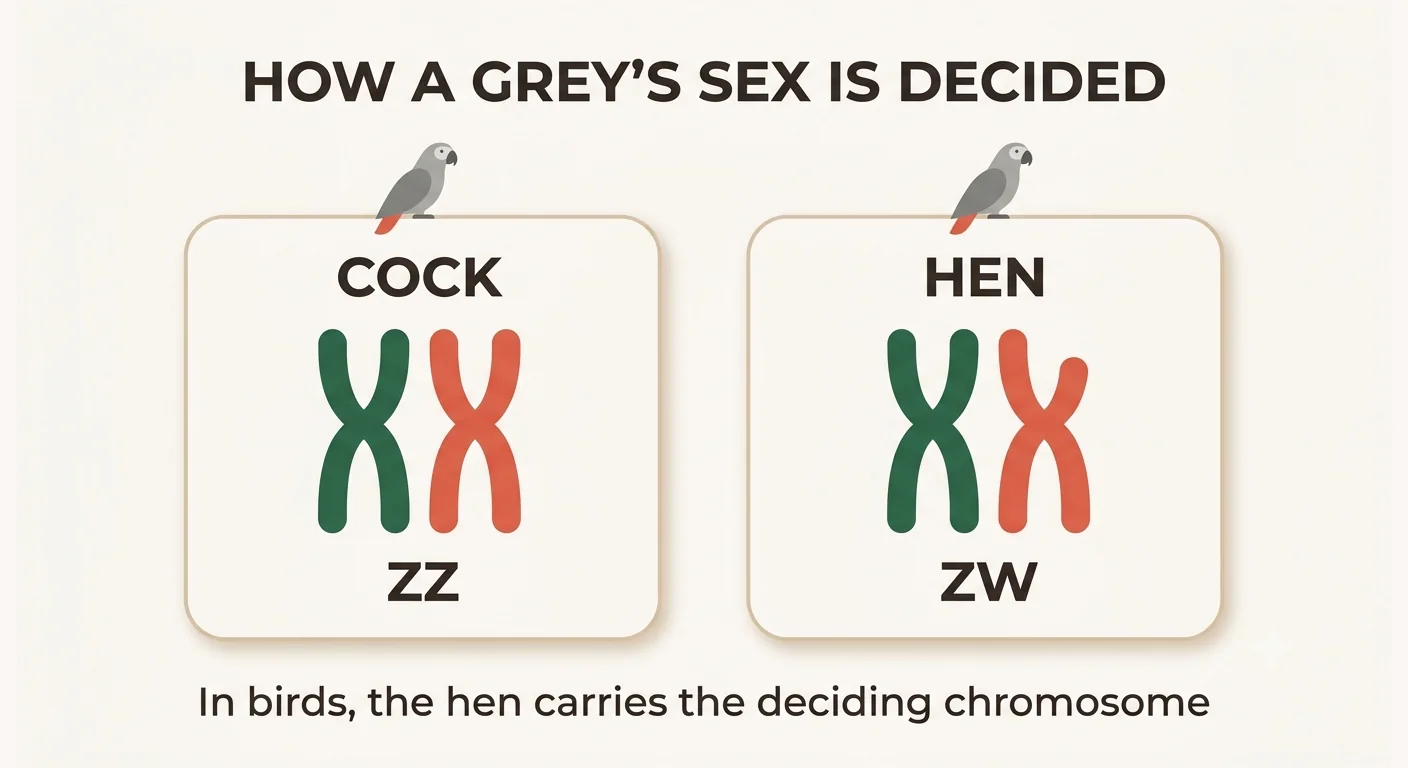
Since a cock can only ever pass on a Z, the hen's contribution decides which way each chick goes. It is a satisfying inversion of the mammal story, and it has a practical edge for us: because the W is a distinct sequence rather than an absence, the assay is looking for something positive to find rather than trying to prove a negative.
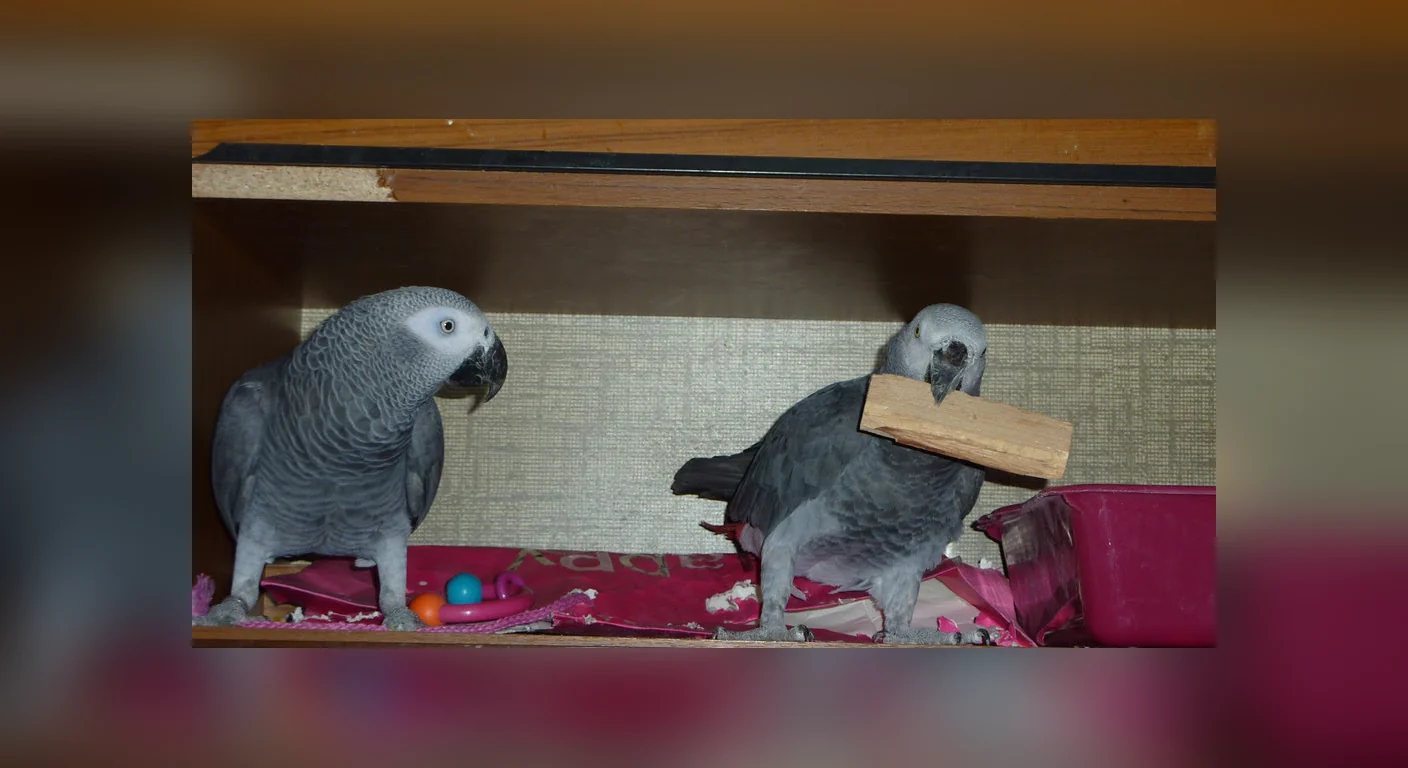
Macy and Letis, the parents behind Jins and Jeni. Every chick's sex was decided on Macy's side of that pairing.
The process is far less dramatic than the word DNA suggests, and we think buyers deserve to see it laid out rather than gestured at. A small sample leaves the bird, travels to a genetics laboratory, gets amplified by PCR until the chromosomes can be read, and comes back as one word on a certificate. Four steps, roughly a fortnight door to door, and no anaesthetic anywhere in it.
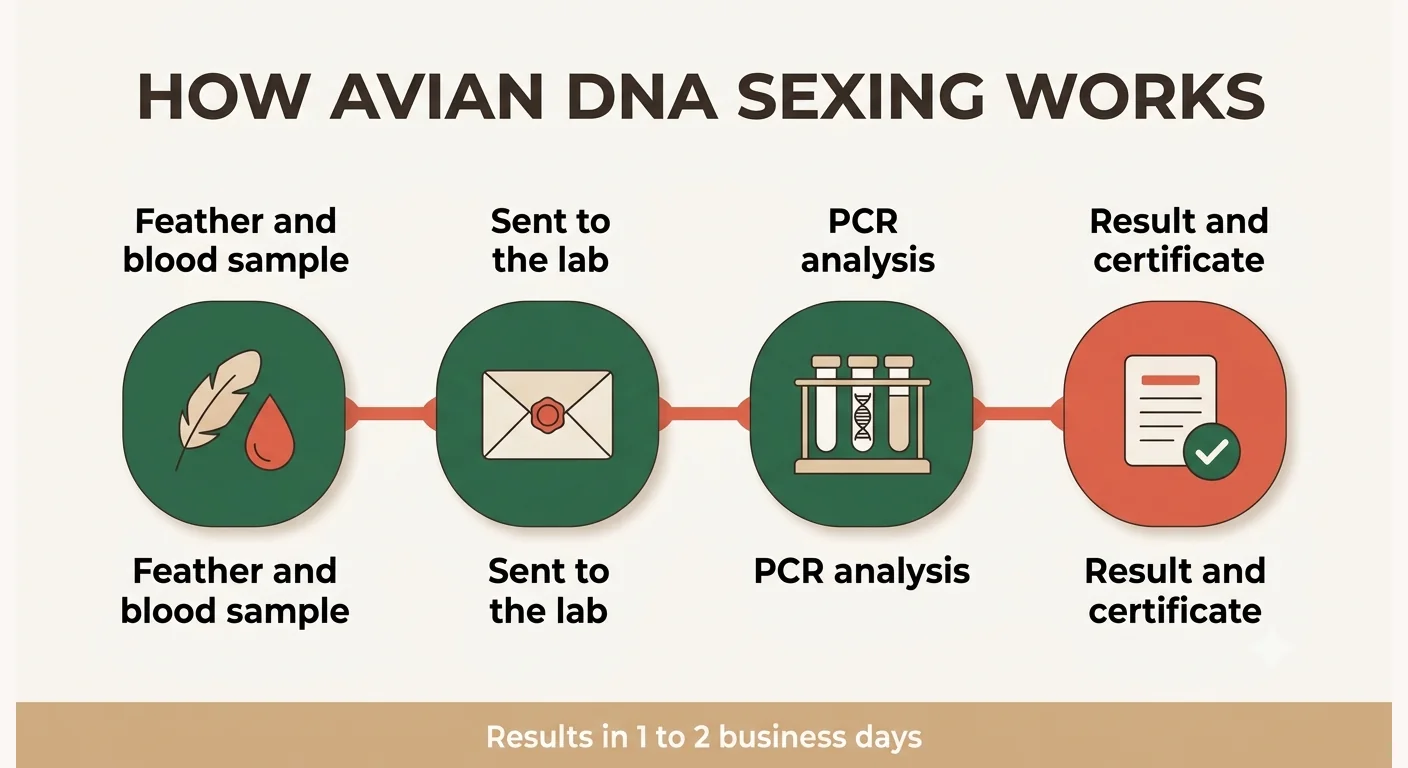
Avian DNA sexing services at Animal Genetics ↗ — the laboratory family we use, formerly trading as Avian Biotech — accept blood, feather and eggshell, and state that all three are equally reliable. That matters practically, because it means the choice of sample is about the bird in front of us on the day rather than about the quality of the answer.
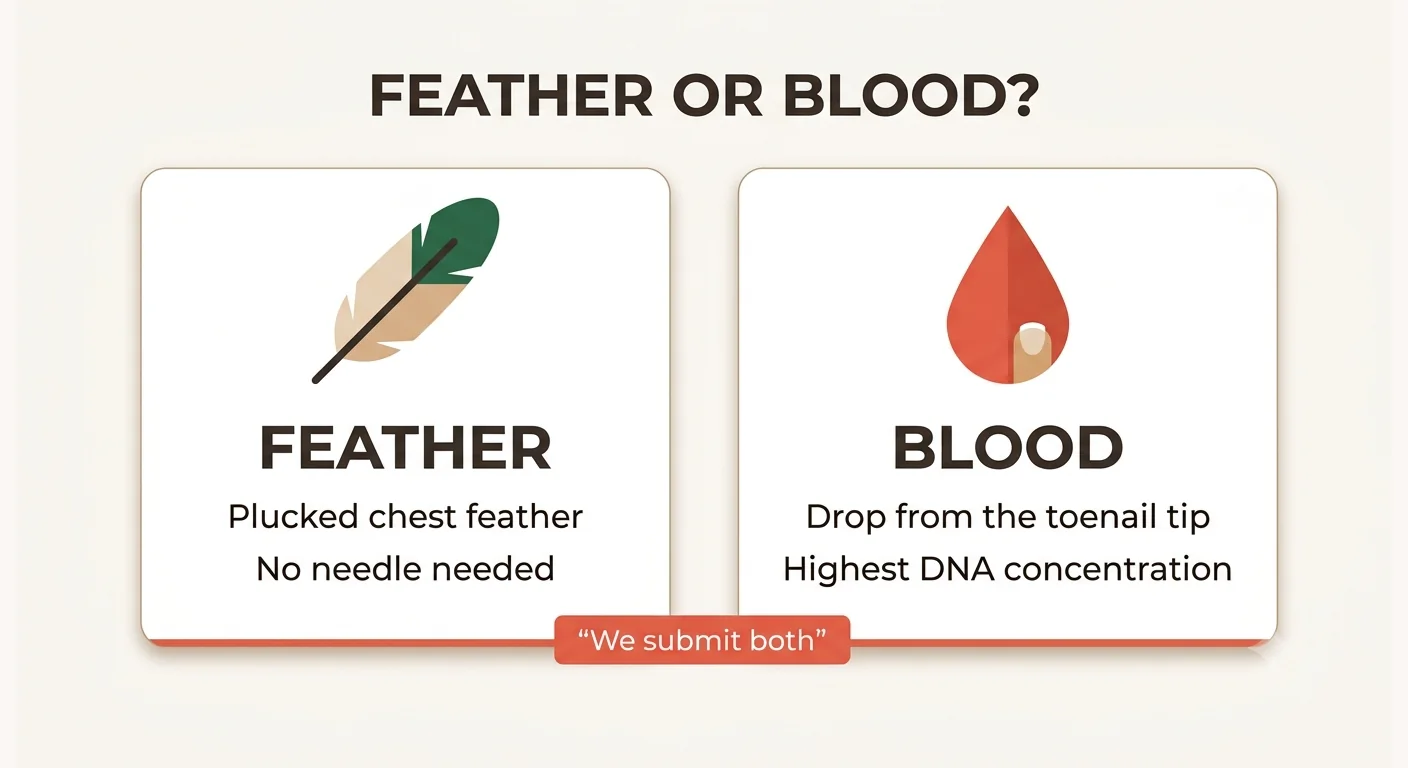
A settled young grey barely notices a few chest feathers coming away, so that is usually where we start. An older bird already having its toenails tipped gives us a blood drop with less fuss than a pluck would cause. Neither route is a compromise; we pick whichever is calmer for that individual, and the certificate records which one it was.
Peer-reviewed comparison of avian sample sources ↗ found molecular sexing from blood more accurate than from oral swabs, for the simple reason that blood carries more DNA per sample. Feather pulp sits comfortably between the two, which is why the pulp has to come with the feather — a shed feather off the cage floor has nothing left in it to read.
The published method is a single drop taken from the very end of a toenail, not a syringe and not a vein. It is the same nick a slightly over-enthusiastic nail trim produces, and it stops within seconds.
Polymerase chain reaction copies a target stretch of DNA over and over until there is enough of it to see. Applied to a grey, the target is the chromosome pair — two Zs for a cock, a Z and a W for a hen — so the readout is a physical pattern rather than an interpretation. That is the whole reason we trust it over our own eyes after twelve years of looking at these birds.
Feather-sample turnaround times published by the laboratory ↗ put the analysis itself at one to two business days. Everything else in the fortnight is postage, which is worth knowing when a seller tells you results are "a few weeks away" — the assay is never the slow part.
That speed is precisely why we have no patience for a bird listed as tested before its result exists. Two working days is not a long wait to hold a page before publishing it.
The published window starts when the sample is logged in at the laboratory. Add a few days each way for the post and you have the realistic timeline we quote buyers who ask how soon a newly hatched chick can be listed with its sex on the page.
Nobody on the first page of results for this search shows you one, so the phrase "certificate included" does a great deal of unexamined work in this market. A real certificate is a short, dull document with seven fields on it, and every one of those fields exists so that somebody can check something. Below is the whole anatomy, field by field, with what each line is for.
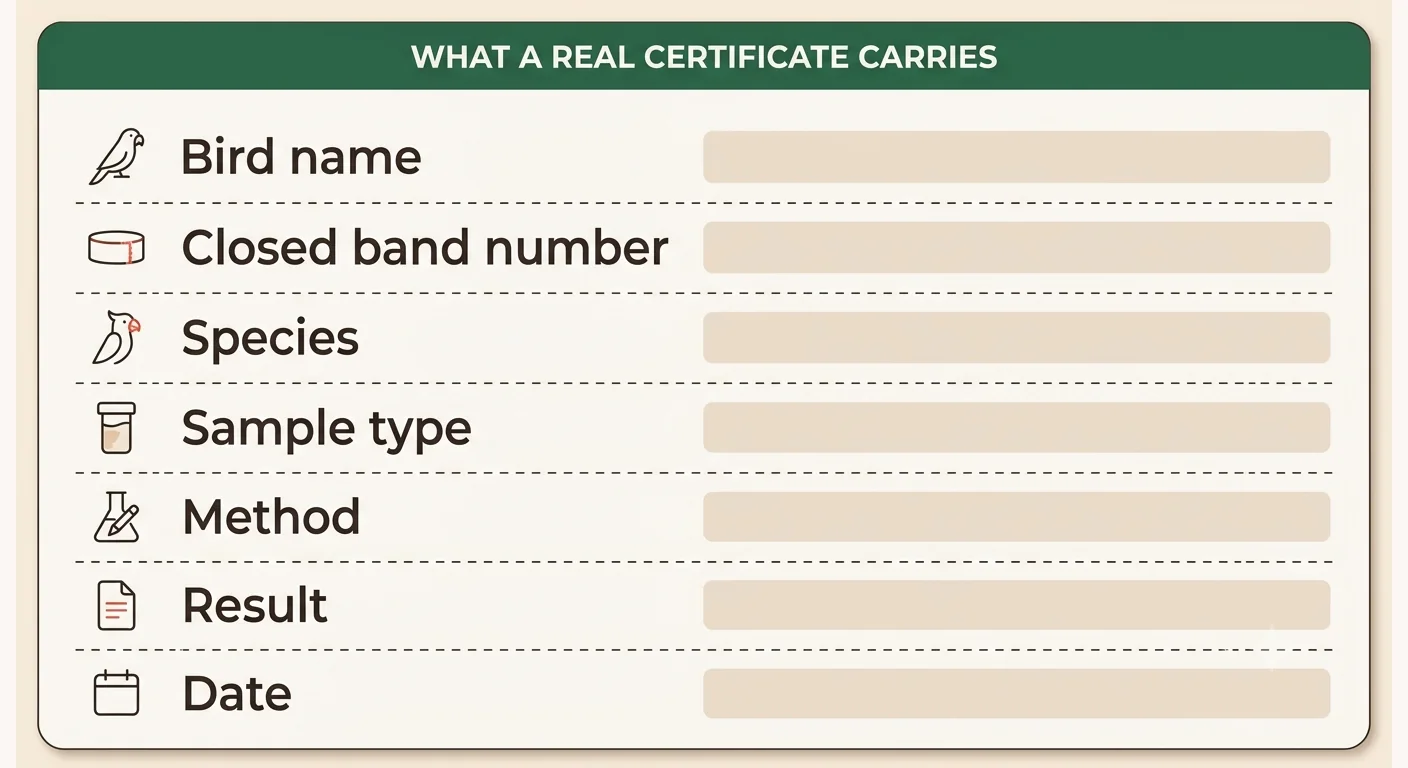
An explanatory diagram of the fields, not a scan of our paperwork — the value bars are deliberately blank.
| Field | What it holds | Why the field exists |
|---|---|---|
| 01Bird name | The name the breeder listed the grey under | Ties the paper to a listing you can point at |
| 02Closed band number | The unique number on the ring fitted at a few weeks old | The only field tying paper to parrot — check it against the leg |
| 03Species | Psittacus erithacus, or Psittacus timneh for a Timneh | Confirms the laboratory ran a grey, not a generic bird panel |
| 04Sample type | Feather, blood or eggshell | Tells you how the material was taken, and by whom |
| 05Method | PCR — polymerase chain reaction, reading the Z and W chromosomes | Separates a molecular assay from a visual opinion |
| 06Result | Male or female, stated without hedging | A hedged result is not a result |
| 07Date and issuing laboratory | When the assay ran, and who signed it off | Lets you ring the laboratory and confirm the record exists |
Read the band, then read the paper, and make sure they agree. That is the entire verification, and it takes about fifteen seconds with the bird on your hand. A seller who cannot produce a certificate whose number matches the ring on the leg has given you a document about somebody else's parrot.
A closed band goes on in the first weeks of life and cannot be slipped off an adult foot, so it stays a permanent identifier in a way a photograph never is. That permanence is what lets a piece of paper written months earlier still mean something on the day you collect the bird.
When we send a certificate ahead of a purchase we cover our laboratory account number, because that identifies our billing rather than your bird. The band number, species, sample type, method, result and date always stay visible. If any seller blanks the band number, ask why — that is the one field a buyer actually needs.
Approximately 99 percent, which is the figure the laboratories publish about themselves and therefore the only one we will quote. It is high enough to plan a household around and honest enough to survive being checked.
Only an egg is, and eggs arrive on their own schedule. Everything before that is a very good instrument with a known error rate — which, for what it is worth, is a far better position than the confident guesswork it replaced.
You will still see sellers advertise 99.9 percent. That figure appears nowhere in the published material of the laboratories doing the work, and a seller quoting it is either repeating something they never checked or improving on it deliberately. We would rather be the page that told you the real number.
Here are the 6 African Greys we can place right now, and every one of them has a laboratory result on file rather than an opinion. Filter them by what the assay came back with — hens, cocks, or the bonded pair that happens to be one of each — and reserve whichever suits the home you are describing to us.
Hen · confirmed Congo hen, result on file since her first moult — steady, unhurried, easy to read.
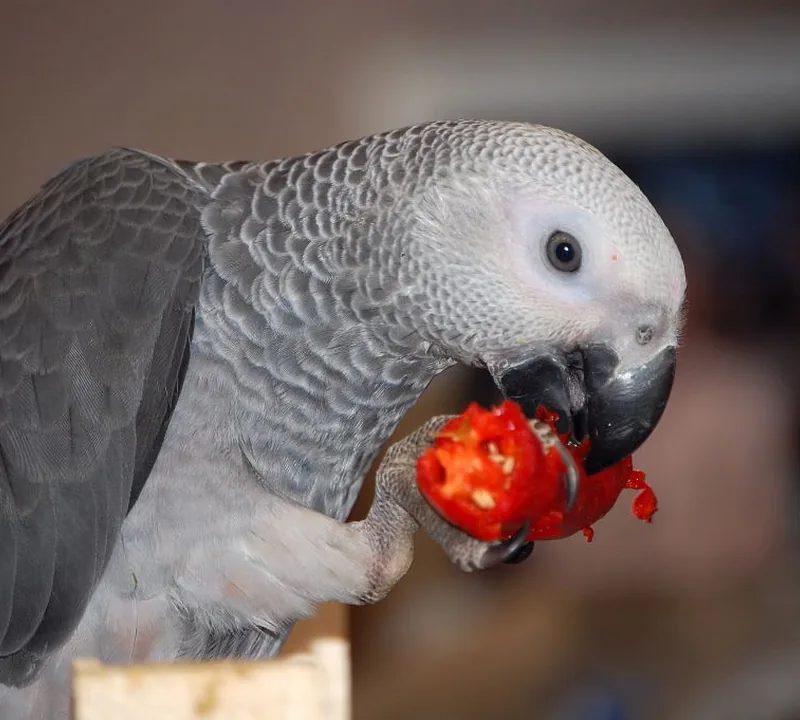 Hen · confirmed
 Congo hen, young and quick; her assay came back before her photographs went up.
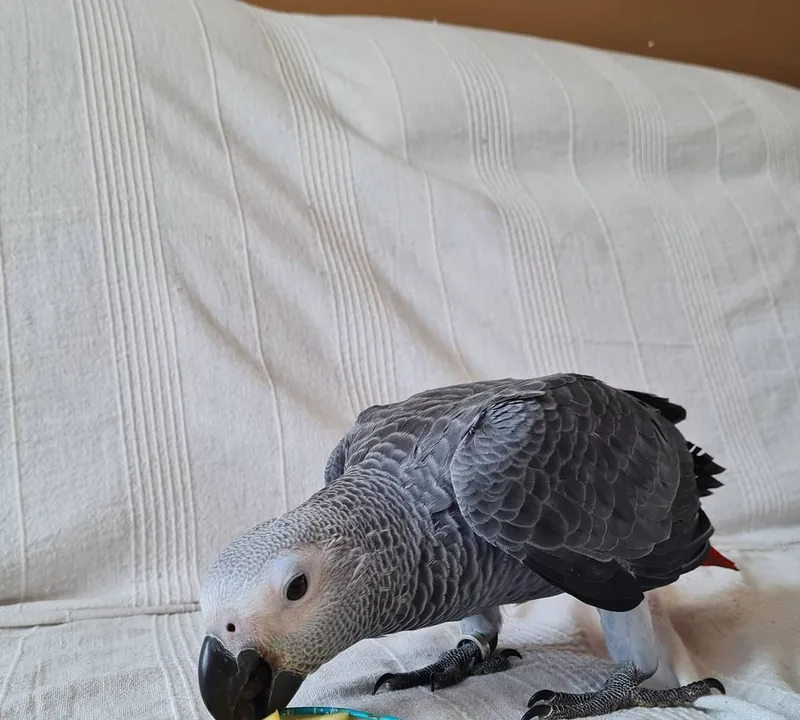 Cock · confirmed
 Congo cock, and nothing about his tail told us that — the laboratory did.
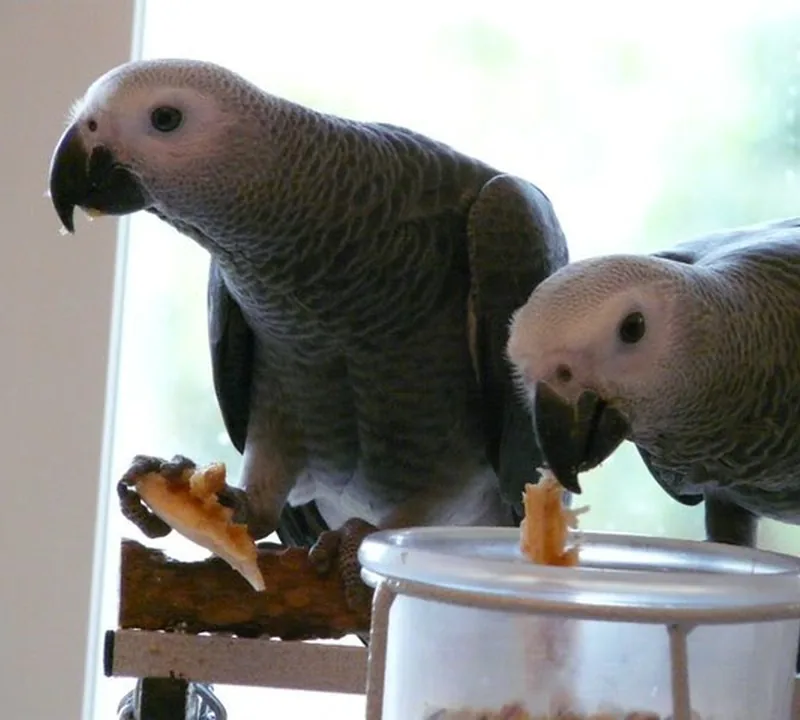 Cock + Hen · confirmed
 One cock, one hen, sold together. Look at them and you still cannot tell which is which.
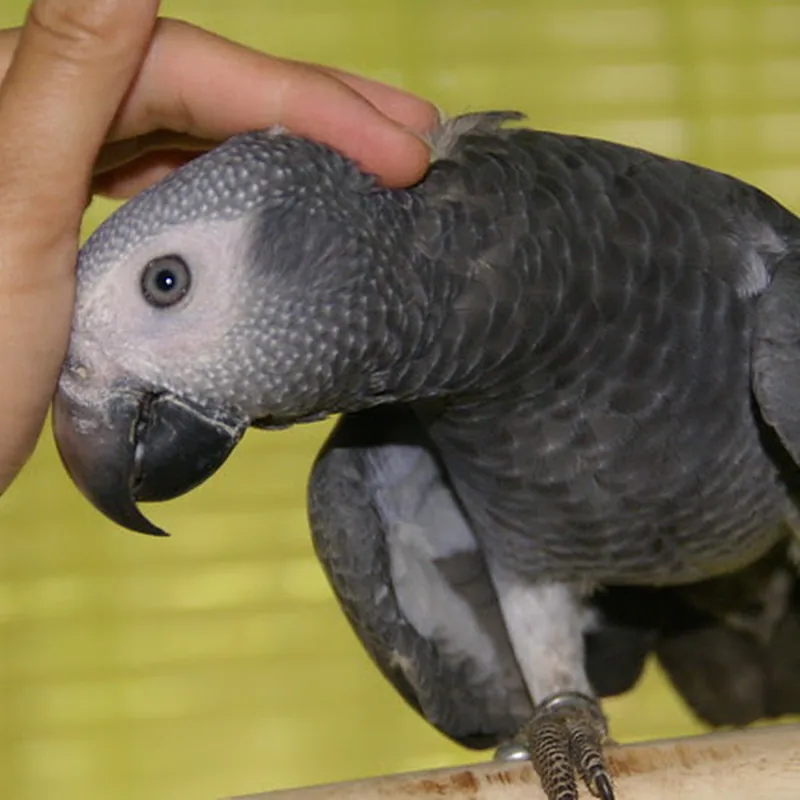 Cock · confirmed
 Timneh cock out of Levi and Rily, confirmed by assay rather than by eye.
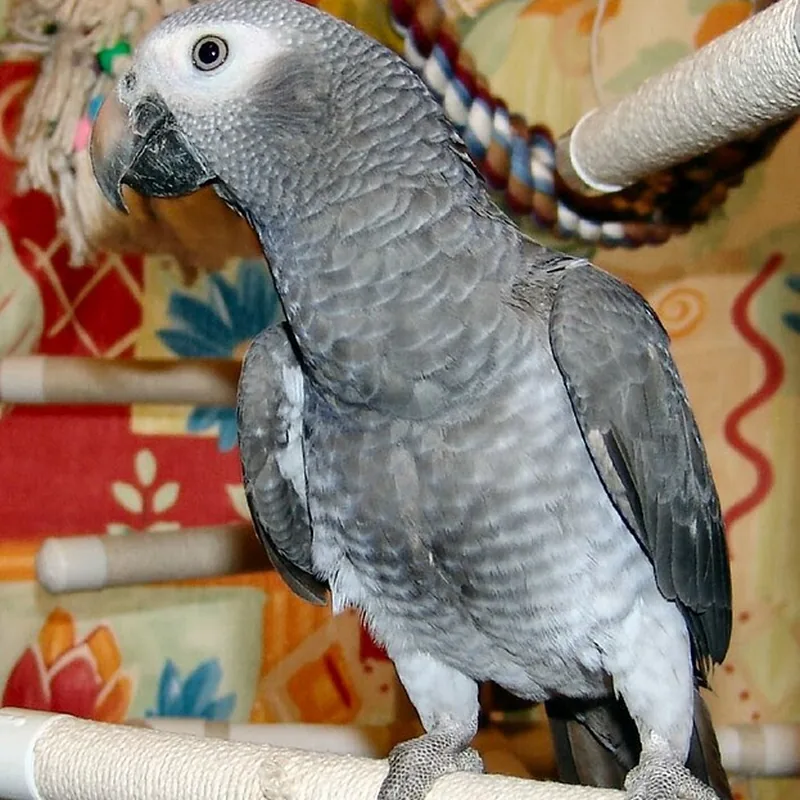 Hen · confirmed
 Timneh hen, gentle and deliberate; her feather sample answered the question at once.
The split at the moment runs 3 hens, 2 cocks and one pair, across both subspecies. Our Congo versus Timneh comparison is the place to settle which of the two suits you before the sex question even comes up, since subspecies changes far more about daily life than chromosomes do.
Every card above carries the same four confirmations: the subspecies, the assay result, a closed band, and a real price. Nothing on this page is a placeholder for a bird we expect to have later.
If a chick has hatched here but its sample has not come back, it does not appear on this page at all. That is a rule rather than a preference, and it is the reason our list is sometimes shorter than a competitor's.
Ask for any of the 6 birds by name and we will read you the band number and the certificate together, on a video call, before you send a deposit.
Forty to sixty dollars, itemised separately from the bird. We publish that because the alternative — the word "included", floating free of any figure — is what every seller on the first page of results does, and it makes it impossible for a buyer to work out whether the testing happened at all.
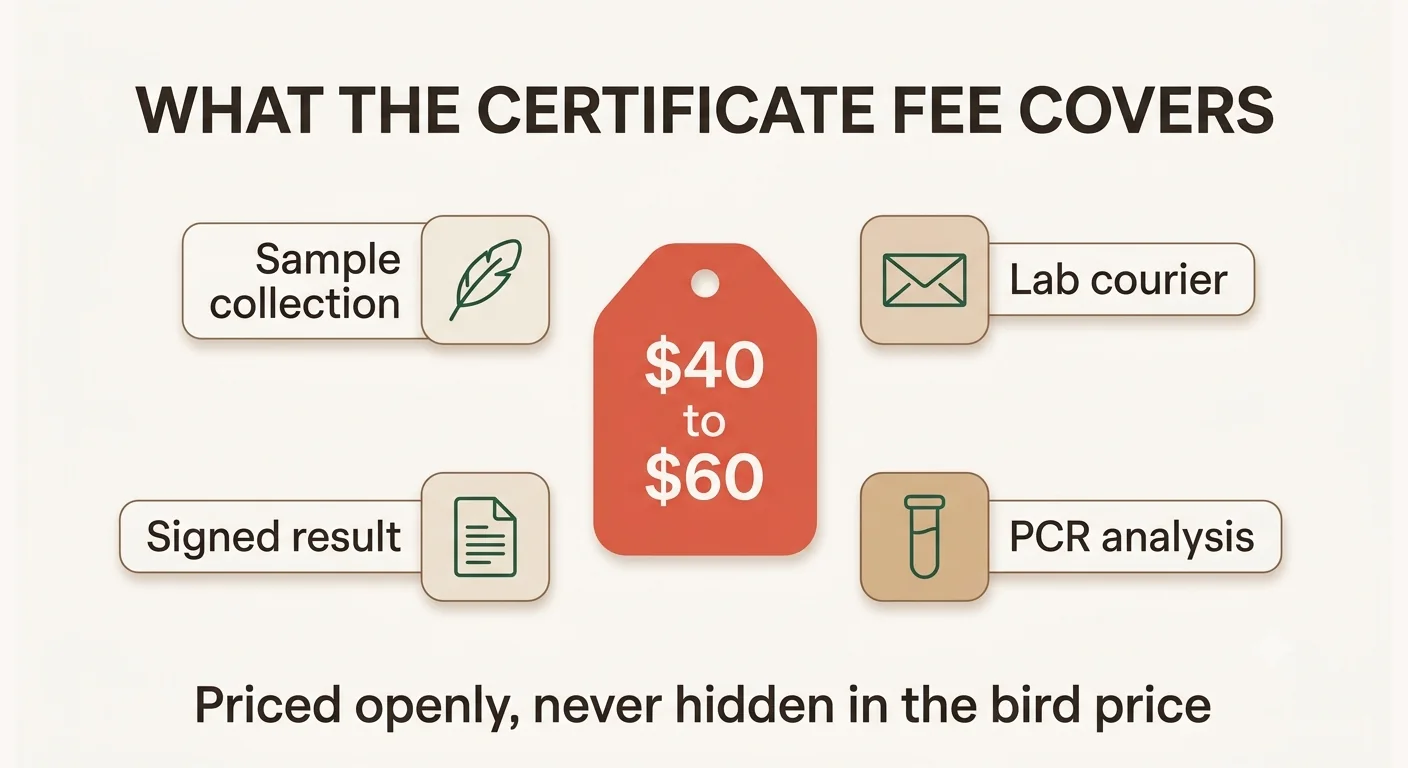
A hidden cost cannot be checked, and anything that cannot be checked is worth nothing as a trust signal. Publishing the number lets you compare it against the laboratory fees advertised openly online, see that our margin on it is modest, and conclude for yourself that the work is real.
It is not, and an earlier version of this page said otherwise. We have corrected that. The bird's price covers the bird; the certificate is a separate line you can see, question and decline to pay for if you would rather arrange your own testing through an avian vet.
Where a particular bird lands inside that band depends on the sample and the courier rather than on the grey itself. Nobody pays more because their bird is more expensive.
Taking the sample cleanly, packaging and posting it, the laboratory's own per-sample charge, the return post, and issuing a certificate tied to the band number. Published laboratory fees for the assay alone sit around $17 to $25; the difference is handling, not mystery.
It can, and this is the part of avian genetics no competitor on our SERP connects. The same feather pulp that reveals a Z and a W will also run the PCR panels for psittacine beak and feather disease and for avian polyomavirus. One pull from one bird, one envelope, and you learn who the grey is and whether it is carrying either of the two viruses that most often end badly.
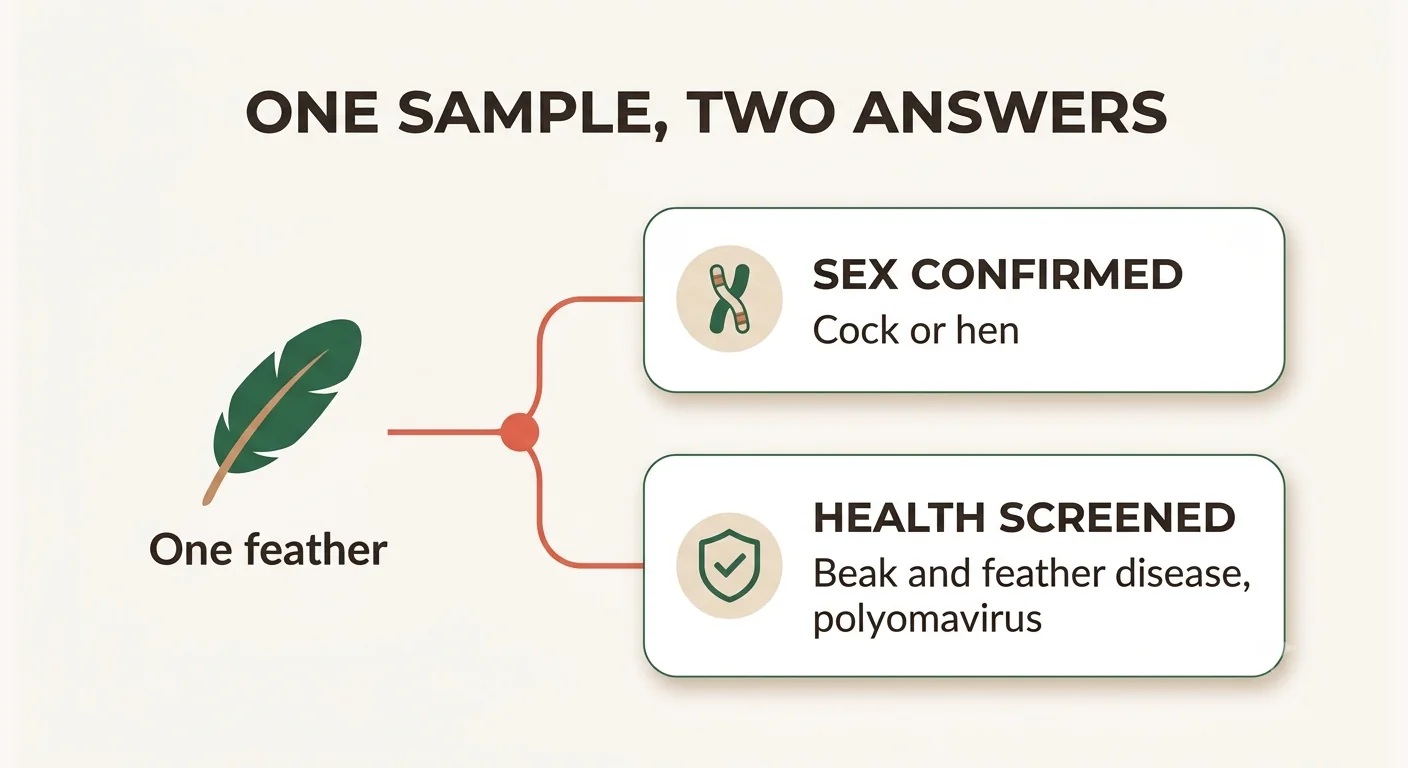
Our health-guarantee page sets out what we put in writing once those panels come back, so we will not repeat it here. What belongs on this page is the logistics: the disease screening is not a separate ordeal for the bird, because the material has already left it.
Because the awkward moment for a buyer is the same in both cases — asking a stranger to prove something about an animal you have not met. Asking once, about one sample, is easier than asking twice, and a seller who ran both is telling you something about how they operate. The Association of Avian Veterinarians directory ↗ will find you an avian vet who can repeat either panel independently if you would like a second opinion.
Both are PCR tests looking for viral DNA in the sample, which is why the same feather or blood draw serves all three questions. It is the single most practical thing we know about avian testing, and it is worth asking any breeder whether they used it.
Because it is an advertisement for a fact that does not exist yet. We have watched competitor accounts post a new chick with "DNA pending" underneath it, take enquiries all week, and never publish the result — and the honest reading of that is simple: the sale closed before the answer arrived, so the answer stopped mattering to anyone but the buyer.
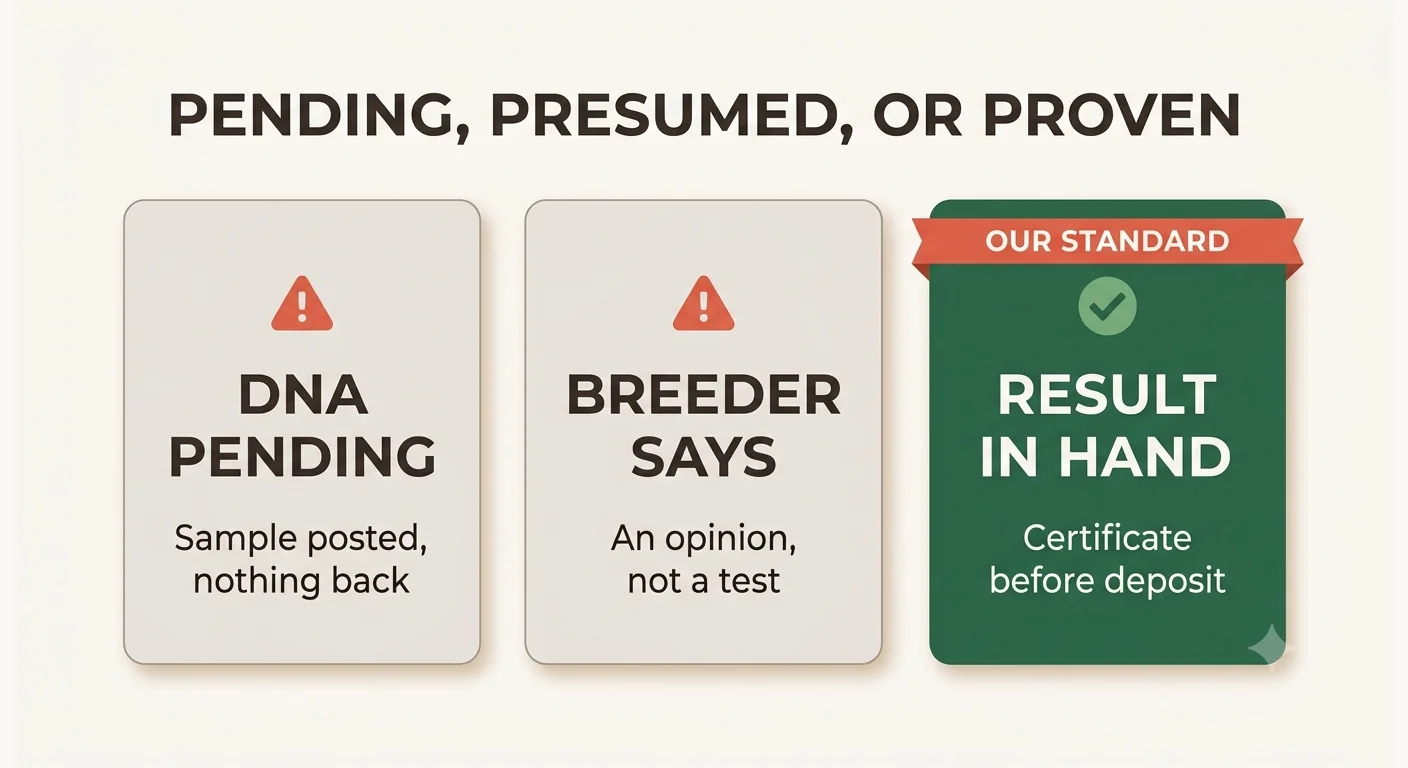
They shade into each other, and all three end with you owning a bird of unconfirmed sex. Pending means the sample is somewhere in the postal system. Presumed means somebody looked. "Breeder says" means somebody looked and was confident about it.
Four questions, and they take a minute: which laboratory ran it, what sample went in, what date the result came back, and what band number is printed on the certificate. Any breeder who actually tested the bird can answer all four from memory or from a folder. Our scam guide puts those questions alongside the other checks worth running before money moves.
A deposit changes the conversation. Before it, you are a buyer choosing between sellers; after it, you are somebody hoping a document turns up. Ask while you still have the leverage.
Two working days at the laboratory is not long enough to justify publishing a claim we cannot yet support, so we hold the page instead. It costs us a week of listing time per chick and we consider that a fair trade.
This is the uncomfortable half of the argument we have been making all page. A DNA certificate is a genuine trust signal, which is exactly why it gets bolted onto listings that deserve none — and right now a site ranking on page one for this very search is selling Congo greys at $750 under a "DNA Sexing Certificate Included" banner, with a struck-through $2,500 beside it.
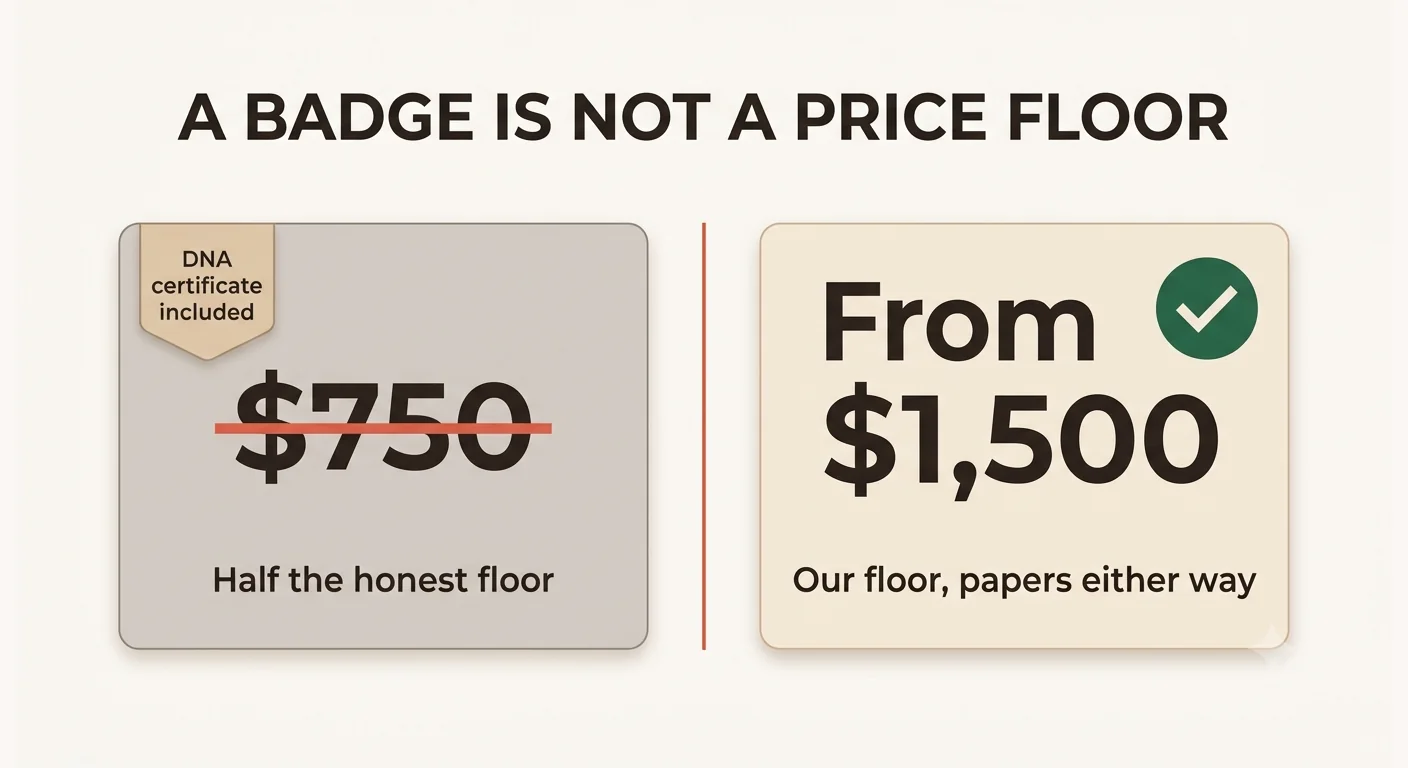
Look at that seller's own published price guide and it puts Congos at $2,500 to $3,200 — then discounts every bird on the site by roughly seventy percent at once, simultaneously, under a limited-time banner. Real aviaries do not clear their entire stock at half the cost of raising it, and a certificate badge does not change that arithmetic.
Because a certificate is a claim about one small fact and a price is a claim about everything else — incubation, months of feeding, veterinary care, paperwork, and whether the bird exists. A seller who wants to seem legitimate cheaply will always reach for the smallest verifiable-looking thing on the list.
We have never placed a grey below it and we are not going to. If a listing pairs a certificate badge with a price under that floor, the certificate is the least reliable thing on the page.
Less than most buyers hope. Once the certificate has settled the question, the honest follow-up is that it predicts fewer things about daily life than a good look at the individual bird does — and we would rather say so here than sell the result as more useful than it is.
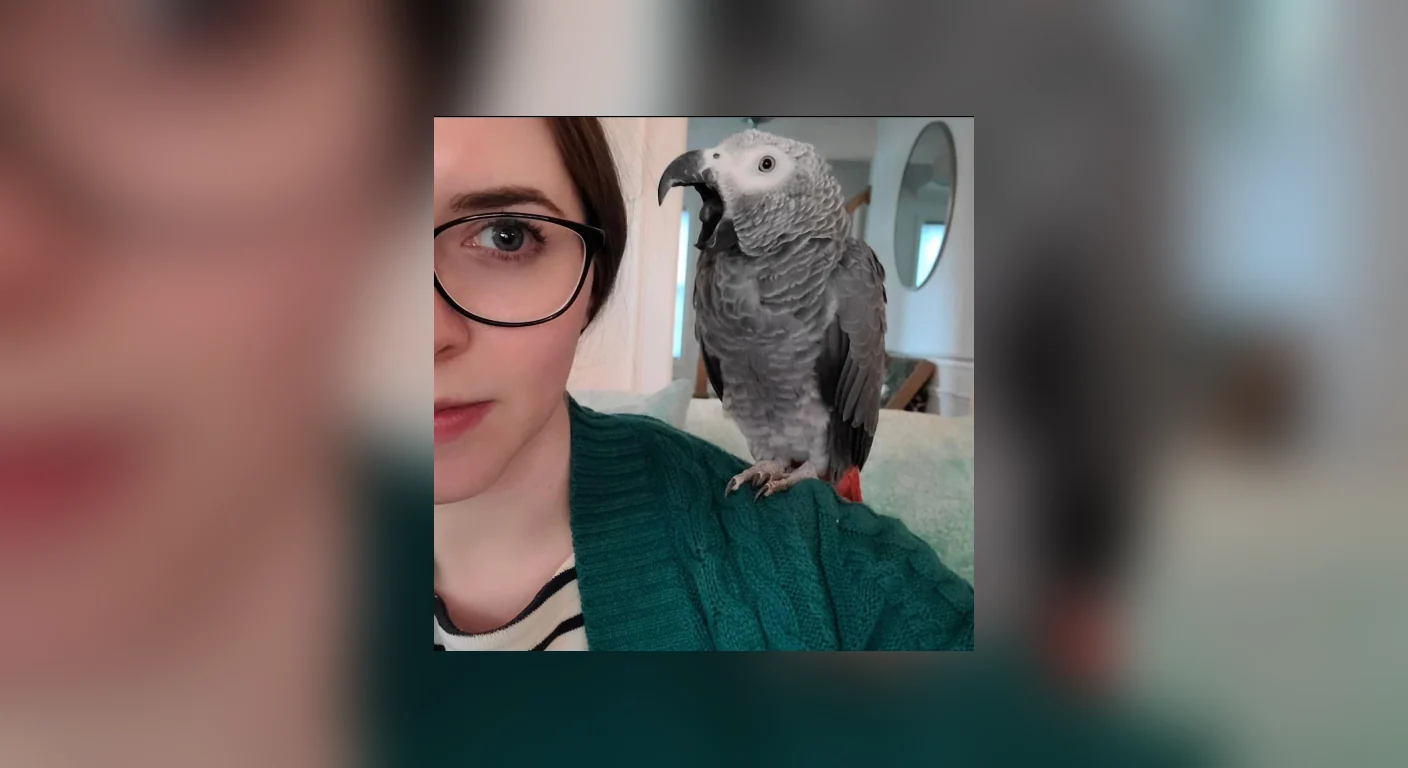
It predicts the possibility of eggs, which is worth planning for, and it settles what to call the bird. It does not reliably predict talking, temperament or how quickly a grey attaches to you. Our male versus female comparison takes that question apart properly, with the behavioural evidence weighed rather than summarised — this page's job was only to get you a trustworthy answer to start from.
Yes, when the bird is captive-bred in the USA and its paperwork is in order — which describes every grey we place. The species sits on CITES Appendix I, and that listing governs international movement rather than whether an American family may keep one that hatched in Texas.
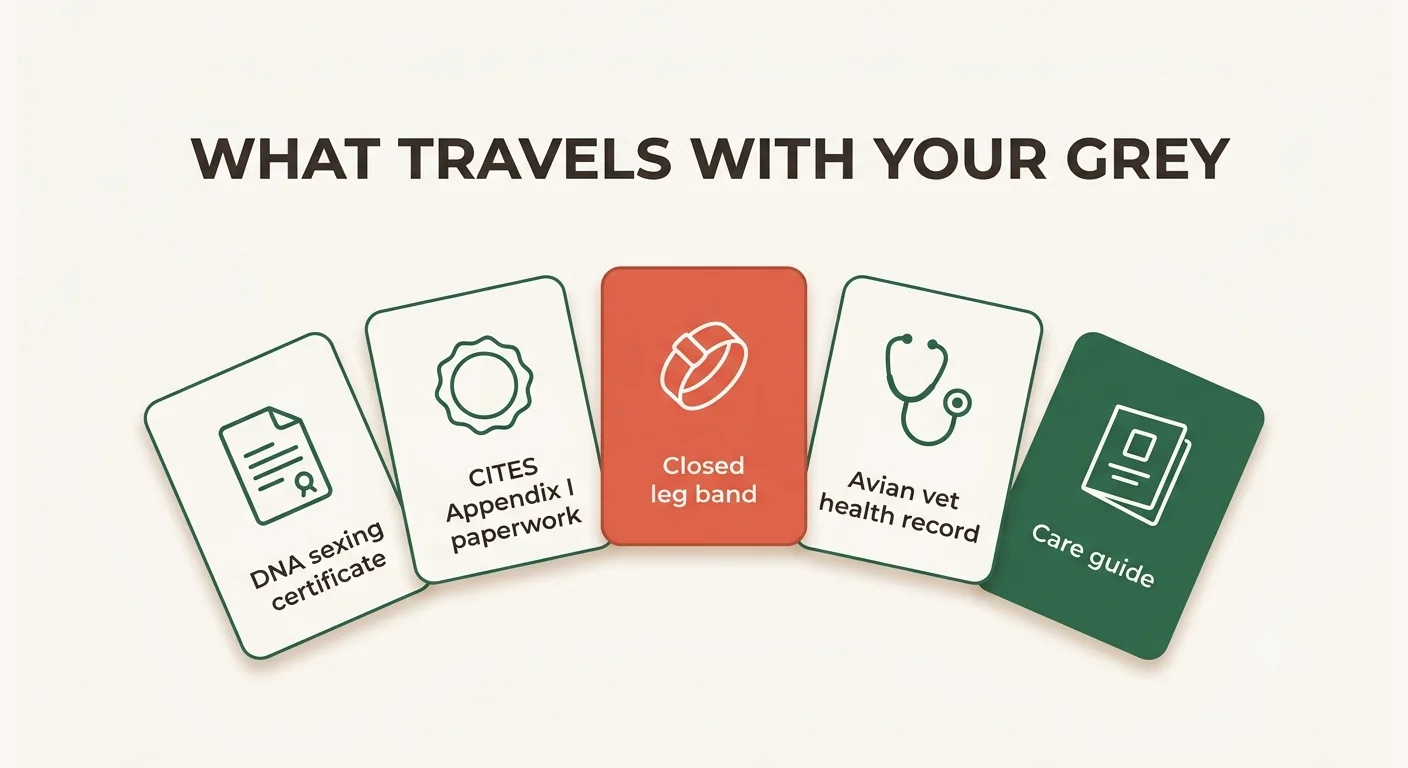
The CITES appendices, where the grey parrot listing sits ↗ explain the uplisting that took effect in 2017. Nothing we sell has ever been wild-caught, and nothing crosses a border — our birds hatch here, fly domestically, and travel with the documents that prove it.
Our documentation page walks through each item in detail. On a sexed bird the folder gains one extra sheet — the certificate — which sits alongside the CITES paperwork, the closed band record, the avian vet health record and the care guide.
As cargo rather than luggage, in a ventilated crate meeting the IATA Live Animals Regulations, with the certificate riding in the folder taped to its door. There are three ways to take delivery, and the price of each sits on this page rather than arriving after you have committed.

Ships nationwide · $185 airport · $350 home · Pickup in Midland, TX (within 2–3 hours)
Delta, United and American all run live-animal cargo programmes we have used for years, and the crate is ventilated, water-fitted and labelled to the IATA Live Animals Regulations. If you live within two or three hours of Midland, collecting in person is free and is genuinely the calmest option for the bird.
Two of our buyers wrote these after their birds landed, and we publish them unedited. Our rating stands at 4.9 across 52 reviews — a real number we can produce the underlying reviews for, which is more than the initials-only testimonials on the sites ranking beside us.
If you're looking for an african gray bird for sale, I highly recommend C.A.Gs. My bird arrived exactly as promised — healthy, curious, and already comfortable around people. The updates throughout the process and the professionalism of the C.A.Gs team gave me complete confidence. It's rare to find a breeder that truly cares about both the birds and their customers.
 Stanley PerkinOceanside, CA · Verified C.A.Gs buyer
 My African grey parrot purchase through C.A.Gs couldn't have gone better. Every question I had was answered promptly, and I received regular updates before my bird arrived. My African Grey is healthy, intelligent, and already becoming a wonderful member of our family. The quality of care and customer service from C.A.Gs exceeded my expectations.
 Jesse OvalleBaton Rouge, LA · Verified C.A.Gs buyer
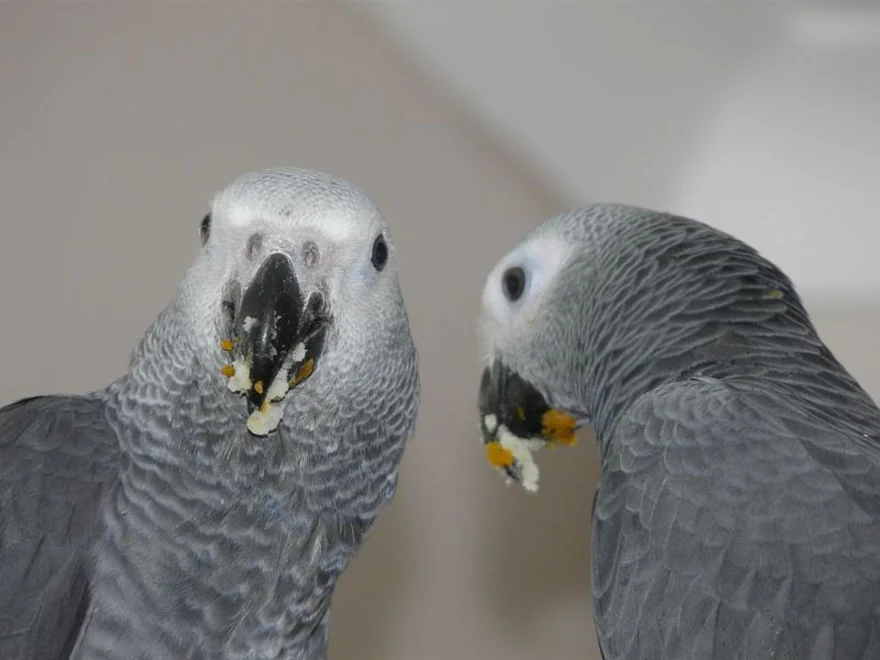
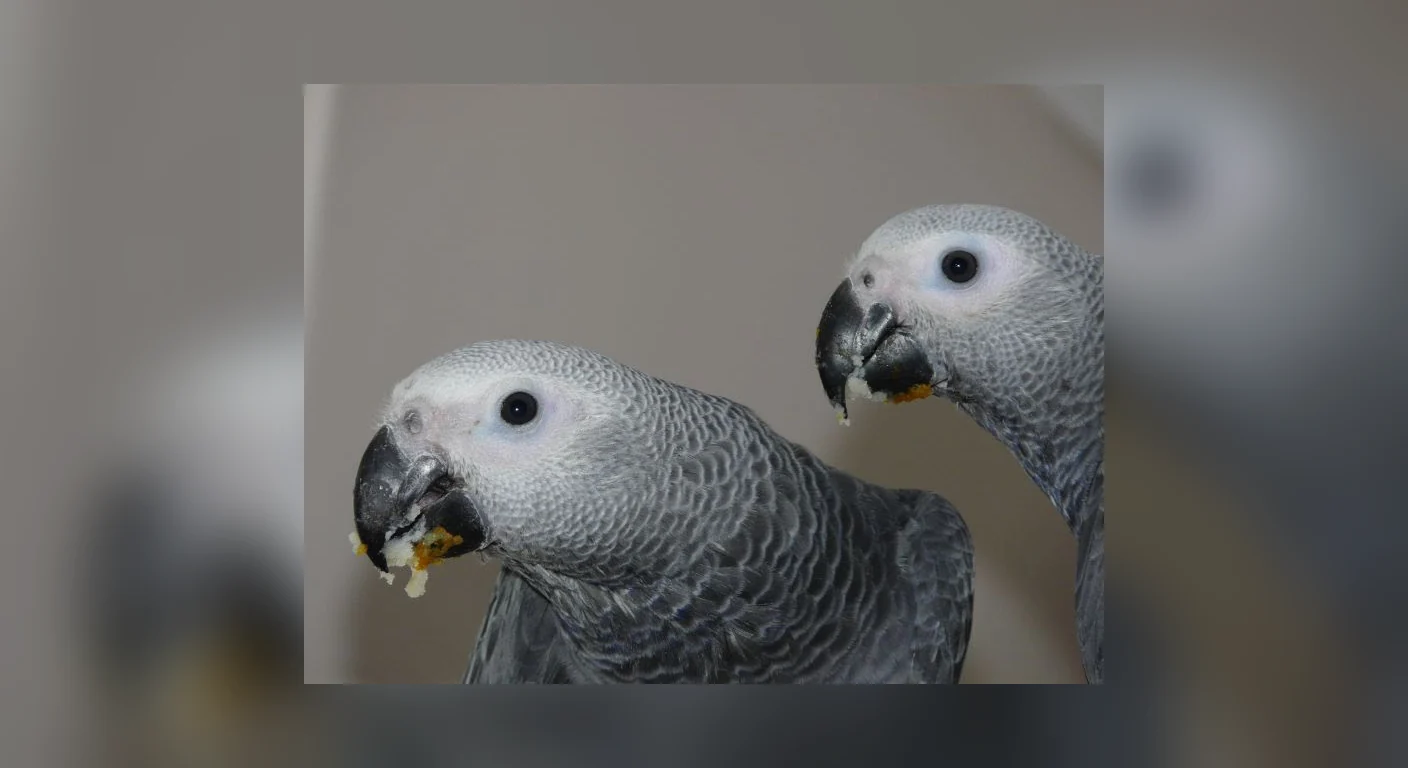
 Photographs can be lifted from someone else's aviary; a video of two named birds feeding together is harder to fake and easier to check. This is Jins and Jeni sharing a bowl — one cock, one hen, and nothing on either of them that would tell you which.
We pulled the first page of results for this search and read what each seller actually publishes, rather than what their badges imply. The table below is that audit, and every line in the right-hand column comes from a page we fetched rather than from an assumption about competitors.
| On this question | C.A.Gs | Page-one sellers we checked |
|---|---|---|
| Names the testing laboratory | Yes — Avian Biotech, now part of Animal Genetics | No laboratory named on any page-one listing we checked |
| States the sample type | Feather or blood, stated per bird | Not stated anywhere |
| Publishes an accuracy figure | Approximately 99%, matching the labs | Silent, or claiming 99.9% |
| Prices the certificate | $40–$60, itemised separately | “Included”, with no figure given |
| Lists birds before results return | Never — result in hand, or it is not listed | “DNA pending” listings observed |
| Lowest Congo price advertised | A $1,500 floor | $750–$820 under a certificate badge |
The USDA Animal Welfare Act licence lookup ↗ lets you check us — and them — in under a minute, and our breeder-vetting page lists the rest of the checks worth running on anyone selling a grey.
This page deliberately stopped short of four subjects that deserve their own space. Each of these was written the same way — by the people who raise the birds, about things we can show you.

Also from our aviary
Eggs priced by sex are the clearest example of a claim no lab can support, and that page sets out what we will and will not sell unhatched.
A lab-sexed adult pair arrives with two certificates rather than one, which is the only version of a pair worth paying a premium for.
The Congo pair listed separately was sexed by the same assay and ships with its own CITES paperwork.
These are the ten questions that reach us most often about sexing, taken from what people actually type into search and post on owner forums. Several of them have answers that will annoy somebody selling a cheaper bird.
No, and this is the single most repeated piece of bad advice about the species. Greys are monomorphic: hens and cocks carry the same plumage, the same red or maroon tail and the same face mask, for life. Body size, eye shape, head shade and tail tipping all vary between individuals and with age, so they will happily let you build a confident guess that turns out wrong. Only two things settle it — a laboratory assay, or an egg.
Laboratories publish accuracy of approximately 99 percent, and that is the figure we quote. It is not 100 percent, and any seller advertising 99.9 percent is out-claiming the laboratories themselves. Errors are rare and usually trace back to a contaminated or insufficient sample rather than to the assay, which is why a clean pull matters. If a result ever contradicted a bird's later behaviour — a supposed cock laying an egg — a repeat test settles it.
Both work. The laboratory we use accepts blood, feather and eggshell samples and states plainly that all are equally reliable. A feather sample means plucking a few chest feathers so the pulp at the base comes away with them; a blood sample is a single drop taken from the tip of a toenail. We submit whichever suits the individual bird on the day, and for a very young chick the feather route is usually the gentler one.
The laboratory publishes one to two business days from the moment the sample reaches them. In practice you should add the post in both directions, so a fortnight from pulling the feather to holding the paper is a fair expectation. Owner threads quoting one to two weeks are usually counting the vet appointment and the mail rather than the assay itself.
Per-sample laboratory fees advertised publicly sit in the region of $17 to $25. Our certificate is $40 to $60, and that gap is deliberate rather than a markup for its own sake: it covers taking the sample cleanly, the courier both ways, the assay, and issuing a certificate tied to the bird's closed band number. We publish the figure rather than folding it silently into the price of the grey.
They do not. Every healthy Congo African Grey carries a red tail and every Timneh a maroon one, whatever their sex. The claim circulates because a page-one search result states it outright, and thousands of owners have acted on it. Silver tipping along the tail, a paler head and rounder eyes belong to the same folklore — real variations that simply do not track sex.
A vet can perform surgical sexing under anaesthetic, which visualises the gonads directly, and it was standard practice before molecular testing became cheap. Almost nobody does it on a companion grey now, because it carries anaesthetic risk for an answer a plucked feather gives just as reliably. What a vet cannot do is look at a clothed, conscious grey and tell you its sex.
A legitimate one names the bird, records the closed band number, states the species, records the sample type and the method, gives the result, carries a date and comes from a named laboratory. The band number is the field that matters most, because it is the only line tying the paper to the parrot standing in front of you. A certificate with no identifier proves that some bird was tested — just not necessarily yours.
The evidence for that is thin, and we have watched it fail in our own aviary often enough to stop repeating it. Individual temperament, how much a household talks, and how early the bird was socialised all predict vocabulary far better than sex does. Knowing you have a hen tells you what to name her and what to expect if she ever lays; it does not tell you how much she will say.
No, and anyone offering you one should be asked how. The assay needs tissue — a few drops of blood or a freshly plucked feather with its shaft intact — and there is no way to take either from a developing embryo and still have a chick at the end. The phrase turns up in listings because a sexed egg sounds like a bargain version of a sexed bird, but nothing sits behind it. If the sex matters to you, buy a grey whose sample has already been through the lab and whose certificate names the result, which is exactly why every bird priced on this page has been through it first.
Because both adults went through the same assay as every chick we sell, and we still hold both certificates. This is the case for DNA testing at its most concrete: Psittacus erithacus is monomorphic, so two greys of opposite sex look alike, and no amount of time around birds turns that into a reliable judgement. Keepers have run two hens together for years wondering why the nest box stayed empty. A seller who can produce only one certificate, or none, is selling you a hope with a price on it — ask for both before any money moves, on our pairs as readily as on anyone else's.
Yes, and it is the most useful thing we can tell you on this page. The same sample type that answers the sex question runs the PCR panels for psittacine beak and feather disease and avian polyomavirus, both of which we screen for. One pull, one courier, three answers — which is why it is worth asking any seller whether they ran the disease panel while they had the sample in hand.
Tell us which bird you have been reading about and how you would like it to travel, and Teri replies personally within 24 hours. A $200 refundable deposit holds a grey while we arrange the details — and we will read you its band number and certificate on a call before you send anything.
Pick the one you want, or ask us to match a hen or cock to the household you are describing.
Ships nationwide · $185 airport · $350 home · Pickup in Midland, TX (within 2–3 hours)