
- Home
- Resources & Trust
- CITES Documentation
CITES Appendix I · USA Captive-Bred · Paperwork Explained
African Grey Parrot CITES Documentation
African Greys are a CITES Appendix I species — and that frightens a lot of first-time buyers into thinking ownership is illegal. It is not.
Here at C.A.Gs in Midland, Texas, we place only U.S. captive-bred Greys, each one closed-banded and fully documented.
This page explains what CITES Appendix I actually means, why captive-bred birds are legal to own and transfer at home, and exactly which papers travel with every Grey we sell — before any deposit.
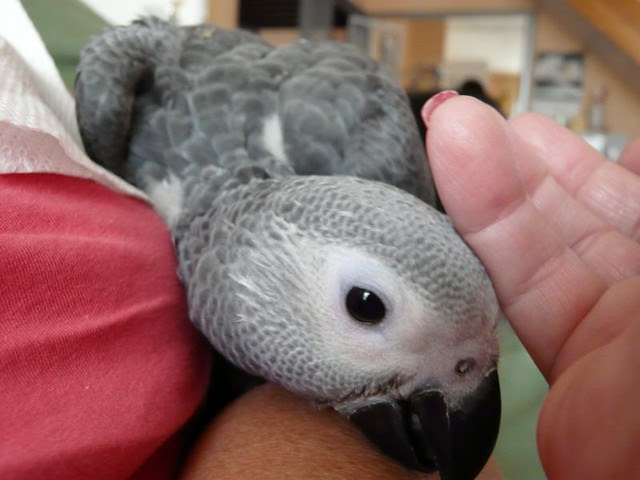
The short version
Is It Legal to Own an African Grey? (Yes — With Documentation)
A captive-bred African Grey is legal to own and transfer domestically in the United States with proper documentation.
African Greys were uplisted from Appendix II to CITES Appendix I at CoP17, effective 2 January 2017.
Appendix I bans commercial international trade in wild-caught African Greys — captive-bred birds are the only legal option.
CITES captive-bred certificate, hatch certificate, PCR DNA sexing certificate, and an avian-vet health certificate.
A seamless closed leg-band, slipped on as a chick, is the physical proof a bird was aviary-hatched, not poached.
We hold a verifiable USDA Animal Welfare Act license you can check before you pay anything.
No federal CITES permit is needed for an intrastate or interstate sale of a captive-bred bird — only for crossing a border.
Wild African Greys are Endangered, so buying documented captive-bred protects both you and the species.

The Framework
What Is CITES and Why Does It Govern African Greys?
CITES is the international treaty that regulates trade in endangered wildlife across borders. It sorts species into three appendices by extinction risk, and the African Grey sits in the strictest one — Appendix I.
CITES — the Convention on International Trade in Endangered Species of Wild Fauna and Flora — has regulated the African Grey since the treaty first covered the species in 1981.
Across the official CITES appendices, more than 180 member countries agree to a single set of rules so that no nation can quietly become a loophole for trafficking.
The point is conservation through paperwork: if every legal bird is documented, the illegal ones have nowhere to hide.
The African Grey (Psittacus erithacus) is native to the rainforests of West and Central Africa, and, as the World Parrot Trust species encyclopedia records, decades of trapping for the pet trade pushed wild flocks into steep decline.
CITES is the mechanism that responded to that decline — and the reason every Grey sold today must be able to prove it was bred in captivity rather than taken from the forest.
For a buyer, the practical takeaway is simple. CITES does not make owning an African Grey illegal; it makes undocumented ownership risky.
The treaty draws a hard line between captive-bred birds, which are legal to keep with proper papers, and wild-caught birds, which cannot be lawfully imported or sold — and documentation is the only thing that tells the two apart.
The 2017 Uplisting
Why Are African Greys on Appendix I — and What Changed in 2017?
African Greys were moved from CITES Appendix II up to Appendix I at the 17th Conference of the Parties (CoP17), effective 2 January 2017 — a change that ended all legal trade in wild-caught birds.
For years the African Grey was listed on Appendix II, which permitted regulated trade in wild specimens under quota.
By 2016 the evidence of collapse was overwhelming, so the CoP17 conference in Johannesburg voted to uplist the species to Appendix I — the highest level of protection.
As the U.S. Fish & Wildlife Service and other CITES authorities implemented the change, the wild-caught African Grey trade that had thinned the forests for decades was, in legal terms, shut off at the source.
Both subspecies are covered: the larger red-tailed Congo African Grey and the smaller maroon-tailed Timneh African Grey both carry Appendix I status.
That matters because some older care sheets still quote the outdated "Appendix II" classification — if you read that anywhere, it predates January 2017 and is simply wrong.
Here is the part that reassures honest buyers: Appendix I is aimed squarely at wild capture, not at responsible captive breeding. Captive-bred birds, hatched from parents already in legal captivity and documented as such, remain legal to own and transfer domestically.
In other words, the uplisting raised the bar for paperwork — it did not close the door on owning a Grey. Choosing a documented captive-bred bird is exactly how the system is meant to work.
Plain-Language Answer
Is It Legal to Own a Captive-Bred African Grey in the USA?
Yes — a captive-bred African Grey is legal to own and transfer within the United States as long as it comes with documentation proving its captive-bred origin.
The single most important distinction on this whole page is this one: captive-bred means legal to own and trade with documentation; wild-caught means illegal to import or sell.
Appendix I bans the commercial international movement of wild-caught Greys, but it was never intended to criminalize a family keeping a documented, aviary-hatched companion bird.
Every African Grey lawfully available in the USA today is captive-bred, and its paperwork is what proves which category it belongs to.
That is why, honestly, the documentation is the product as much as the bird is.
Here at C.A.Gs, every Congo and Timneh Grey is hatched in our Midland, Texas home, closed-banded as a chick, and matched to an individual CITES Appendix I captive-bred certificate before it goes anywhere.
A bird without that paper trail is a legal liability no matter how healthy it looks — which is also why a price far below our $1,500 floor almost always signals a wild-caught bird, a sick bird, or no bird at all.
If you ever face a wildlife inspection, a state move, or a future sale, the captive-bred certificate, hatch certificate and closed-band record are what let you prove, in seconds, that your Grey is the lawful kind.
That protection is the reason we never treat documentation as an upsell — it travels with every bird, and you receive it before any money changes hands. Our trusted breeders page shows exactly what that verification process looks like.
Does "Legal Federally" Mean Legal Everywhere?
Federal law is the floor, not the whole answer.
CITES and the federal rules make a documented captive-bred Grey lawful to own and transfer domestically — but individual states and cities can layer their own exotic-bird rules on top.
Who Do You Ask Before You Buy?
One call to your state wildlife agency settles it. Ask whether Psittacus erithacus requires any permit or registration where you live — for most U.S. buyers the answer is no, and the question takes five minutes.
Keep the Answer With the Packet
Note the date and who you spoke to, and file it with your CITES paperwork.
If You Move States, Repeat the Call
If you ever move states with your Grey, you repeat the same five-minute call — and your documentation does the rest.
Proof, Not Promises
Which Documents Come With Every C.A.Gs African Grey?
Every Grey we place ships with a complete documentation packet, and you receive all of it before any deposit — the opposite of how a scam operates. Here is what each document does and why it matters.
Four Papers, Every Bird — Shown Before Any Deposit
CITES Appendix I Captive-Bred Certificate
Issued from our USDA-registered aviary, this confirms your bird was hatched in captivity in the United States from captive parents — not imported from Africa. It is the primary proof that your Grey is the legal, captive-bred kind.
Protects you from: seizure and any liability for wild-caught trafficking.
Hatch Certificate + Closed-Band Number
Records the hatch date and the seamless closed leg-band number we slip onto each chick in its first weeks. Because that band cannot be fitted to an adult, it is tamper-evident, lifelong proof of where and when the bird was hatched.
Why it matters: physically ties the specific bird to its paperwork.
PCR DNA Sexing Certificate
Laboratory-confirmed sex from an avian DNA lab — necessary because African Greys are not visually sexable. The certificate names the lab, the submission date, the confirmed sex and a sample reference number.
Why it matters: a DNA result is definitive; a sex 'guess' is not.
Avian-Vet Health Certificate
A board-certified avian veterinarian examines every Grey before it leaves, with PBFD and Polyomavirus screening, plus the USDA health certificate required by federal law for any bird crossing state lines.
Required for: interstate transport, airline shipping and your new bird's lifelong health file.
Read the full story behind these papers — what captive-bred actually means and how the closed band proves it — on our captive-bred African Grey page, and our written health guarantee shows how the same packet underpins it.
Where Permits Apply
Domestic Transfer vs International Export — What Paperwork Do You Actually Need?
CITES permits attach to borders, not to ownership.
Buying a captive-bred Grey within the USA is a very different paperwork picture from taking one out of the country — and confusing the two is what makes the topic feel scarier than it is.
| The Situation | Buying / Moving Inside the USA | Taking a Bird Across a Border |
|---|---|---|
| Federal CITES permit | Not required for captive-bred birds | CITES export + destination import permit required |
| What proves the bird is legal | Captive-bred cert, hatch cert, closed band | All of that plus government-issued CITES permits |
| USDA health certificate | Required to cross state lines (we provide it) | Required, plus destination-country veterinary rules |
| Who issues it | Your breeder + an accredited avian vet | USDA APHIS / U.S. Fish & Wildlife Service |
| Best first step | Confirm the documentation packet before you pay | Contact USFWS / APHIS months before you travel |
A practical note: some states layer their own permit or record-keeping rules on top of the federal picture, so the safe habit is to keep your full documentation packet together for the life of the bird.
We deliberately keep the state-specific detail general here because rules vary — when in doubt, your state wildlife agency and the U.S. Fish & Wildlife Service are the authorities to confirm with, not a breeder's webpage.
Before You Pay
How Do You Verify a Breeder Is CITES Compliant?
You should never have to take a breeder's word for any of this.
Real documentation is something a scammer cannot fake on demand, so a few minutes of verification separates a legitimate aviary from a fraudulent listing.
The Buyer's CITES Verification Checklist
Six checks that work on any African Grey breeder, not just us.
- 1
Ask for the USDA AWA license number
Go to aphis.usda.gov and use the Animal Care search to confirm the license is valid and active, and that it matches the breeder's name and facility. Ours is available on request before you pay anything.
- 2
Request the CITES certificate before payment
Ask to see the captive-bred certificate for the exact bird you are reserving — not a generic aviary letter. A legitimate breeder can show you the documentation practice before a single dollar moves.
- 3
Verify the avian veterinarian
Ask for the name and practice of the vet who issues the health certificates, then call to confirm they work with that breeder. It takes two minutes and tells you a great deal.
- 4
Never accept 'papers come after payment'
CITES documentation and health certificates are issued before a sale, never after. 'I'll send the papers once you pay' almost always means the papers do not exist. Documentation readiness at the time of sale is non-negotiable.
These four checks are the spine of every safe purchase.
For the full playbook on spotting fake listings, cloned aviary websites and documentation that does not hold up, read our detailed guide to avoiding African Grey scams before you send a deposit anywhere.
CITES · Questions
CITES & African Grey Ownership — Your Questions, Answered
Yes. It is legal to own a captive-bred African Grey in the United States, provided the bird comes with documentation proving its captive-bred origin.
African Greys (Psittacus erithacus) sit on CITES Appendix I, so importing or commercially trading wild-caught specimens is banned — but a captive-bred bird is legal to own and transfer domestically with proper paperwork.
Every Grey we place here at C.A.Gs is U.S. captive-bred, closed-banded, and CITES Appendix I documented, so your ownership rests on solid legal ground.
CITES — the Convention on International Trade in Endangered Species — lists species in three appendices by extinction risk.
Appendix I is the strictest tier: commercial international trade in wild-caught specimens is prohibited and all cross-border movement is tightly permit-controlled.
African Greys were uplisted from Appendix II to Appendix I at CoP17, effective 2 January 2017, which ended legal trade in wild-caught birds.
For a captive-bred Grey sold inside the USA, Appendix I means the breeder must keep documentation proving the bird was bred in captivity rather than taken from the wild.
Every Grey we place ships with a complete packet: (1) a CITES Appendix I captive-bred certificate confirming U.S. captive birth; (2) a hatch certificate recording the closed-band number and hatch date; (3) a PCR DNA sexing certificate from an avian lab; (4) a board-certified avian-veterinarian health certificate, with PBFD and Polyomavirus screening, plus the USDA health certificate required for interstate transport.
The seamless closed band on the bird's leg ties the physical bird to that paperwork.
A federal CITES export or import permit is only required when a bird crosses an international border — it is not needed for an intrastate or interstate sale of a captive-bred bird inside the United States.
That said, some states have their own permit or record rules, and your Grey will travel for vet visits, moves and shipping over a 40-to-60-year life.
That is why we provide the full captive-bred certificate, hatch certificate and closed-band record with every bird regardless of where you live — the documentation protects you in every scenario.
Taking an African Grey across a national border requires a CITES export permit from the United States and an import permit from the destination country, because Appendix I covers personal as well as commercial movement.
Contact USDA APHIS Wildlife Services and the U.S. Fish & Wildlife Service for current export requirements well before you travel, and confirm the destination's own rules — some countries restrict or ban parrot import outright.
This is separate from the domestic ownership paperwork that travels with every Grey we sell.
Ask for three things before any money changes hands: a verifiable USDA Animal Welfare Act license number you can check at aphis.usda.gov; a CITES captive-bred certificate for the exact bird you are reserving, not a generic letter; and the name of the avian veterinarian who issued its health certificate.
A legitimate breeder produces all three willingly. If a seller says documentation 'comes after payment,' cannot name their vet, or offers a price far below the market floor, treat it as a red flag and read our guide to avoiding African Grey scams first.
An undocumented African Grey leaves you legally exposed.
Wildlife enforcement agencies such as the U.S. Fish & Wildlife Service can seize a bird whose captive-bred origin cannot be proven, and if the bird turns out to be wild-caught you could face penalties under the Lacey Act.
Even an honest buyer struggles to prove good faith without papers. The fix is simple: demand the CITES captive-bred certificate, hatch certificate and closed-band record before you pay, every time.
Wild African Grey populations are listed as Endangered on the IUCN Red List, driven by habitat loss and decades of trapping for the pet trade — which is exactly why the species was uplisted to CITES Appendix I.
A documented captive-bred bird does the opposite of harm: every captive-bred sale removes a unit of demand that might otherwise fund poaching.
Choosing a closed-banded, CITES-documented Grey from a USDA-licensed aviary touches no wild bird and supports the conservation intent behind the Appendix I listing.
Still doing your homework? See what captive-bred really guarantees, how our health guarantee works, and our trusted breeders page explains why families choose us.
Same Paperwork, Eggs & Pairs Too
Do African Grey Eggs and Breeding Pairs Carry CITES Documentation?
Yes — the Appendix I rules explained above apply to the whole program, not just single chicks. Our documented African Grey eggs and CITES-papered breeding pairs ship with the same captive-bred provenance trail: closed-band records, the hatch certificate, and the Appendix I paperwork that proves a legal domestic transfer. Never wild-caught, never "papers after payment."
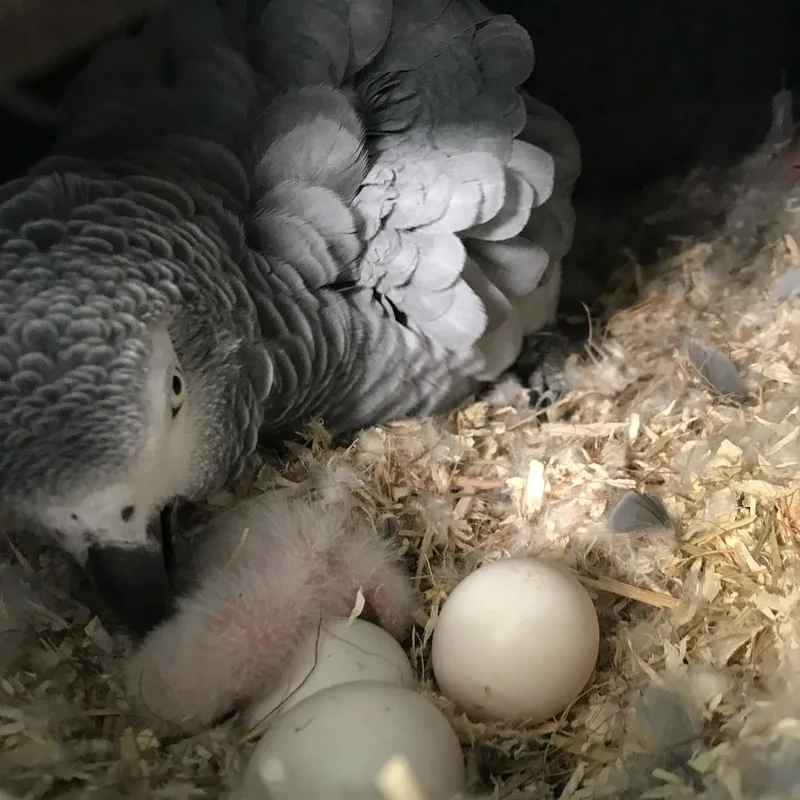
Documented African Grey Eggs
Candled Congo & Timneh eggs with full captive-bred provenance — $95 each, free US shipping on five or more. Paperwork travels with the clutch.
View documented eggs →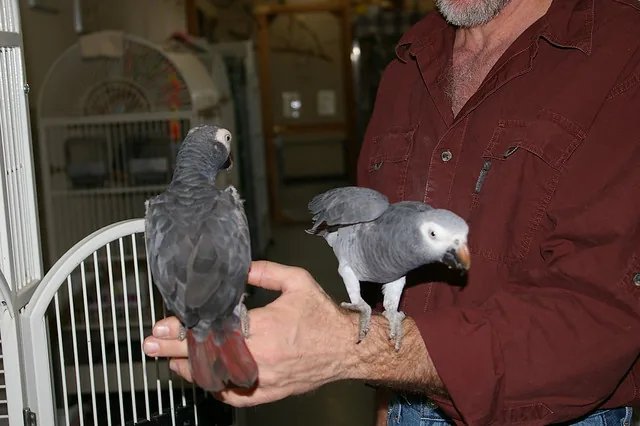
CITES-Papered Breeding Pairs
Closed-banded, proven African Grey pairs for breeders — from $3,000, each with closed-band records and the Appendix I documentation explained above.
View breeding pairs →Want to see the documentation for an egg order or a pair before you commit? Ask us below and we'll walk you through every certificate.
Documented & Legal
Every Grey We Place Is Fully CITES Documented — Ready to Ask Us About Yours?
Every African Grey from C.A.Gs is U.S. captive-bred, closed-banded, PCR DNA-sexed, avian-vet certified, and placed with a complete CITES Appendix I documentation packet — never wild-caught, paperwork in your hands before any deposit.
Tell us about your home in the form below and Mark or Teri will reply within 24 hours. Still deciding? Compare our Congo and Timneh Greys — both carry the exact same documentation standard.
Adopt an African Grey — Inquiry Form
We review every application. Expect a response within 24 hours.