- Home
- Care Guides
- Best African Grey Parrot Food
Nutrition Guide from USDA-Licensed Breeders
Best Food for African Grey Parrots
What our birds actually eat — pellets, fresh foods, toxic food list, and daily schedule from Mark & Teri Benjamin's home aviary in Midland, TX.
After raising African Grey parrots for over a decade, we've learned that best african grey parrot food isn't about one brand — it's about getting the nutritional balance right. African Greys are prone to vitamin A deficiency, calcium deficiency, and obesity from seed-heavy diets. The right diet prevents all three while fueling the intelligence that makes these birds so remarkable.
This guide covers everything we feed our birds at Congo African Greys — the pellets, the fresh foods, the schedule, the foods we never allow near our aviary, and the enrichment strategies that keep our birds mentally engaged while they eat. It's the same information we send home with every bird we place.
What Do African Grey Parrots Eat in the Wild?
In the wild, African Greys (Psittacus erithacus) range across the equatorial forests of Central and West Africa — Angola, Cameroon, Congo, Ghana, Kenya. Their natural diet is extraordinarily varied:
Wild Food Sources
- • Palm nuts and seeds (oil palm, raphia palm)
- • Tropical fruits (figs, berries, mangoes)
- • Flowers and flower nectar
- • Bark and mineral-rich clay licks
- • Insects and larvae (protein source)
- • Leaves and leaf buds
What This Means for Captive Diet
- • High variety is instinctive — they need it
- • Seasonal fruit, not unlimited daily fruit
- • Clay mineral licks → calcium supplementation
- • Seeds are part of the diet, not the whole thing
- • Foraging behavior is hardwired
- • Pellets replace what they can't forage here
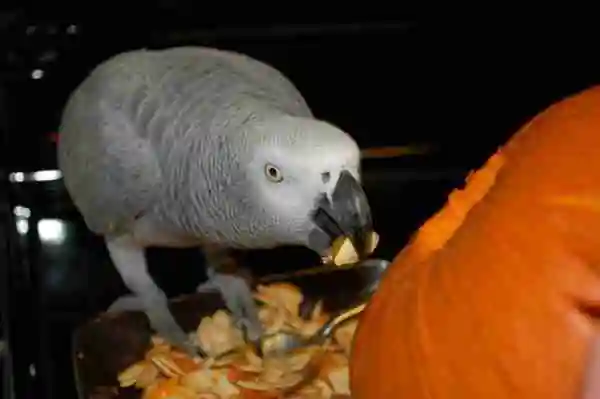
Understanding the wild diet explains why an all-seed diet fails: seeds in the wild are just one component of dozens. In captivity, seeds become 100% of intake — and they're nutritionally incomplete.
Best Pellet Brands for African Grey Parrots
Pellets should make up 60–70% of your African Grey's daily diet. They're nutritionally complete and prevent the vitamin/mineral deficiencies common in seed-fed birds. Here's what we've used and recommend:
Harrison's High Potency Coarse
Top PickCertified organic, no artificial colors or dyes, vet-endorsed by avian veterinarians nationwide. Formulated specifically for medium to large parrots. The coarse size is ideal for African Grey beaks.
Best for: Primary diet foundation. Especially important for birds coming off seed diets — palatability is high.
Zupreem Natural
No Artificial DyesThe fruit-free "Natural" formula avoids artificial dyes that color other Zupreem varieties. Highly palatable, widely available, and the format our birds transitioned on most easily. Good vitamin A content for deficiency prevention.
Best for: Seed-to-pellet transitions. Birds often accept this brand before Harrison's.
Roudybush Crumbles
Roudybush is formulated by a UC Davis-trained avian nutritionist. The crumble size works well for African Greys who prefer smaller bites. No artificial colors, preservatives, or added sugar. Complete amino acid profile.
Best for: Rotation with Harrison's. Alternating pellet brands prevents diet monotony and ensures varied nutrient sources.
Avoid: Brightly colored pellets with artificial dyes (red, blue, yellow). The dyes are linked to organ stress over years of daily consumption. Stick to natural-colored or tan/brown pellets.
Fresh Foods African Greys Love (and Need)
Fresh vegetables and fruit should make up 20–30% of the daily diet. We prepare "chop" — a mixed salad of chopped vegetables — every 3 days and refrigerate it. Morning offering is 2 tablespoons of chop per bird, removed after 4 hours.
Best Vegetables
- ★Cooked sweet potato — highest beta-carotene source; prevents vitamin A deficiency; serve 3×/week
- ★Kale & arugula — calcium, vitamin K, daily rotation
- •Broccoli florets (raw or lightly steamed)
- •Bell peppers — all colors, high vitamin C
- •Carrots (grated or thin slices)
- •Snap peas and green beans
- •Watercress and sprouts
- •Corn on the cob (enrichment + nutrition)
Safe Fruits (Limited)
Fruits are 5–10% of diet maximum — high sugar content; serve 3–4×/week at most
- ★Pomegranate — antioxidant powerhouse, our birds love it
- ★Organic mango — vitamin A precursor, enrichment food
- •Papaya (fresh — not dried)
- •Blueberries (antioxidants)
- •Melon (watermelon, cantaloupe)
- •Kiwi (vitamin C)
Always wash thoroughly. Remove uneaten fresh food within 4 hours.
Healthy Nuts and Seeds (Treat Use Only)
Almonds (raw, unsalted), walnuts, pine nuts, hemp seeds, and flaxseeds are excellent treats and training rewards. Offer 2–3 nuts daily maximum — high fat content. Never roasted/salted nuts.
Foods That Are Toxic to African Grey Parrots
This list is non-negotiable. These foods can cause serious illness or death. Post it on your refrigerator.
NEVER Feed These Foods
- Avocado — ALL parts; persin toxin causes heart failure
- Chocolate — theobromine is fatal to birds
- Onions & garlic — cause hemolytic anemia
- Alcohol — toxic even in tiny amounts
- Caffeine — coffee, tea, energy drinks
- Fruit pits & apple seeds — contain cyanide compounds
- Raw rhubarb — oxalic acid causes kidney failure
- Mushrooms — many varieties are toxic to birds
Limit or Use Caution With
High-salt foods (crackers, chips, processed meats), high-sugar foods, dairy products (birds are lactose intolerant), raw legumes (cook thoroughly before offering), and Teflon/PTFE cookware fumes (not a food, but cooking spray and overheated non-stick pans emit fumes fatal to birds).
How Much to Feed an African Grey Parrot Daily
Here is the exact feeding schedule we use in our Midland, TX aviary. These amounts are for an adult African Grey (400–600g). Adjust down 15–20% for Timneh African Greys (smaller subspecies).
| Time | Food | Amount |
|---|---|---|
| Morning (7–9am) | Fresh chop (vegetables + limited fruit) | 2–3 tablespoons |
| After chop removed | Fresh pellets (primary food bowl) | ½ cup |
| Midday (optional) | Training treats (nuts, seeds, small fruit piece) | 3–5 pieces max |
| Evening (4–6pm) | Second fresh offering or foraging activity | 1–2 tablespoons |
| All day | Fresh clean water (changed 2× daily) | Unlimited |
Remove ALL fresh food within 4 hours of offering to prevent bacterial growth. Pellet bowl stays available all day. Weigh your bird monthly — healthy adult Congos maintain 400–600g.
Foraging and Food Enrichment
African Greys spend 4–6 hours foraging daily in the wild. In captivity, serving food in a bowl takes 10 minutes. The 5+ hours of unused foraging energy goes somewhere — often into feather plucking, screaming, or obsessive behaviors. Food enrichment addresses this directly.
Foraging Toys
Hide pellets or almonds inside foraging toys — boxes, cups with covers, shreddable wraps. Our birds spend 30–45 minutes on a stuffed foraging toy vs. 5 minutes at a bowl.
Kabob/Skewer Feeding
Thread raw vegetables (broccoli, bell pepper, sweet potato cubes) on a stainless steel skewer. Birds work to pull food off — mimics foraging behavior and slows eating.
Wrapped Treats
Wrap nuts or pieces of fruit in paper or palm leaves. Birds shred to discover food — natural foraging behavior that prevents boredom and satisfies the need to chew.
Every bird we send home gets a feeding guide that includes foraging strategies. A bird that works for its food is a mentally healthier bird — less likely to feather-pluck, less likely to scream for attention.
African Grey Parrot Food: Frequently Asked Questions
What is the best food for African Grey parrots? +
Can African Grey parrots eat seeds? +
What vegetables should I feed my African Grey parrot? +
What foods are toxic to African Grey parrots? +
How much should I feed my African Grey parrot daily? +
What pellets do African Grey breeders recommend? +
How do I convert my African Grey from seeds to pellets? +
Do African Grey parrots need calcium supplements? +
Ready to Bring Home a Well-Nourished African Grey?
Every bird from our aviary leaves with a full nutrition guide, a starter supply of Harrison's pellets, and personal guidance from Mark & Teri on transitioning to a complete diet.
Ready to Meet Your African Grey?
Our birds are hand-raised, CITES-documented, and DNA sexed. Reach out to start the conversation — we reply within 24 hours.
$200 deposit reserves your bird · 3-day health guarantee · IATA-compliant shipping nationwide