
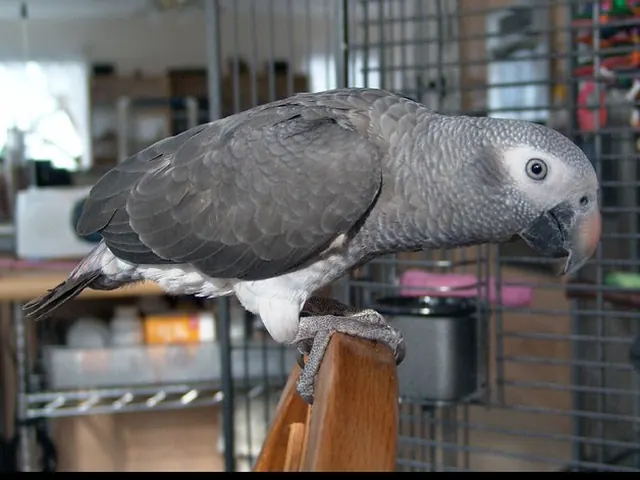
 Under $1,700
 Evie
Our lowest documented price, and nothing was removed to reach it.
- DNA-sexed
- PCR screened
- Vet certificate
Priced $1,500 to $3,500 · Midland, TX · USDA-licensed
A rescue publishes one number, a breeder publishes another, and the listing you found last night publishes a third that looks too good. Here at C.A.Gs we price all three side by side — day one, year one, and five years out — then show you the documented Congos and Timnehs reservable from $1,500.
$1,500 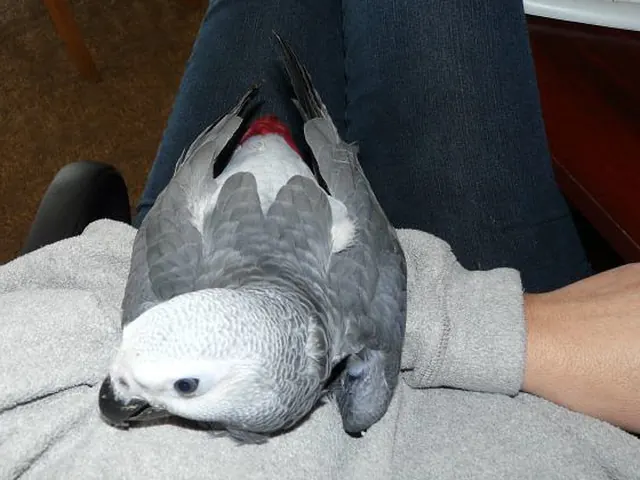 $1,700
 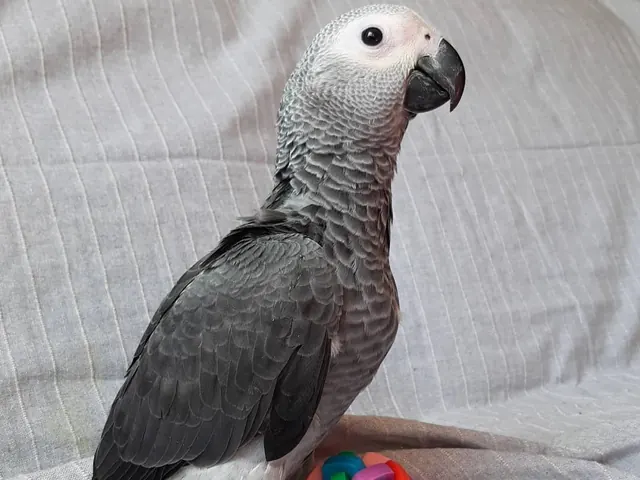 $2,300
 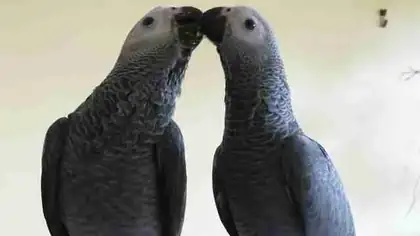 $3,500
 A documented African Grey costs between $1,500 and $3,500 here at C.A.Gs, and between roughly $450 and $8,500 across the wider US market — a spread wide enough that quoting a single figure would be dishonest. That range exists because the same species is sold through three different doors, and each door prices a different thing: a rescue prices its overheads, a breeder prices sixteen weeks of hand-feeding and a paperwork trail, and an anonymous listing prices whatever it thinks you will send.
The honest range runs from about $450 at the bottom to about $8,500 at the top, and both ends are real. We sit deliberately in the middle of it, because the bottom end usually means a bird whose history nobody can reconstruct and the top end usually means a waiting list rather than a better bird.
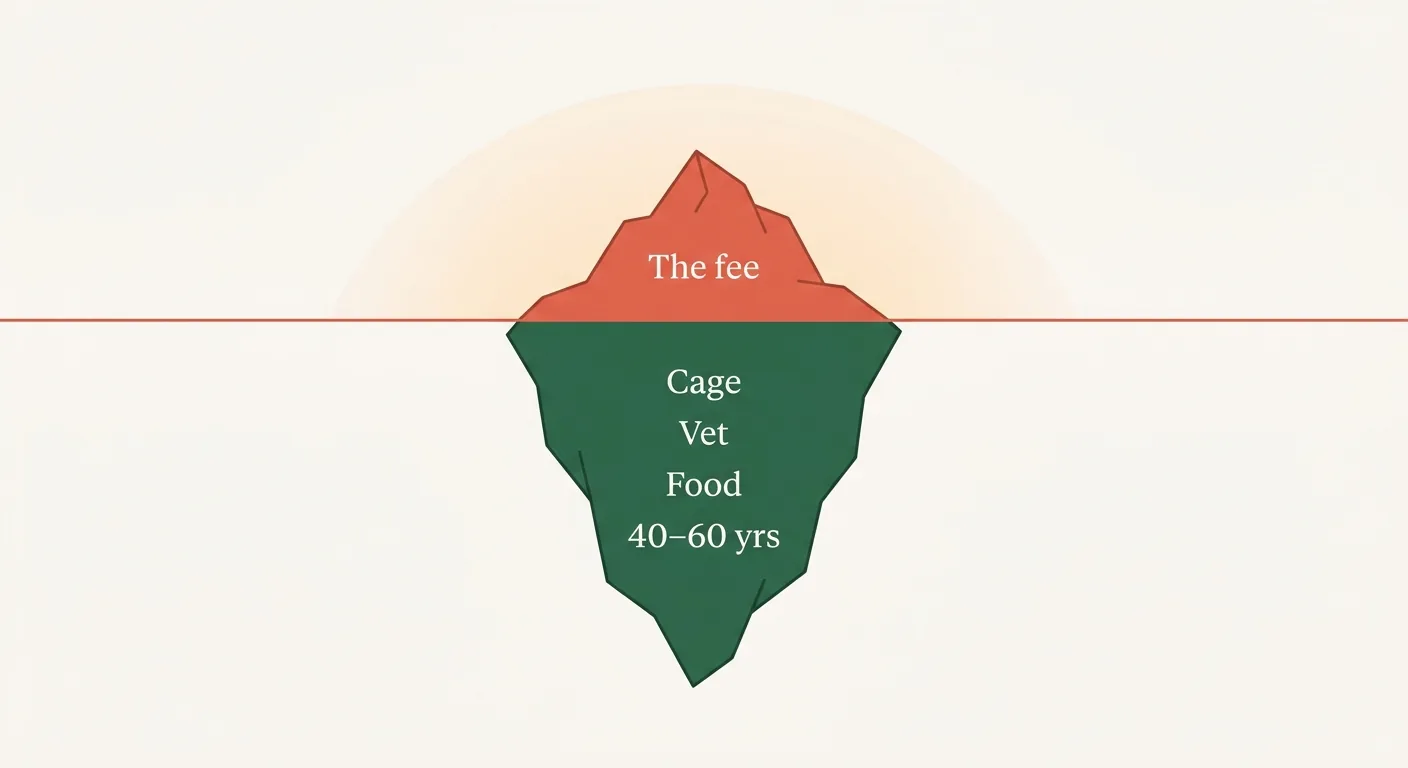
All in, expect $2,160–$5,150 for your first year with a documented Grey — the bird itself, delivery, the cage and stand you buy once, the first avian-vet visit, and a year of food and enrichment. That is the number worth planning against, and it is roughly double the sticker price on any route you choose.
Every clutch differs. A Timneh hen weaning early in a quiet season and a Congo cock hand-fed through a busy one do not cost us the same to raise, and pretending otherwise would mean overcharging for one to subsidise the other. We price each bird for what that bird actually took.
We have never placed an African Grey below $1,500 in twelve years of breeding, through a market that roughly tripled after 2020. The floor is not a promotion and it is not a negotiating position — it is the point below which the documentation, the screening and the hand-rearing stop paying for themselves.
Our Congos run $1,700 to $2,500 and our Timnehs $1,500 to $1,600, which places every bird we hold in the lower-middle of the national spread. Our full cost-of-ownership breakdown carries the long-term arithmetic; this page stays on the money that changes hands to acquire the bird.
Yes, by about two hundred dollars at the entry point — and that gap says nothing about the bird. Timneh pricing starts lower because Timnehs are smaller, wean a little sooner and are less in demand than the red-tailed Congo, not because they talk less or bond less. Several of our steadiest birds have been Timnehs.

Parrot rescues publish their fees, which makes this the one route you can price without asking anybody: the schedules we checked list African Greys between $450 and $1,500. We are a breeder, not a rescue, and we would rather send you to a good one with accurate numbers than pretend the route does not exist — our honest guide to where adoption actually works covers the application side in full.
Four organisations publish a figure for this species, and they do not agree with one another. That disagreement is the useful part: it tells you the fee reflects the organisation's costs and region, not the bird in front of you.
Between $450 and $1,500, depending entirely on who you ask. The Parrots First fee schedule lists African Greys at $450, Phoenix Landing publishes $500 for greys and large macaws, and Rhode Island Parrot Rescue lists $1,500 — which lands exactly on our own floor price.
A $450 grey and a $1,500 grey from two rescues are not different grades of bird. They are different organisations recovering different overheads, in different states, with different intake volumes. Read the fee as a contribution to a programme rather than a valuation of an animal.
Phoenix Landing states plainly on its own fee page that the adoption fee is minimal compared with the cost of caring for a parrot, and lists what it does not cover — food, veterinary care, enrichment, and a spacious cage. That is a rescue making the same argument this page makes, on its own website, without a breeder's incentive to make it.
Published schedules describe organised rescues. Most greys that change hands never go near one — they move privately, between owners, at whatever figure the current owner names, and that figure is routinely higher than any schedule.
It is different in every way that matters. One widely-read r/parrots thread opens with a San Diego bird store asking a $5,500 "rehoming fee" for a six-year-old tame hen with a thin history, while selling hand-tame babies at $6,000 — and the sharpest reply in the thread points out that rehoming is simply a euphemism for selling.
Owners in that same discussion report paying $600 to $900 for adult greys, and $900 with a cage included in a second thread. The number tracks the local market and the bird's tameness, not the word on the listing. If a fee is high, ask what history comes with it; if it is low, ask the same question harder.
Before you send a rescue any money
Eight Questions Worth Asking a Rescue First
Parrots First routes any CITES Appendix I species to case-by-case committee review — and its schedule predates the 2017 uplisting that moved African Greys into that appendix at CoP17. The paperwork we handle as routine is the same paperwork that makes a careful rescue slow down, which is one honest reason adoption timelines run long.
Nobody publishes this comparison, so we built it: three acquisition routes, priced across three horizons, with a column for what each route leaves out. Rescues publish a fee and stop. Marketplaces publish a price and stop. The interesting number is the one five years out, where the three routes quietly converge.
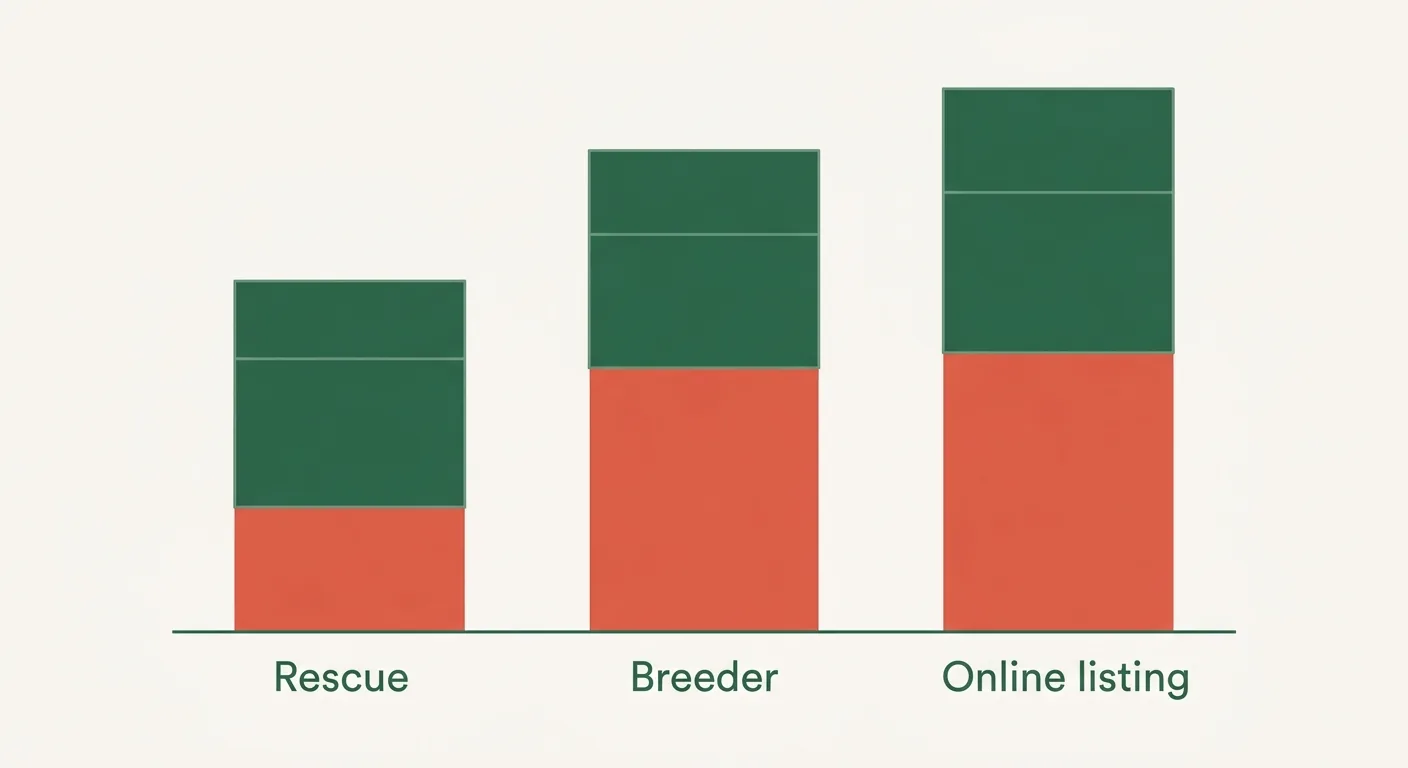
Day one separates the routes by roughly a thousand dollars. Year five separates them by almost nothing — because a Grey eats, chews and visits a vet at the same rate regardless of how you acquired it.
| Horizon | Rescue route | C.A.Gs route | Below-floor listing | What the number leaves out |
|---|---|---|---|---|
| Day one | $450–$1,500 | $1,500–$3,500 | $400–$900 | A published rescue fee rarely covers transport. A sub-floor listing frequently covers nothing at all. |
| Year one | $925–$2,800 | $2,160–$5,150 | $1,400–$4,000+ | Setup costs the same whichever route you take. The sub-floor column swells because undocumented birds arrive needing work. |
| Five years | $2,425–$8,200 | $5,040–$12,350 | $2,900–$9,400+ | By year five the three routes converge. What you bought on day one was documentation, not a discount. |
Cheaper on day one, almost identical by year five. If the adoption fee is the whole of your budget then adoption is the honest answer and we will say so; if the fee is simply the first of many numbers, the route matters far less than whether the bird arrives documented.
Your number depends on which bird, how it travels, and what you already own — so rather than publish an average, we built a calculator that returns your range. For a quick first-year estimate on a single bird, our homepage first-year calculator is the faster tool; the one below adds the multi-year view and the route comparison.
Set the four inputs below to your own situation and the calculator returns a range rather than an average, because an average across three acquisition routes describes nobody in particular. Choose the bird you are actually considering, how it would travel, what you already own, and how far ahead you want to look.
True-cost calculator · multi-year, by route
Every figure is a range because the underlying data is a range. Nobody can tell you what one emergency vet visit will cost in year seven.
A single confident number would be easier to read and less true. Cage prices span $300 to $800, an unplanned vet visit spans $0 to $500, and neither of those is knowable in advance. We would rather hand you an honest band than a precise fiction.
Day one is the bird, the delivery tier and a deposit that has already been paid — $1,500–$3,500 plus $185 to $350 depending on how the bird travels. Everything else on this page is what follows; this is the only figure that moves money before your Grey is standing in your house.
The paperwork is inside the price, not bolted on afterwards. That is a deliberate commercial choice: itemising certificates lets a seller advertise a lower headline and recover it at checkout, and we would rather quote the number you actually pay.
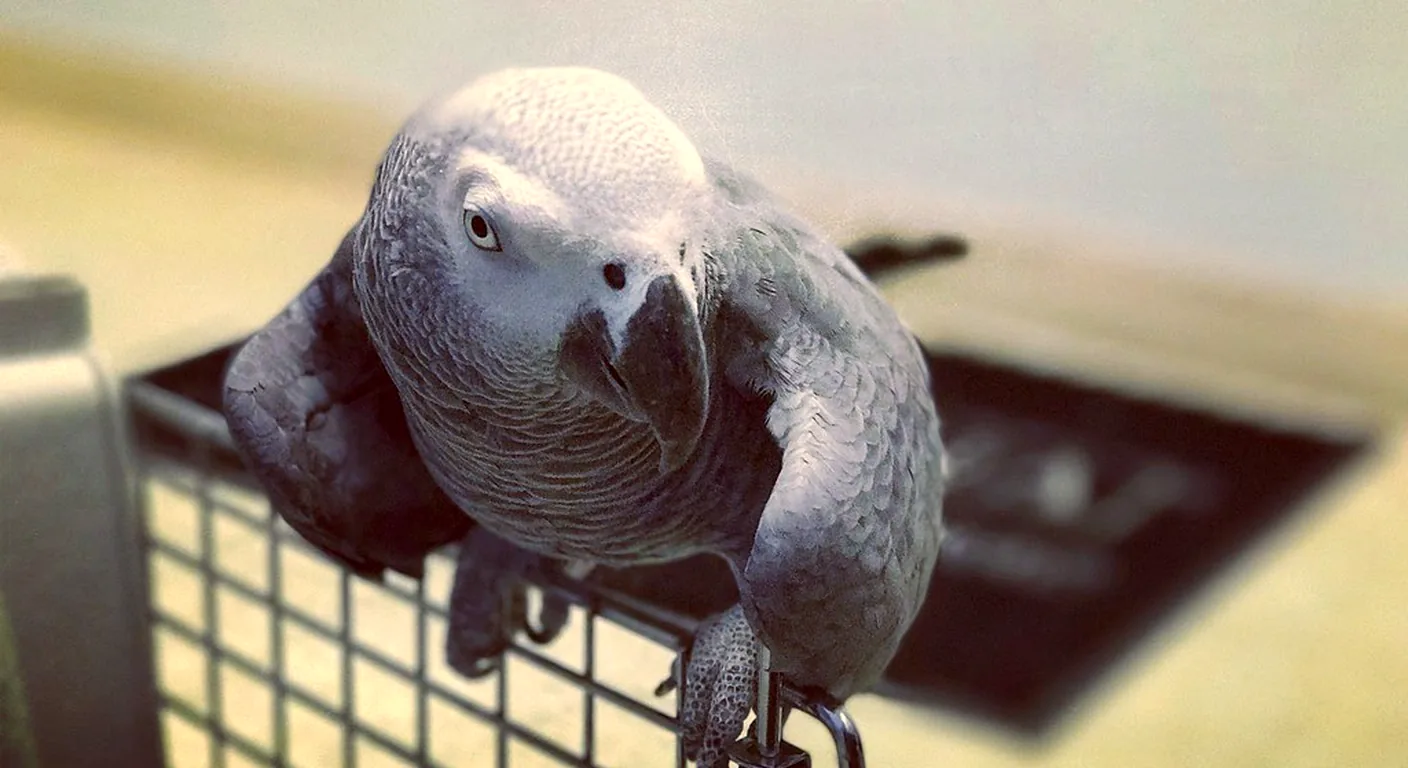
Both, on every bird, with no separate line. Our DNA-tested Greys page explains how the PCR sexing works and what the certificate proves, and the same sample run covers the PBFD and Polyomavirus screening we do before any bird is offered.
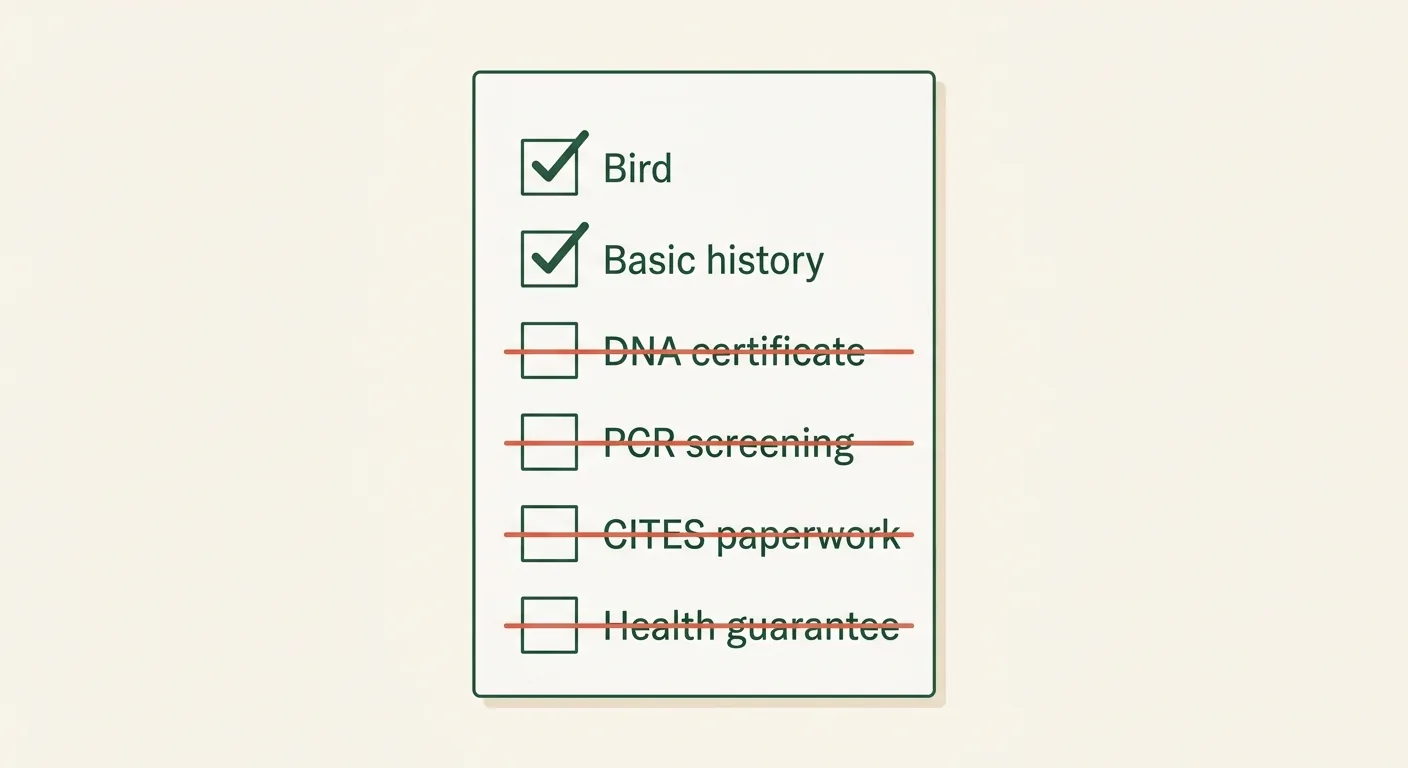
Five documents travel with every Grey we place. A seller who charges for these separately is not offering you a cheaper bird — they are offering you the same bird with the invoice split in two, and the second half arrives after you have committed.
The hatch certificate carries the closed leg-band number; the CITES Appendix I captive-bred file establishes lawful origin; the DNA certificate names the sex; the PCR panel covers PBFD and Polyomavirus; and the avian-vet health certificate is dated within ten days of travel. The guarantee attached to every price sets out what happens if any of it fails to match the bird.
Every Grey Leaves With
A deposit takes a named bird off the board and starts the paperwork; the balance falls due before we book travel. We keep that gap deliberately, because it is the window in which sensible buyers order the cage — and because a bird held without a deposit is a bird two families are quietly counting on.
Once the bird is home the spending changes shape: $475–$1,300 of things you buy once, then $720–$1,800 every year for the next four decades. That second number is the one that decides whether an African Grey is affordable for you, and it is the number almost no listing mentions.
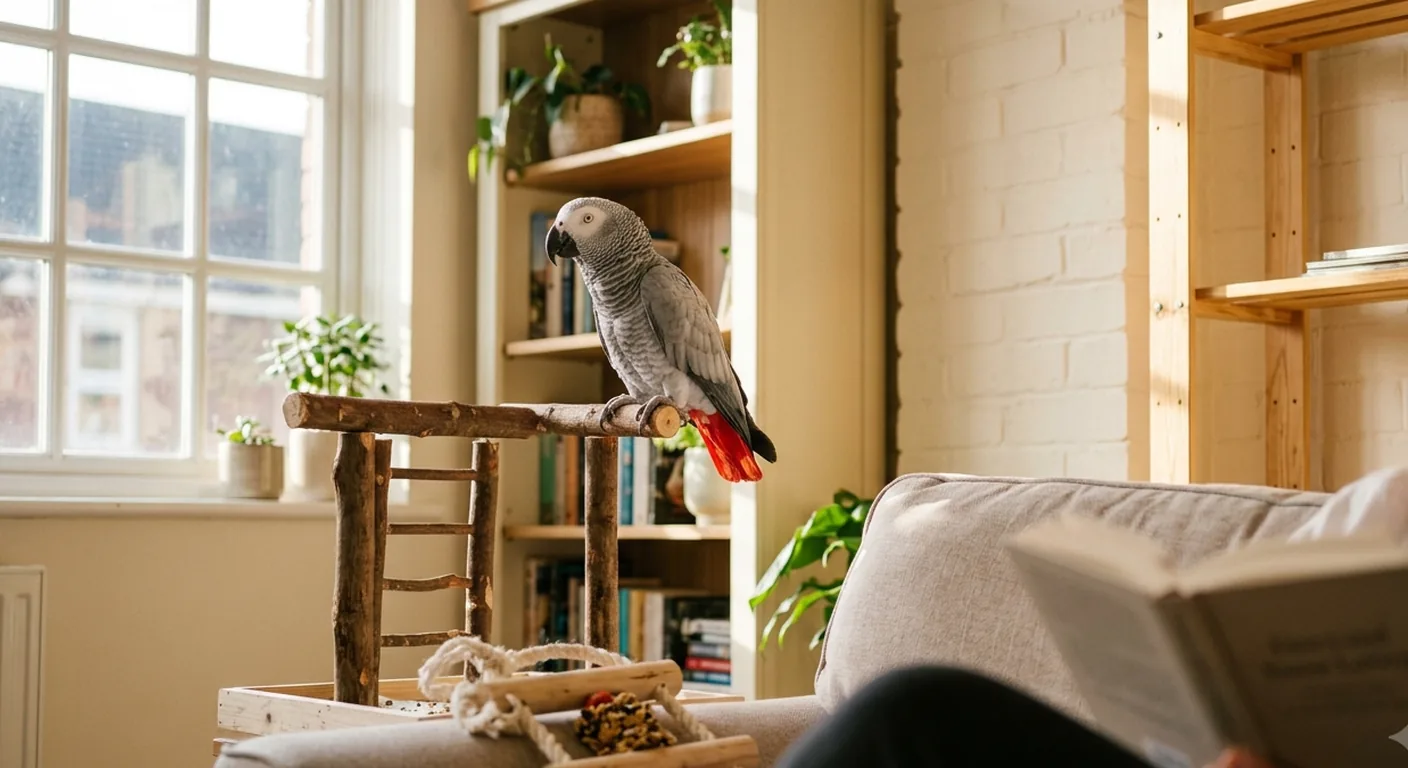
The one-off spend is a cage, perches and toys, and a first avian-vet visit — $475–$1,300 together. Buy it before the bird arrives rather than after, because a Grey settling into a house is a poor moment to be assembling furniture around it.

A cage large enough for a Congo runs $300 to $800, with perches and starter toys adding $100 to $300. Bar spacing matters more than badging: too wide and a Grey gets its head through, too narrow and it cannot climb, and either mistake means buying twice.
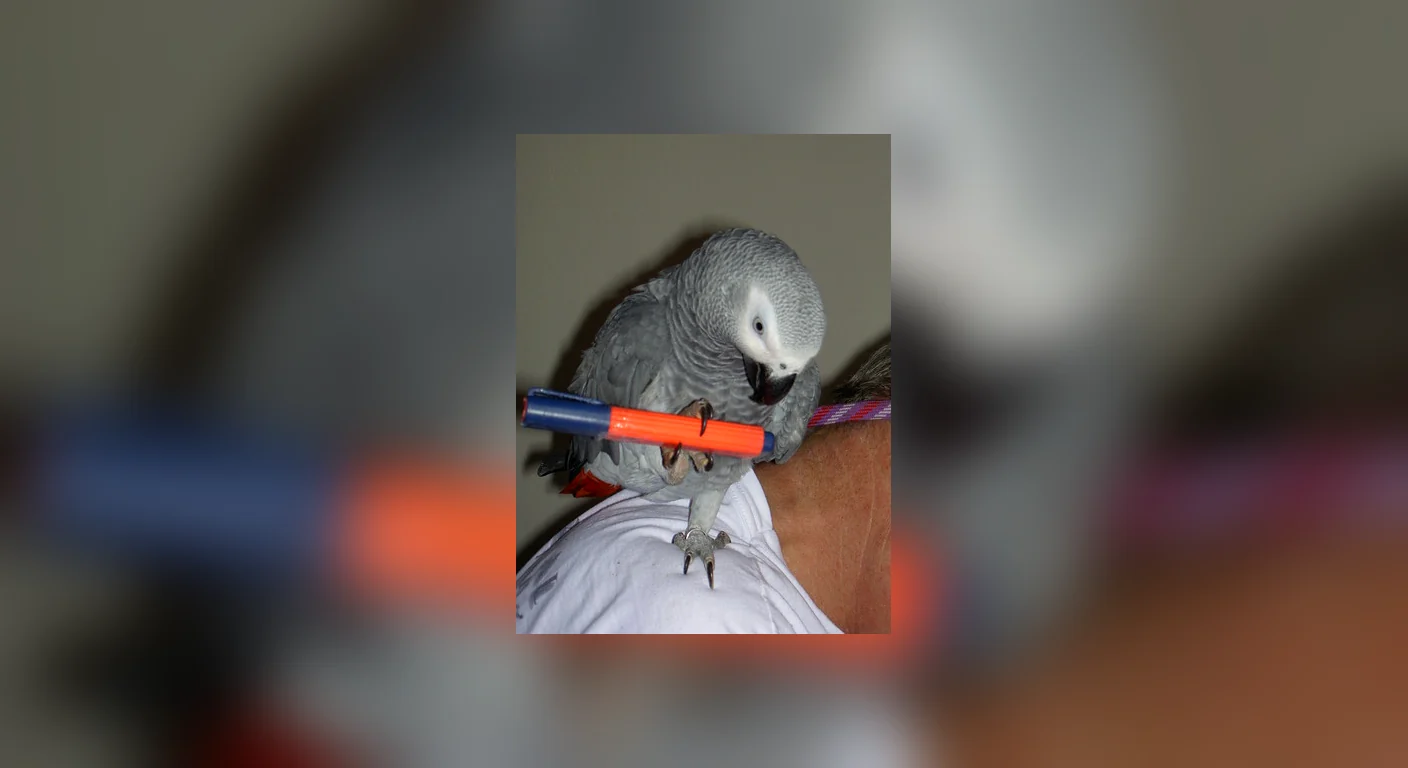
We watch it happen most years. Somebody buys a mid-size cage for a baby Grey, the bird grows into a full-sized Congo with a full-sized wingspan, and eight months later there is a second cage in the hallway and a first one on a resale site at half price.
Food, veterinary care, replacement enrichment and a contingency — $720–$1,800 a year, every year. Our guide to the pellet brands we actually feed covers the diet side, which is the largest predictable slice of that figure.
Budget $720–$1,800: $380–$700 for pellets and fresh produce, $150–$250 for the annual wellness exam, $190–$350 replacing what gets destroyed, and up to $500 held back for the visit you did not plan.
| Annual line item | Range | What moves it |
|---|---|---|
| Pellets, seed and fresh produceHarrison's, Roudybush, TOP's or Zupreem Natural | $380–$700 | Brand, and how much chop goes uneaten |
| Annual wellness examOne well-bird visit a year | $150–$250 | Whether bloodwork is bundled in |
| Toy and perch replacementConsumable by design | $190–$350 | A Grey goes through wood far faster than plastic |
| Contingency for unexpected careSome years nothing, one year plenty | $0–$500 | Age, and how close your nearest avian vet is |
Parrots conceal illness until they cannot, which is why avian medicine tends to arrive as an emergency rather than an appointment. The contingency line is not padding — it is the difference between treating a sick bird and making a decision you did not want to make.
Five recurring lines, and only the first two are predictable. We feed a reviewed rotation rather than a house brand, and our care guide sets out the routine we hand every buyer so the annual figure stays where we said it would.
Because something has been left out, and it is worth knowing what. A Grey advertised at $600 or $800 is either a genuine private rehoming with thin paperwork, or it is not a bird at all — and the two look identical in a listing photograph.
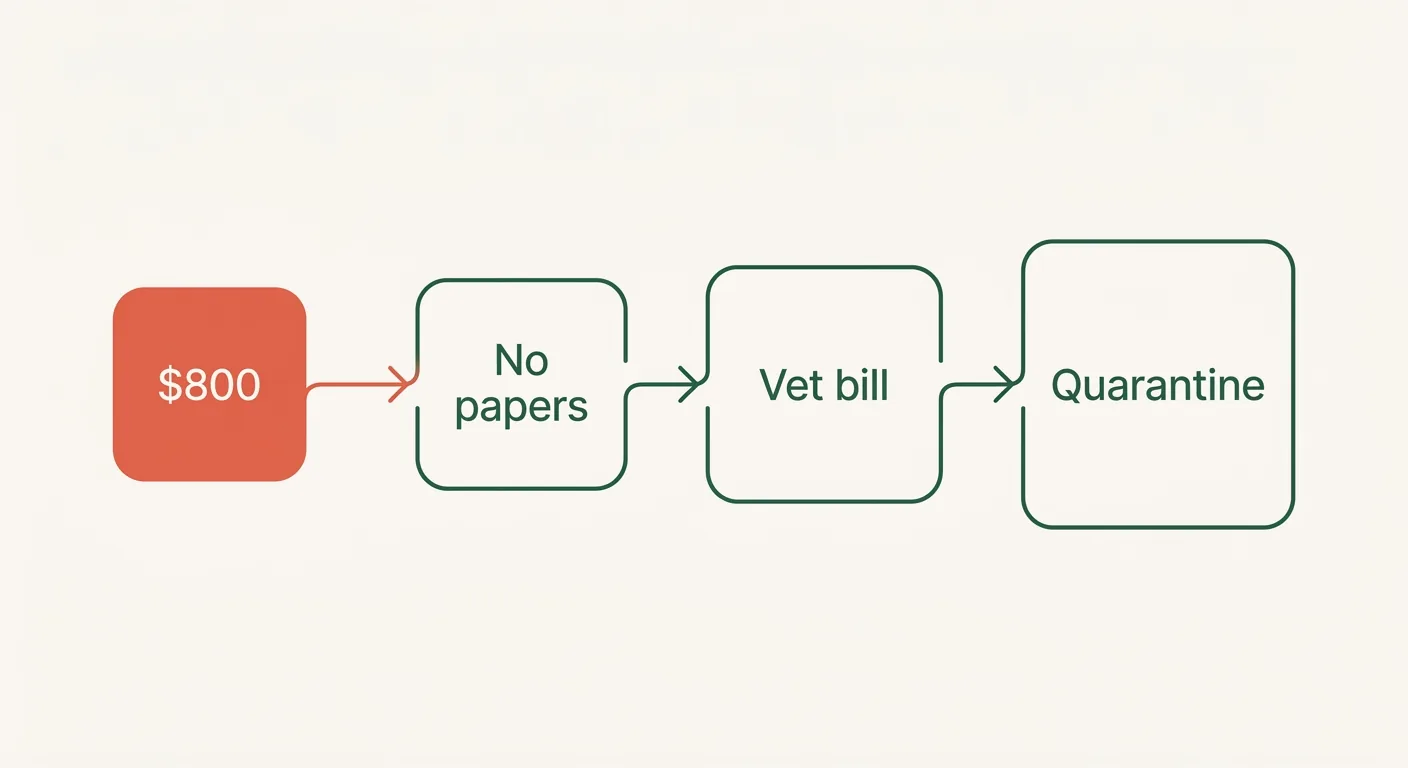
Usually you are buying the absence of three things: a DNA certificate, a disease-screening panel, and a documented origin. None of those absences show up in the photograph, and all three surface within the first month.
Sometimes yes, and the tells are consistent. Listings priced below our floor repeat the same patterns we documented across the price SERP: manufactured strike-through discounts on a living animal, the word "adopt" used over priced stock to soften a sale, flat pricing across wildly different species, and a seller who moves to payment before they will move to a video call.
Run the arithmetic honestly. Saving $900 on the purchase, then paying for sexing, a full disease panel, a quarantine period and a first-visit workup, lands you above what a documented bird cost — with a bird whose history still cannot be reconstructed.
Green flags, not red ones
Five Things a Real Breeder Can Show You in Sixty Seconds
Not in twelve years, and not when a market that tripled would have let us. If you find a bird advertised as ours below that figure, it is not ours — check the contact details on our own site against whatever the listing shows you, because that mismatch is the single fastest scam check there is.
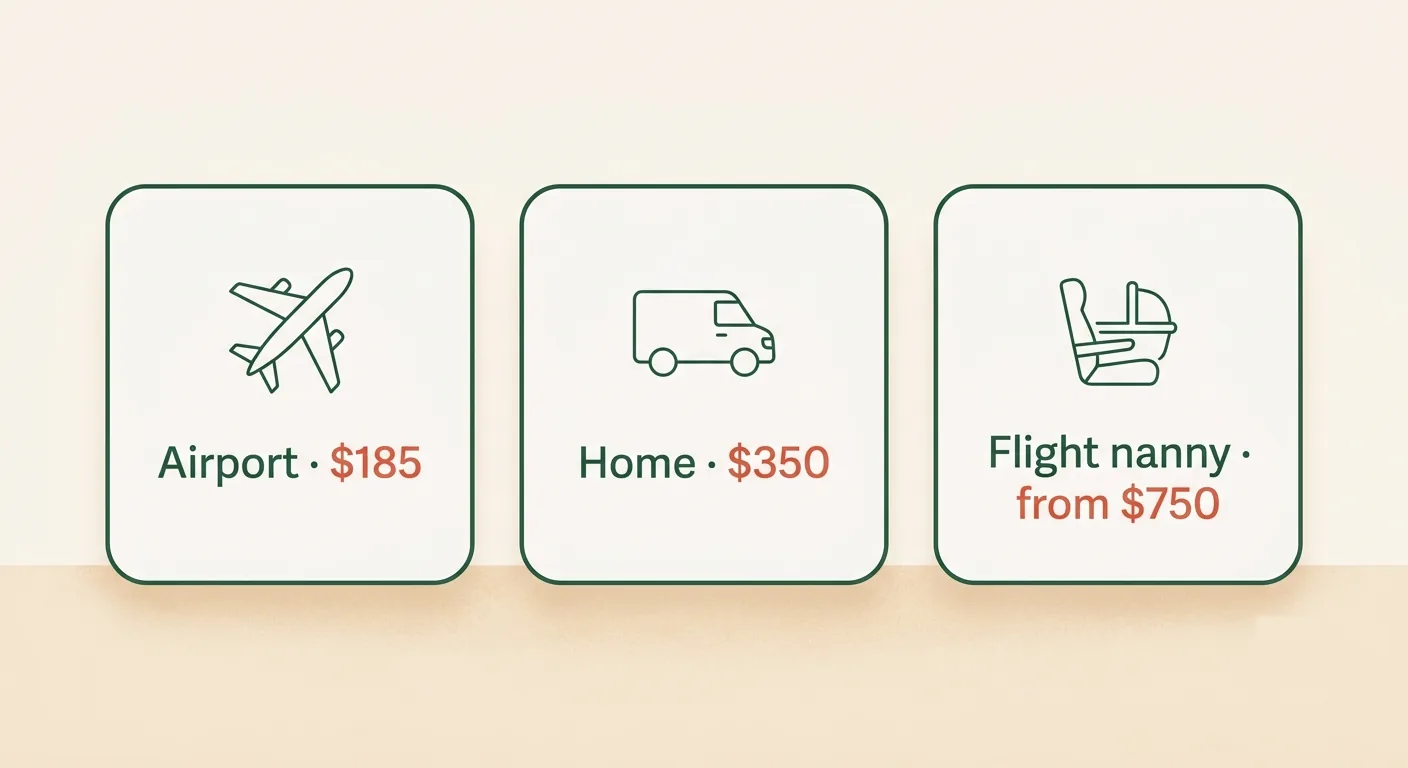
We place birds inside the United States only, at $185 for airport pickup or $350 for home delivery, with a flight-nanny option from $750. Delivery is the last line on the day-one figure and the one people most often forget to budget.
No, and we would rather say so on this page than in a reply three emails deep. We are a USDA-licensed Texas aviary; every bird we place stays within the country.
The figures are not comparable, and it matters because overseas prices circulate widely in search results. A US captive-bred Grey carries CITES Appendix I documentation, USDA-licensed origin, PCR screening and an avian-vet certificate; a price quoted in another market reflects a different legal regime, a different currency and often a different chain of custody entirely.
Because African Greys sit in CITES Appendix I, moving one across a border lawfully needs an export permit from the origin country and an import permit from the destination — paperwork that takes months and routinely costs more than the bird. When a US buyer compares our price against an overseas figure, they are comparing two different products that share a species name.
Three tiers, and one of them is free. Our full nationwide shipping guide walks the whole journey; the short version is below.
Between $185 and $350 for the two routes almost everyone uses, and nothing at all if you can reach Midland within two to three hours. We publish delivery as a line item rather than quoting it once you are committed, because a shipping cost that appears late is one of the clearest scam tells in this market.
Airport pickup
$185
IATA live-animal cargo with Delta, United or American to your nearest major airport.
Home delivery
$350
Door to door, with the documentation folder handed over on arrival.
Flight nanny
from $750
In-cabin with a vetted chaperone; quoted per route because it covers their round-trip airfare.
Ships nationwide · $185 airport · $350 home
| Route home | Cost | How it works |
|---|---|---|
| Airport cargo pickupIATA Live Animal Regulations | $185 | Delta, United or American cargo; you collect at the counter |
| Home deliveryDoor to door | $350 | Climate-controlled courier, documents handed over on arrival |
| Accompanied flight nannyIn-cabin, quoted per route | from $750 | Subject to route and season, so we price it per bird |
| Pickup in Midland, TXWithin two to three hours of us | Free | You meet the bird at the aviary before it ever travels |
Plenty of Texas families drive. If you are inside two to three hours of Midland you can collect in person, meet the parent birds, and hand over nothing for transport — which also happens to be the best possible way to verify a breeder.
Those three figures are the entire delivery menu and they have not moved this year. Airport cargo is what most buyers choose because it is the cheapest and the quickest; home delivery costs $165 more and buys you not having to find the cargo counter at your own airport. The flight-nanny figure starts at $750 rather than sitting at it, because the price follows the route and the season — so we quote that one per bird instead of publishing an average we would have to break.
We hold 6 documented birds today, priced $1,500–$3,500, and every one carries the same paperwork regardless of where it sits in that range. Filter by what you can spend rather than by what you like the look of — the cheapest bird here is not the least documented one.
Under $1,700 Our lowest documented price, and nothing was removed to reach it.
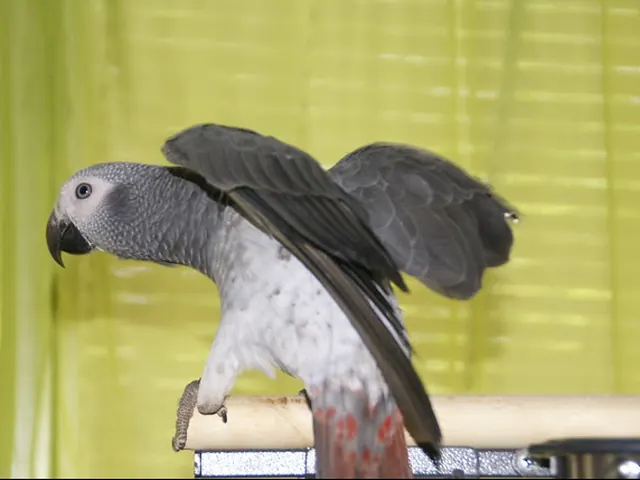 Under $1,700
 Steady Timneh cock, harness-curious and easy to handle already.
$1,700+ A settled hen who reads as calm from the first afternoon home.
$2,300+ Busy and chatty — better matched to a loud house than a quiet one.
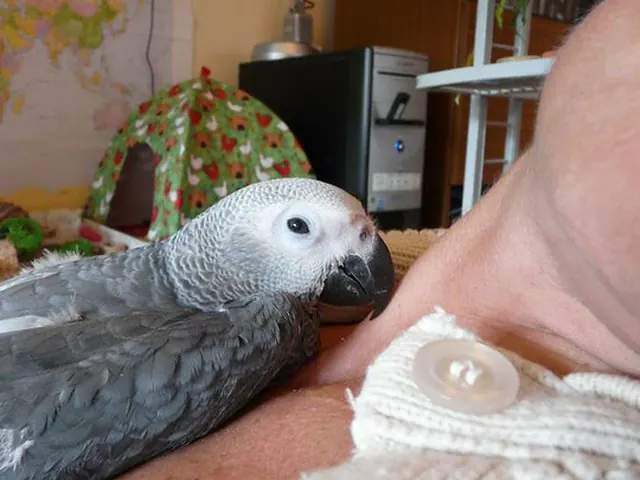 $2,300+
 Hand-fed from the nursery, socialised on shoulders since hatch.
Pair Two birds, one price, one home — they do not separate.
Evie, a Timneh hen, at $1,500. She carries the identical document set as the $3,500 pair — DNA certificate, CITES Appendix I file, PBFD and Polyomavirus PCR results, and an avian-vet health certificate. The price reflects subspecies and demand, never a thinner file.

I'd been burned by a deposit scam before, so I asked C.A.Gs for everything — license number, CITES paperwork, a live video call. They sent it all without hesitating. My grey landed calm and healthy with his whole documentation packet.

From the first email to home delivery, everything was exactly as promised. My grey arrived hand-raised, weaned, and confident — with his health certificate and CITES documents in hand.
These are the questions people actually send us about money, in the order they usually send them. Every answer here is the same one we would give you on the phone.
Across the US market a documented African Grey runs roughly $1,500 to $3,500 from a licensed breeder, while rescue adoption fees are published between $450 and $1,500 and premium breeder listings reach $8,500. Our own floor is $1,500, and a bird at that price still carries a DNA certificate, CITES Appendix I paperwork, PBFD and Polyomavirus PCR screening, and an avian-vet health certificate.
On day one, usually yes — a published rescue fee is lower than a breeder price. Across five years the routes converge, because setup, food, enrichment and veterinary care are identical whichever door the bird came through. Adoption changes what you pay on day one and barely changes what you pay by year five.
An adoption fee is set by an organisation against a published schedule. A rehoming fee is set by whoever currently holds the bird, and it is a private sale. That is why rehoming figures vary so wildly — owners report paying $600 to $900, while one California store was asking $5,500 for a tame six-year-old.
Three things carry the price. African Greys are CITES Appendix I, so every legal transfer is documented. They need twelve to sixteen weeks of daily hand-feeding before they can be placed. And demand rose sharply from 2020 without falling back. A bird priced far below that reality has usually skipped one of the three.
Budget $720–$1,800 a year once the bird is home: pellets and fresh produce, an annual avian-vet wellness exam, toy and perch replacement, and a contingency for the vet visit you did not plan. The contingency is the line people leave out, and it is the one that hurts.
No. We are a USDA-licensed Texas aviary and we place birds inside the United States only. Because African Greys are CITES Appendix I, international movement needs export and import permits in both countries, so prices quoted overseas do not transfer to a US captive-bred bird and are not a fair comparison to ours.
Airport pickup is $185 and home delivery is $350, both on IATA live-animal terms with Delta, United or American. A flight nanny who keeps the bird in the cabin starts from $750 and is quoted per route. If you live within two to three hours of Midland, Texas, collection here costs nothing.
Not always, but a listing far below our $1,500 floor is worth slowing down for. Ask for the USDA licence number, the DNA certificate, the PCR results and a live video call with the bird. A seller who holds those sends them within a day; a seller who does not will change the subject to payment.
A hatch certificate with the closed leg-band number, the CITES Appendix I captive-bred file, the DNA sexing certificate, the PBFD and Polyomavirus PCR results, and an avian-vet health certificate dated within ten days of travel. We price all of it into the bird and never bill it afterwards.
Yes. A deposit holds a named bird and starts the paperwork; the balance falls due before travel is booked. That gap is deliberately the window in which most people buy the cage, because buying the cage twice is the most common first-year mistake we see.
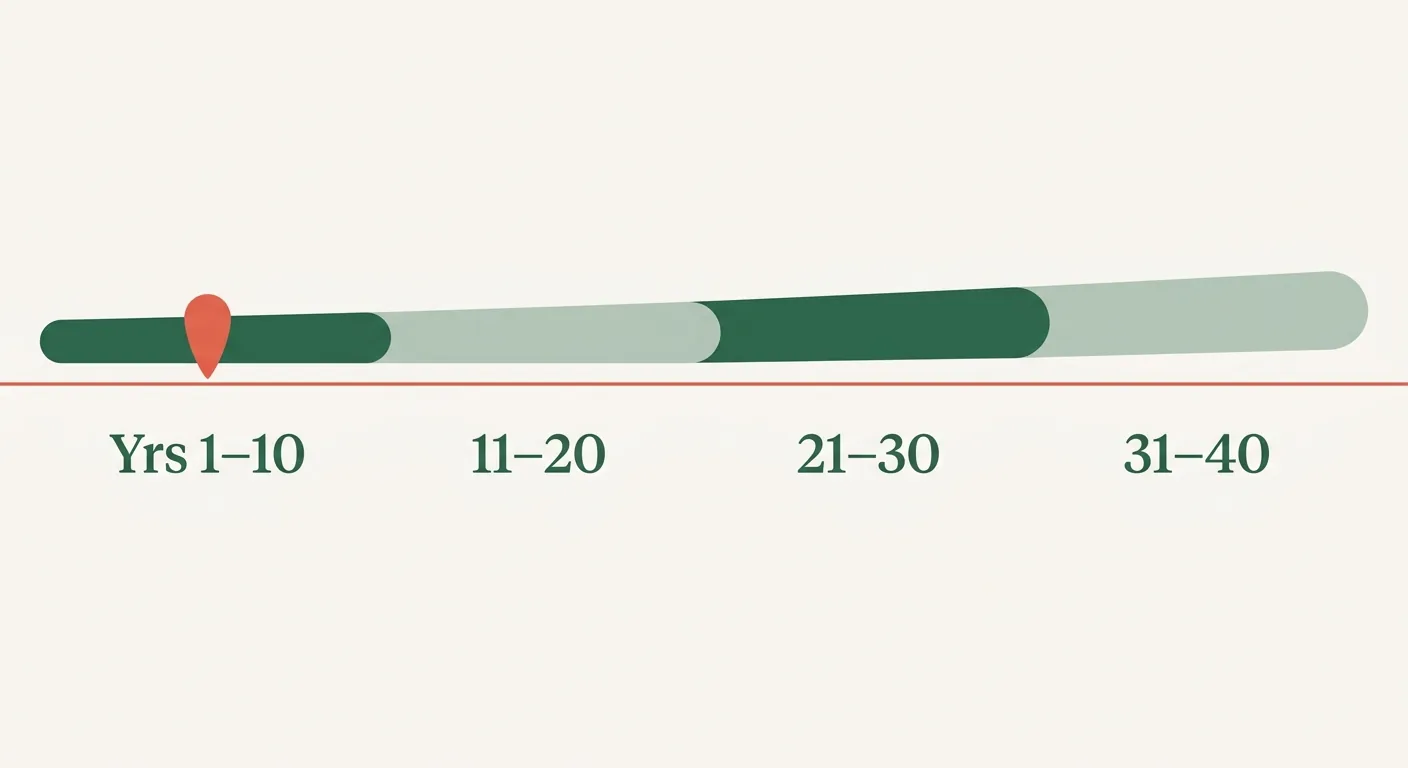
Two pages go further than a cost page usefully can: what the money buys year after year once the bird is home, and how long the commitment you are pricing actually runs.
Cost of ownership
Our Cost-of-Ownership Breakdown
The long-run arithmetic in full — what a Grey costs to keep, not to acquire.
Read the breakdown →
The commitment
How Long an African Grey Actually Lives
Forty to sixty years, and what that means for the money you just calculated.
Read the lifespan guide →Also from our aviary
Breeding stock carries its own price logic, because a proven producer is valued on its record rather than on how tame it is.
Incubating your own clutch looks cheaper per bird until you price the incubator, the failure rate, and sixteen weeks of hand-feeding against your own time.
Every Congo we have available right now is listed with its real price, so you can see for yourself where the bottom of our range actually sits.
Tell us which bird and how you would like it to travel, and Mark or Teri replies within twenty-four hours — in person, never from a template. A deposit holds a bird; nothing on this page asks you to commit before you have seen its paperwork.