African Grey Parrot Training: A Breeder's Step-by-Step Guide
Train the mind before the behaviour. Trust first, then step-up, recall and talking — taught the way we raise them, with rewards and patience, never force.
Written by Mark & Teri Benjamin · C.A.Gs African Grey breeders, Midland TX · USDA-licensed since 2014
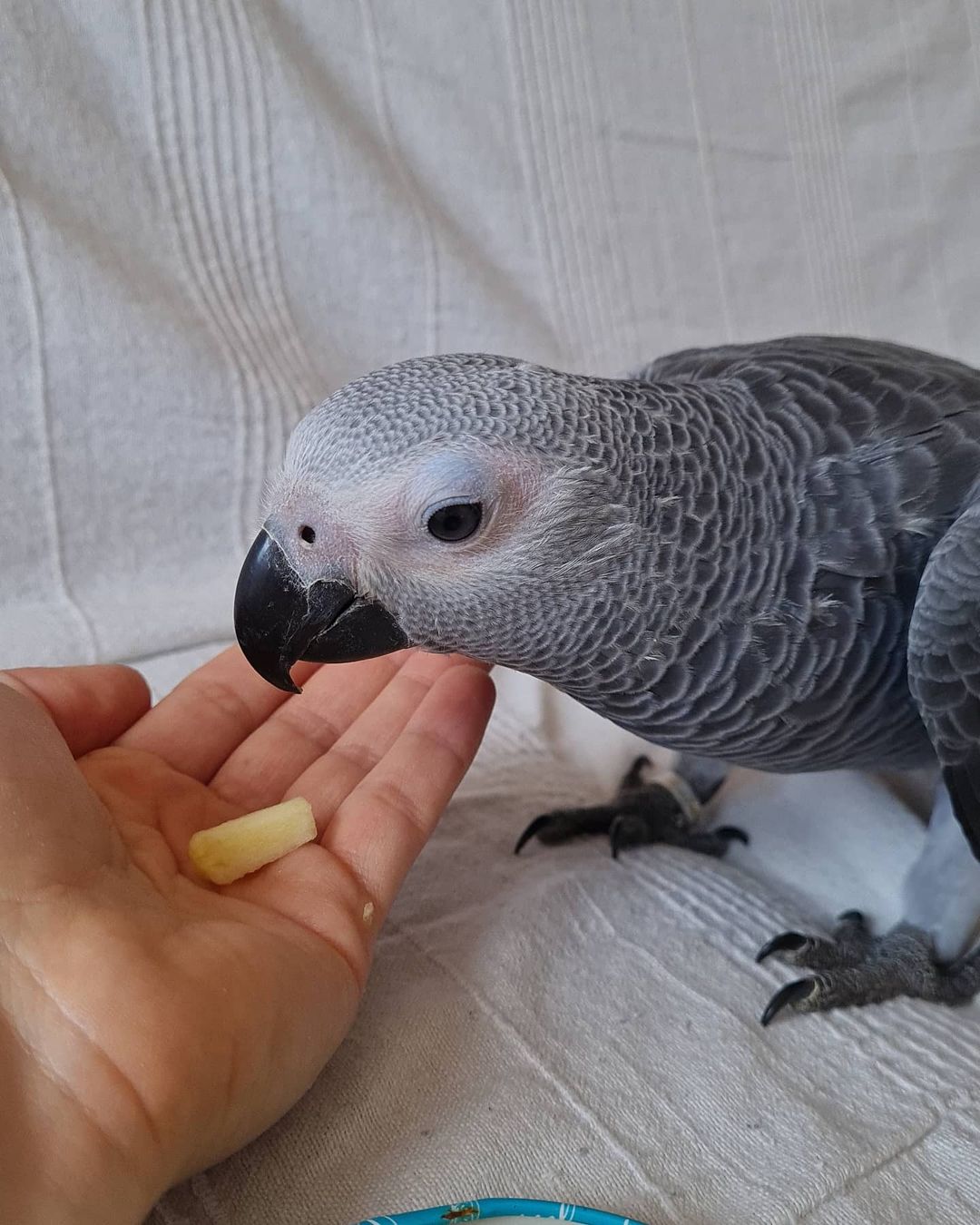
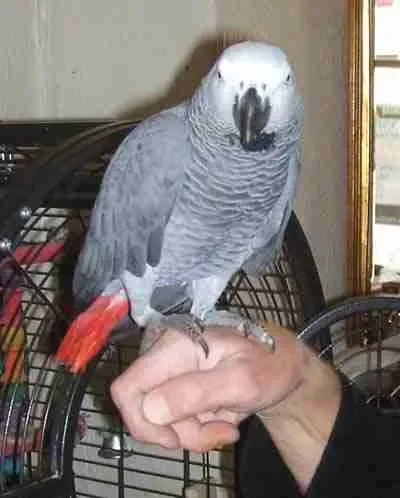
Step-up, the right way — trust first, reward always.
5–15 min
Ideal Session
Trust
Comes First
Reward
Never Punish
Any age
Still Trainable
Want a Grey that's easy to train from day one?
Every chick we raise is handled and gentled from weaning — tell us about your home and we'll match you with one ready to learn.
✓ USDA AWA Licensed✓ CITES Appendix I✓ DNA Sexed✓ Avian Vet Certified✓ Ships Nationwide
On This Page
The short answer
How Do You Train an African Grey Parrot?
Train an African Grey with positive reinforcement in short 5–15 minute sessions, and earn its trust before you teach anything. Start with step-up, build to recall and target training, reward every success, and never punish. The bird is brilliant — your job is to make learning safe, rewarding and worth its while.
MethodPositive reinforcement
Session length5–15 minutes, daily
First skillStep-up
Golden ruleTrust before tricks
How Do You Train an African Grey — and Why Is It Different?
Most parrot-training advice treats the bird like a small dog: give a command, get a behaviour, hand over a treat. With an African Grey that misses the whole point. You're not training a pet that wants to please you — you're negotiating with one of the most intelligent animals you'll ever keep, a bird whose cooperation has to be earned. Get that mindset right and everything else on this page works. Get it wrong and you'll spend years fighting a bird that's smarter than your methods.
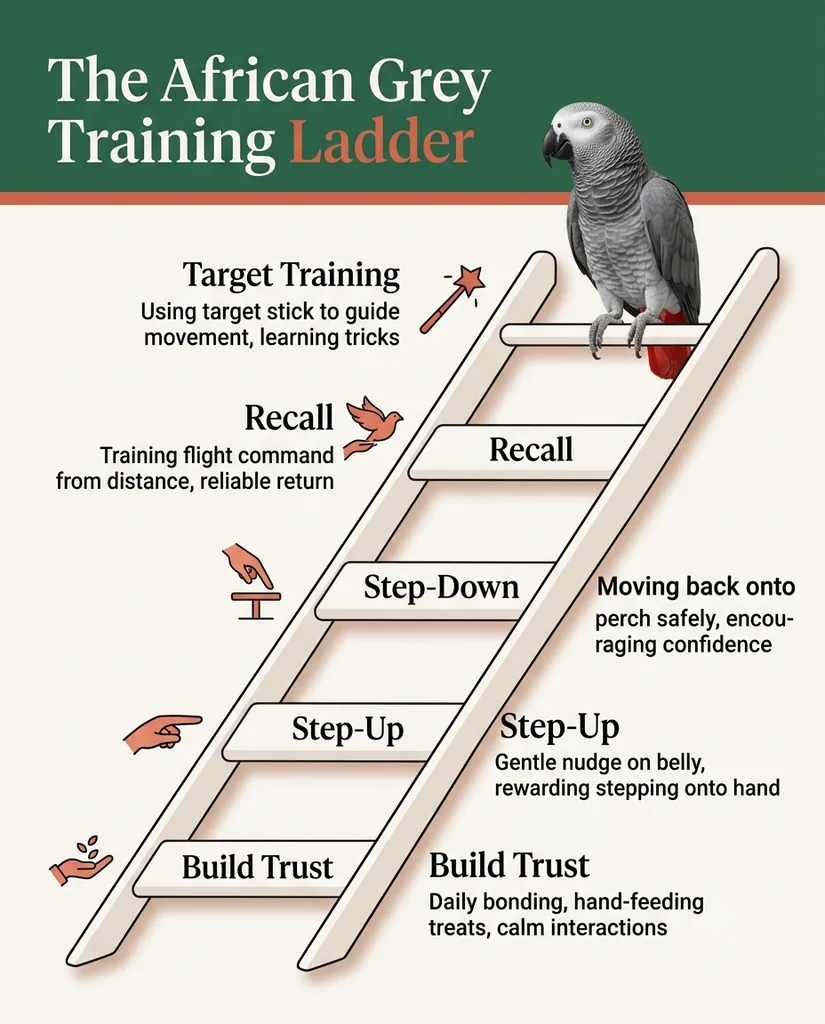
Each rung makes the next easier — start at the bottom with trust, never skip it.
Training goal
Difficulty
Typical time
Step-up
Easy
1–7 days
Step-down
Easy
1–5 days
Recall (come when called)
Medium
2–4 weeks
Target training
Medium
1–3 weeks
Talking on cue
Medium–Hard
Weeks–months
Breeder verdict: Start at the top and work down — step-up is the foundation every other skill is built on.
What Makes African Grey Training Different?
Why You Train the Mind Before the Behaviour
An under-stimulated African Grey doesn't just fail to learn — and as the World Parrot Trust's grey parrot profile ↗ documents, these are birds that forage and problem-solve across the canopy all day, so a bored one invents its own jobs, and you won't like them: screaming, feather-plucking, cage aggression. So the first goal of training isn't a trick at all; it's a mentally engaged, secure bird. Once the mind is occupied and the bird feels safe, behaviours fall into place almost on their own.
Why 5–15 minutes is the ceiling
Greys fatigue mentally far faster than people expect. Past about fifteen minutes a bird stops absorbing and starts resenting, so two short, upbeat sessions a day beat one long grind every time. Always stop while the bird still wants more — that's what makes it eager for tomorrow's session instead of dreading it.
Breeder note: how we start gentling chicks
Our chicks are handled gently from weaning — picked up, talked to, exposed to hands and household life every day — so "training" never starts from zero. By the time one of our Greys goes home it already reads a hand as safe, which is half the battle most owners never have to fight.
Why Trust Has to Come Before Any Training
This is the section almost every competitor skips, and it's the one that decides whether the rest works. You cannot train a bird that doesn't trust you — not really. Push a frightened Grey into "step up" and you'll teach it that hands mean pressure, which is exactly how lifelong biters and hand-shy birds are made. Spend the first week or two doing nothing but earning trust and you'll save yourself months later.
Trust looks like this — a calm, settled bird. Train from here, never before it.
How Do You Build Trust With an African Grey?
Respecting Boundaries and Reading "No"
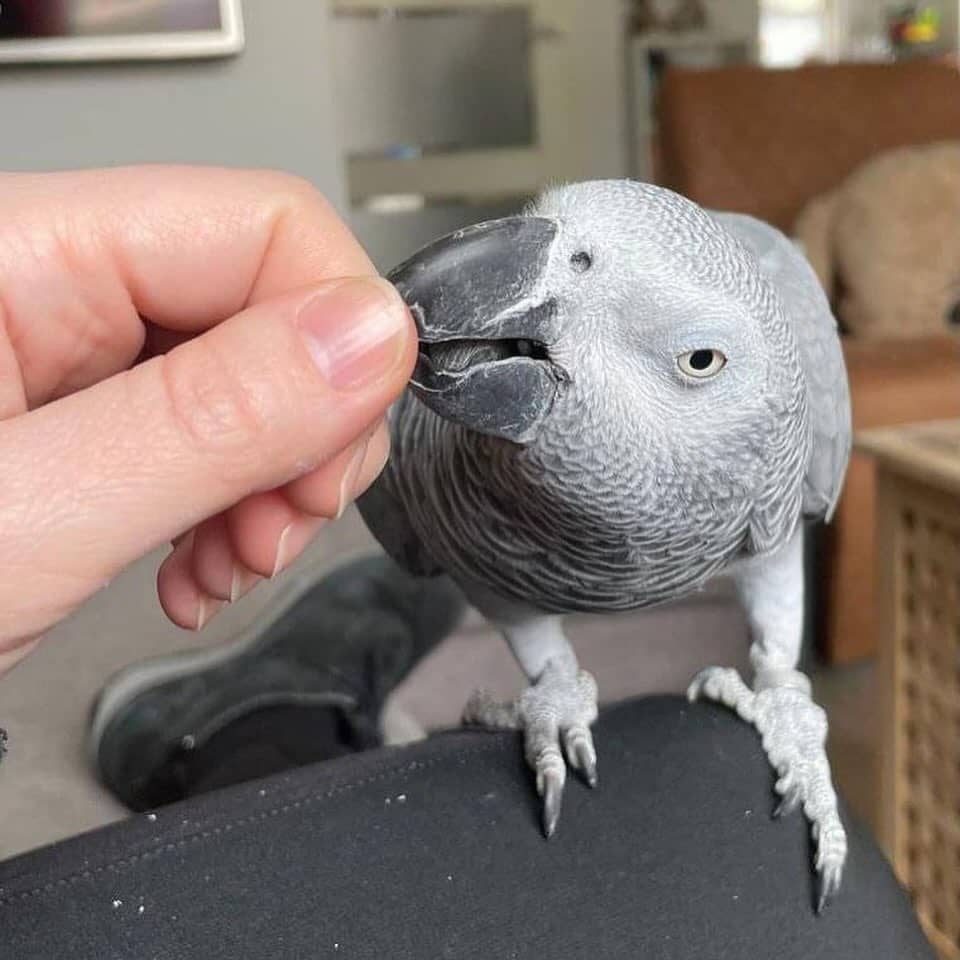
Trust is built by listening, not pushing. When a Grey leans away, fluffs up defensively or steps back, that's a "not yet" — honour it, and the bird learns you're safe and predictable. Treats offered through the bars with no demand attached, your calm voice, and simply being in the room doing quiet things all bank trust far faster than any drill.
Signs your Grey isn't ready to train yet
Hold off on formal training while a bird still freezes when you approach, refuses treats from your hand, paces or alarm-calls when you're near, or lunges at the cage front. None of that is stubbornness — it's a bird telling you it doesn't feel safe yet. Rush it and you'll cement the fear; wait it out and the same bird will come to you.
Building a Predictable Daily Routine
Greys are creatures of routine, and routine is itself a trust-builder. Feeding, covering, out-of-cage time and short training at roughly the same times each day tell the bird the world is reliable — and a bird that feels the world is reliable takes risks, tries new behaviours, and learns.
What a settled routine looks like in week one
In the first week, keep the rhythm simple and identical each day: uncover and greet at the same hour, fresh food at the same times, a quiet hour near the cage in the afternoon, and cover-down at the same point each night. You're not training anything yet — you're proving the day is predictable, which is the ground every later lesson stands on.
Breeder note: the trust timeline we see
With our hand-raised birds, real trust in a brand-new home usually lands somewhere in the first two to four weeks — faster than a parent-reared or imported Grey, because ours arrive already used to people. Slower than that is normal too, especially for a sensitive bird; the worst thing you can do is read patience as failure and start forcing it.
The Essential Commands Every African Grey Should Learn
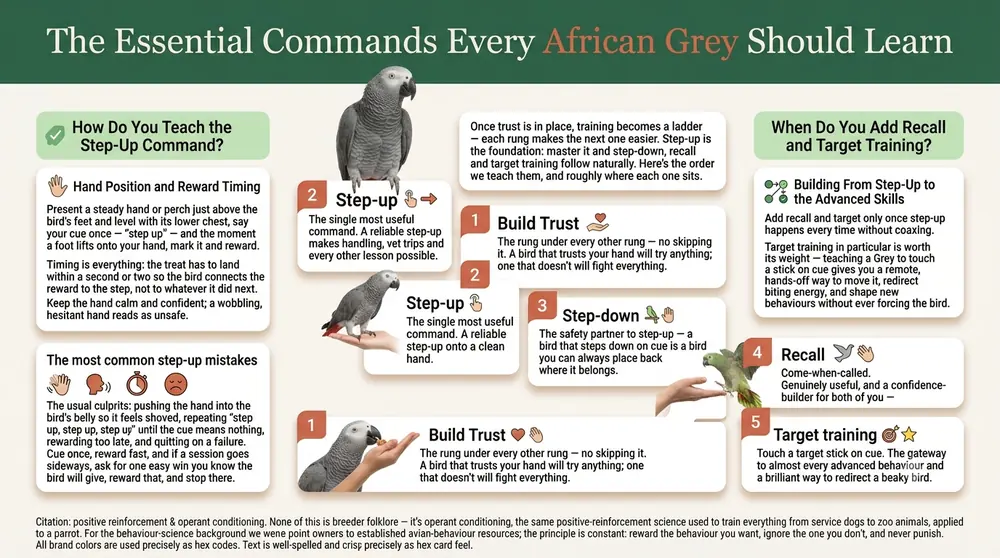
Once trust is in place, training becomes a ladder — each rung makes the next one easier. Step-up is the foundation: master it and step-down, recall and target training follow naturally. Here's the order we teach them, and roughly where each one sits.
The teaching order — step-up first, then step-down, recall and target training.
1
Build trust
The rung under every other rung — no skipping it. A bird that trusts your hand will try anything; one that doesn't will fight everything.
2
Step-up
The single most useful command. A reliable step-up makes handling, vet trips and every other lesson possible.
3
Step-down
The safety partner to step-up — a bird that steps down on cue is a bird you can always place back where it belongs.
4
Recall
Come-when-called. Genuinely useful, and a confidence-builder for both of you — but only once step-up is rock solid.
5
Target training
Touch a target stick on cue. The gateway to almost every advanced behaviour and a brilliant way to redirect a beaky bird.
How Do You Teach the Step-Up Command?
Hand Position and Reward Timing
Present a steady hand or perch just above the bird's feet and level with its lower chest, say your cue once — "step up" — and the moment a foot lifts onto your hand, mark it and reward. As professional parrot-training resources from Barbara Heidenreich ↗ stress, timing is everything: the treat has to land within a second or two so the bird connects the reward to the step, not to whatever it did next. Keep the hand calm and confident; a wobbling, hesitant hand reads as unsafe.
The most common step-up mistakes
The usual culprits: pushing the hand into the bird's belly so it feels shoved, repeating "step up, step up, step UP" until the cue means nothing, rewarding too late, and quitting on a failure. Cue once, reward fast, and if a session goes sideways, ask for one easy win you know the bird will give, reward that, and stop there.
When Do You Add Recall and Target Training?
Building From Step-Up to the Advanced Skills
Add recall and target only once step-up happens every time without coaxing. Built on the same clicker and marker-training method ↗ Karen Pryor popularised, target training in particular is worth its weight — teaching a Grey to touch a stick on cue gives you a remote, hands-off way to move it, redirect biting energy, and shape new behaviours without ever forcing the bird.
Why target training redirects a beaky bird
A Grey that's learned to follow a target stick has something to do with its beak that isn't your hand. Ask for a few touches before you pick the bird up, reward them, and you've given an over-aroused or nippy bird a calm, rewarding job in the exact moment it would otherwise reach to bite.
None of this is breeder folklore — it's operant conditioning, the same positive-reinforcement science used to train everything from service dogs to zoo animals, applied to a parrot. For the behaviour-science background we point owners to Dr. Susan Friedman's applied-behaviour-analysis resources ↗; the principle is constant: reward the behaviour you want, ignore the one you don't, and never punish.
How Do You Train an African Grey to Talk?
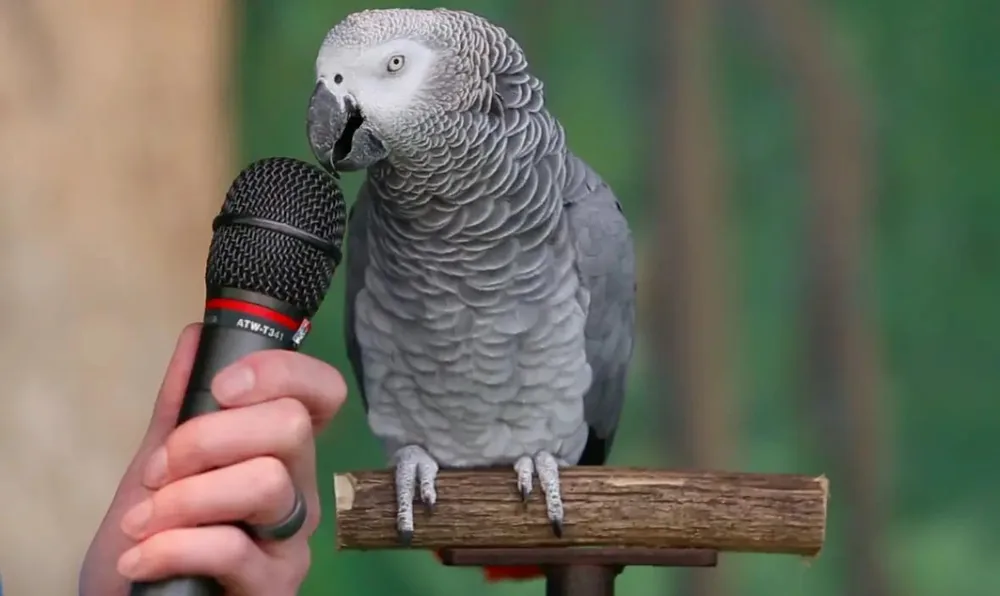
Talking isn't really "trained" so much as grown — but you can absolutely stack the odds. The trick is to stop drilling and start communicating: African Greys learn words the way toddlers do — a process Dr. Irene Pepperberg's research with Alex the Grey ↗ documented in detail — by tying sound to meaning. For the full picture see our guide to African Grey talking ability; here's the training-specific version.
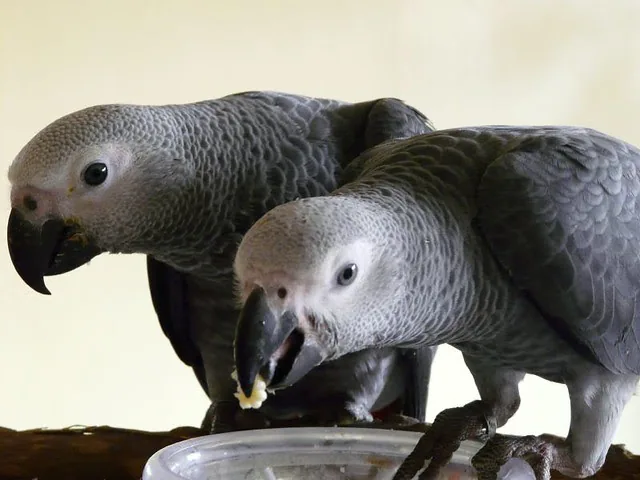
Words stick when they're tied to a moment — say the greeting, not the flashcard.
Choosing First Words and Using Repetition
Pick Easy Words and Reward Every Attempt
Start with short, punchy words full of hard consonants and bright vowels — "hello", "step up", the bird's own name — and pair each with the exact moment it belongs to, every single day. Reward any attempt, even a garbled half-version, because what you're really rewarding is the bird trying to talk to you. Perfection comes later; willingness comes first.
Why context beats word-drilling
Playing a word on a loop or repeating it twenty times in a row does almost nothing — Greys tune out anything that isn't connected to life. The goodbye you say a thousand times as you actually leave will beat the flashcard word you said ten times in a vacuum. Context is the whole engine of African Grey speech.
Fixing the Big Behaviour Problems: Biting, Screaming, Aggression & Fear
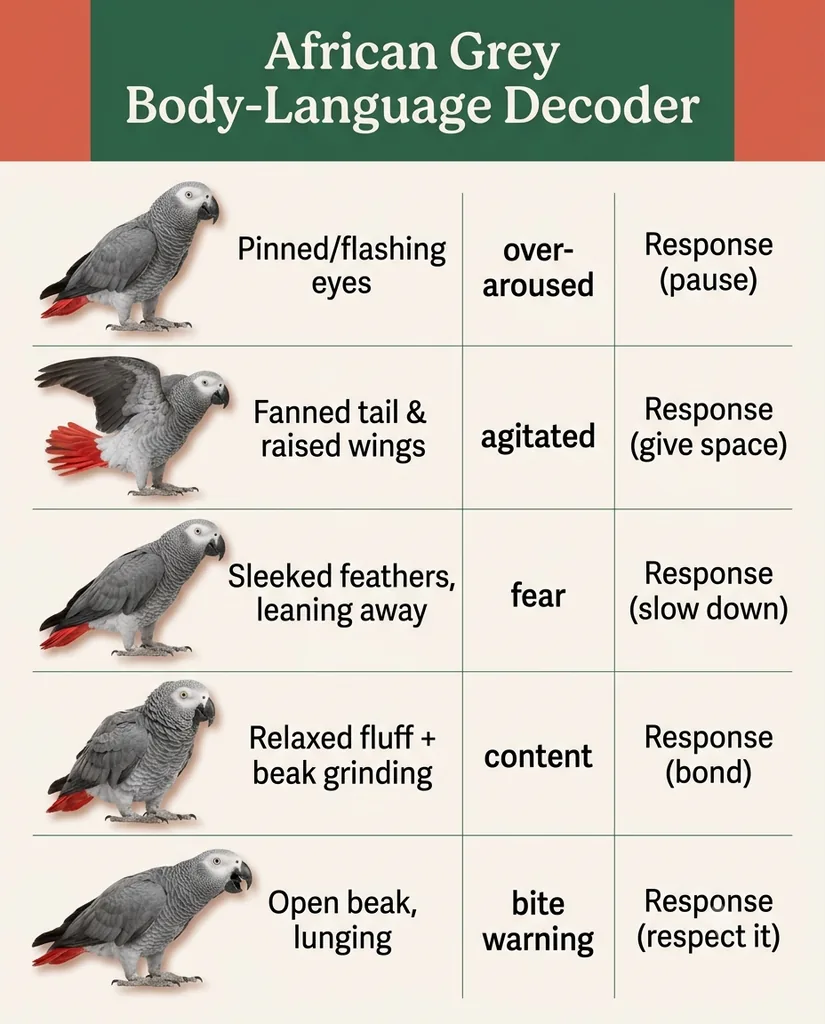
This is the section most owners actually arrive for. The good news: nearly every "behaviour problem" in an African Grey is communication, not malice — the bird is telling you something in the only language it has. Learn to read it, and most problems shrink dramatically. The body-language chart below is the single most useful thing on this page.
Read the bird before you reach for it — five signals that tell you exactly what your Grey is feeling.
Body-language signal
What it usually means
What to do
Pinned / flashing eyes
Excited or over-aroused
Pause — don't reach in yet
Fanned tail, raised wings
Agitated or territorial
Lower the energy, give space
Sleeked feathers, leaning away
Fear — 'back off'
Slow down, rebuild trust
Relaxed fluff + beak grinding
Content, winding down
Bond — don't drill
Open beak, lunging
A bite warning
Respect it — never punish
Breeder verdict: A Grey almost never bites 'out of nowhere' — it warns first. Read the warning and the bite never happens.
How Do I Stop My African Grey From Biting?
Reading the Body Language Before the Bite
The fix for biting starts well before the beak. Watch the eyes and the feathers: a Grey winding up to bite usually pins its eyes, sleeks or fans its feathers, shifts its weight away, or opens its beak in warning. Back off at the warning and you teach the bird it doesn't need to escalate; ignore the warning and you teach it that only a bite gets you to listen.
Eye pinning, posture and what they warn
Pinning (the pupils rapidly shrinking and flaring) signals high arousal — excitement or aggression, so it's a "pause" sign, not a green light. A fanned tail and raised wings mean territorial or over-stimulated; sleeked feathers with a lean-away mean fear. Read the cluster, not one sign in isolation, and respond by lowering the pressure.
Breeder note: the bite we could have prevented
Almost every "my sweet bird suddenly bit me" story we hear, when we walk through it, had two or three ignored warnings in the seconds before. The bird wasn't being treacherous — it was being read too late. Slow down, watch, and you'll catch the warnings you're currently missing.
What About Screaming, Aggression and Fearfulness?
What the Behaviour Is Really Telling You
Screaming is usually contact-calling (or a habit you accidentally rewarded by running over); aggression is usually fear, hormones, or cage-guarding — though any sudden change is worth running past an avian vet ↗ first to rule out pain or illness; fearfulness is usually under-socialisation or a bad past. In every case the move is the same — find the trigger, lower the pressure, and reward the calm alternative — rather than punishing the symptom, which only adds fear to the mix. When screaming or aggression won't shift on its own, a certified animal-behaviour consultant ↗ can pinpoint the trigger a home routine is missing.
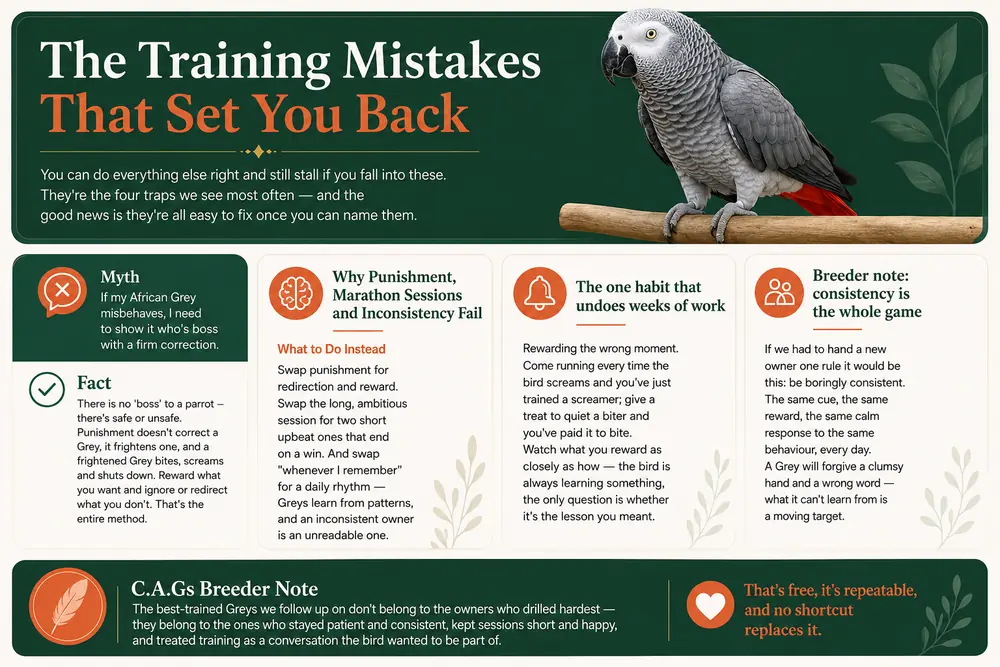
The Training Mistakes That Set You Back
You can do everything else right and still stall if you fall into these. They're the four traps we see most often — and the good news is they're all easy to fix once you can name them.
The four traps that stall training — and the fix for each.
Myth
If my African Grey misbehaves, I need to show it who's boss with a firm correction.
Fact
There is no 'boss' to a parrot — there's safe or unsafe. Punishment doesn't correct a Grey, it frightens one, and a frightened Grey bites, screams and shuts down. Reward what you want and ignore or redirect what you don't. That's the entire method.
Why Punishment, Marathon Sessions and Inconsistency Fail
What to Do Instead
Swap punishment for redirection and reward. Swap the long, ambitious session for two short upbeat ones that end on a win. And swap "whenever I remember" for a daily rhythm — Greys learn from patterns, and an inconsistent owner is an unreadable one.
The one habit that undoes weeks of work
Rewarding the wrong moment. Come running every time the bird screams and you've just trained a screamer; give a treat to quiet a biter and you've paid it to bite. Watch what you reward as closely as how — the bird is always learning something, the only question is whether it's the lesson you meant.
Breeder note: consistency is the whole game
If we had to hand a new owner one rule it would be this: be boringly consistent. The same cue, the same reward, the same calm response to the same behaviour, every day. A Grey will forgive a clumsy hand and a wrong word — what it can't learn from is a moving target.
Where Should YOU Start? A Quick Training Plan
The right first step depends entirely on where your bird is today. Find your situation below for an honest starting point.
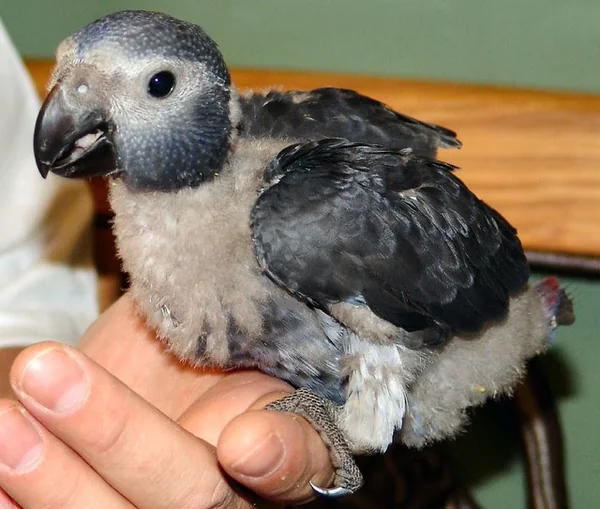
Start where your bird actually is — an early-socialised chick like Evie begins a rung or two up the ladder.
Match a Starting Point to Your Grey
Your Grey just arrived / is brand new
Don't train yet. Spend one to two weeks simply being present — sit nearby, talk softly, drop treats through the bars. Trust is the prerequisite, not the reward.
Your Grey steps up but bites sometimes
Go back to body language. Almost every 'sudden' bite is a missed warning, not aggression — read the eyes and posture and you'll see it coming.
Your Grey is confident and bonded
Build the ladder: step-up → step-down → recall → target, 5–15 minutes a day, and always end on a win while the bird still wants more.
Your Grey screams when you leave the room
That's contact-calling, not misbehaviour. Answer once, reward the quiet that follows, and never come running for the scream — that only trains it louder.
What Do You Get From a Breeder Who Raises for Trainability?
A trainable Grey starts long before you ever hold it. Here at C.A.Gs, every chick is hand-raised and handled daily from weaning, so it arrives already trusting hands, used to household life, and primed to learn — with PCR DNA sexing, an avian-vet health certificate, and CITES Appendix I paperwork, all captive-bred in the USA.
Which of Our Greys Are Ready to Start Training?
Every bird below is hand-raised here in Midland and gentled from weaning — fully weaned, PCR DNA-sexed, vet-checked and CITES-documented. Here's who we have available right now:
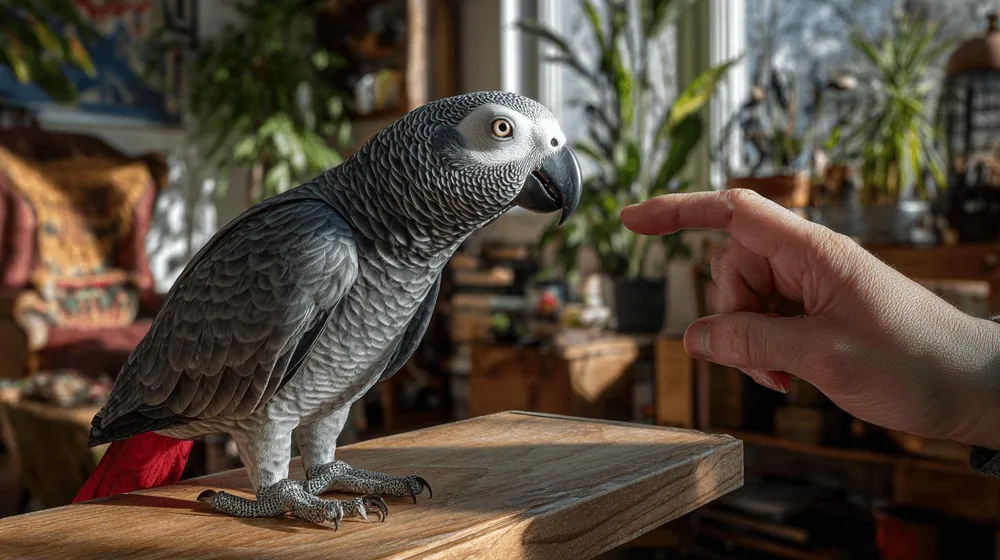
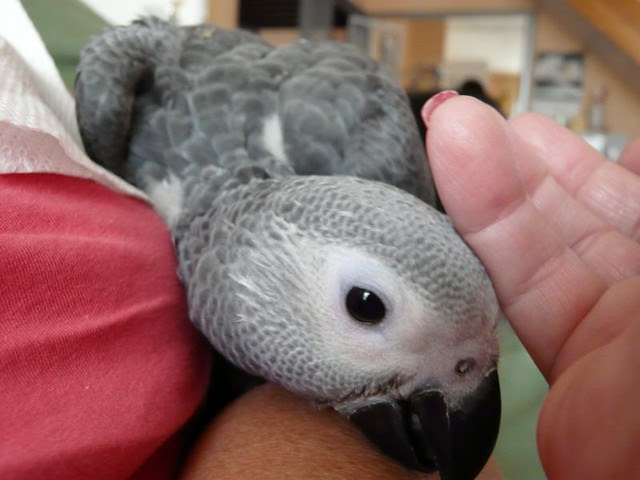
New Arrival Midland, TX
Amie
Female · 3 mo · Congo African Grey
"Already steps up and responds to her name."
Premium hand-raised female, 3 months old. Full social training from weaning — calm with hands, easy to start training.
— Written by Mark & Teri Benjamin, the breeders behind C.A.Gs · USDA-licensed African Grey aviary, Midland, TX
African Grey Training: Frequently Asked Questions
Are African Greys easy to train?
African Greys are among the most trainable parrots because they're so intelligent — but that intelligence cuts both ways. They learn good habits fast and bad ones just as fast, and they bore quickly. The bird isn't hard to train; it's easy to train wrongly. Keep sessions short, reward generously, never punish, and an African Grey will out-learn almost any other companion bird.
How do I stop my African Grey from biting?
Stop reading the bite as the start of the problem — it's the end of one. A Grey almost always warns first with pinned eyes, a fanned tail or a leaning-away posture, and the bite only comes when those signals were missed or pushed past. Learn the body language, back off when you see a warning, and never grab, flick or shout — punishment makes a bird bite harder and trust you less.
How long does it take to train an African Grey?
Simple skills come fast: most Greys learn a reliable step-up in a few days to a week. Recall and target training take a few weeks, and talking on cue can take weeks to months. But the real timeline is the trust that comes first — rush that and everything after it stalls, so we tell owners to think in terms of months of relationship, not days of drilling.
Can you train an older or rehomed African Grey?
Yes. The 'you can't teach an old Grey new tricks' idea is a myth — these birds learn for life. A rehomed or older African Grey may carry baggage (fear, distrust, learned screaming) so progress is slower at first, but with patience, routine and positive reinforcement they absolutely retrain. Many of the most bonded Greys we hear about were second-chance birds.
Can African Greys learn commands like a dog?
They can learn cued behaviours — step-up, step-down, recall, turn around, target — using the same positive-reinforcement science (operant conditioning) used for dogs. The difference is motivation: a Grey works for trust and reward on its own terms, not to please you. Frame it as cooperation, not obedience, and you'll get far more out of the bird.
Why is my African Grey suddenly aggressive?
'Sudden' aggression almost always has a cause: hormones, fear, a change in the home, a cage it's guarding, or — most often — a string of ignored body-language warnings that finally escalated. Greys are sensitive and territorial, so look for the trigger rather than labelling the bird 'mean'. Fix the cause and lower the pressure, and the aggression usually fades.
How long should an African Grey training session be?
Short. Five to fifteen minutes is the sweet spot, once or twice a day. African Greys fatigue mentally, and a tired, over-faced bird stops learning and starts resenting the sessions. Always finish while the bird is still keen and on a success — leaving it wanting more is what keeps it coming back tomorrow.
What's the best reward for training an African Grey?
Whatever your individual bird will work hardest for — usually a small, special food treat it doesn't get any other time (a sliver of nut, a single seed, a piece of fruit), paired with warm praise. Keep treats tiny so the bird doesn't fill up, and reserve the 'jackpot' favourite strictly for training so it stays valuable.
Training tips and new hand-raised clutches before they're listed — socialised families first.


 New Arrival Midland, TX